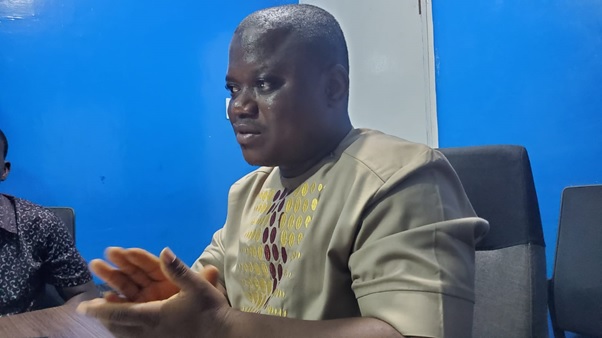
SUAKOKO DISTRICT, BONG COUNTY – Located in a small but thriving corner of Sergeant Kollie’sTown, (SKT) a remarkable figure stands at the frontline of Liberia’s push for food self-sufficiency. Joe N. Kermon widely known as “Joe the Goat” is not just a livestock farmer; he is a symbol of resilience, innovation, and community-driven development.
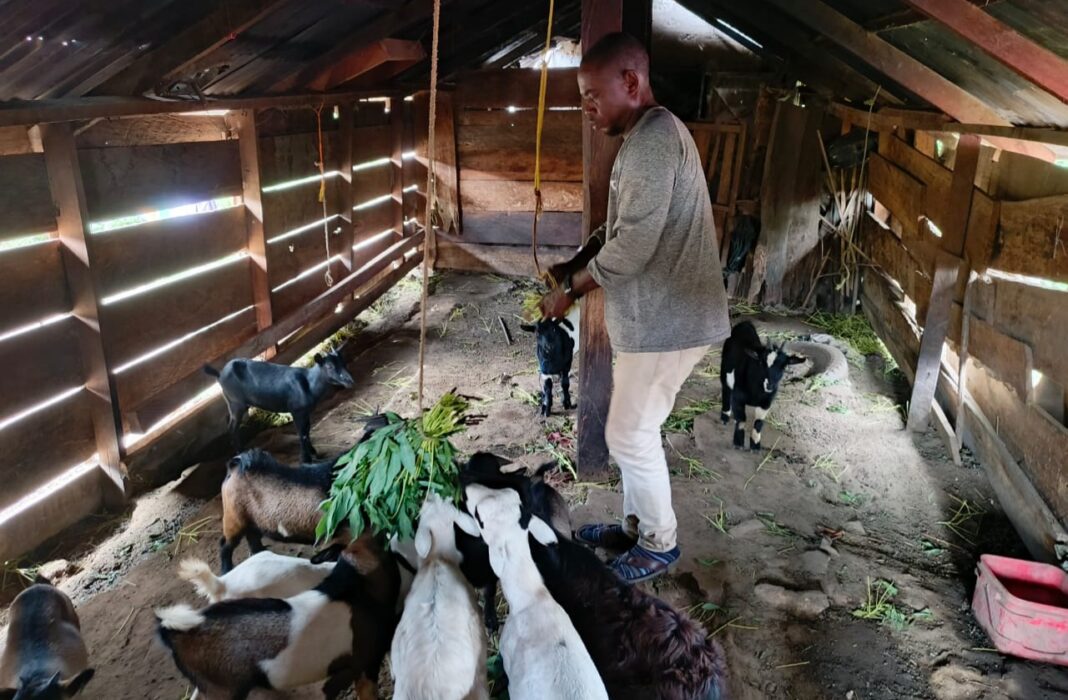
From humble beginnings in 1999, after finishing high school with no means to pursue college, Kermon turned to the land—and the animals it could support—for a path out of poverty. What began with a couple of goats bought with small earnings has grown into a thriving enterprise of nearly 50 goats, 36 sheep, and a burgeoning poultry business.
His efforts have done more than secure a livelihood. They have educated his five children, funded the construction of a five-bedroom home in Kakata, and, most importantly, offered Liberians a healthier alternative to chemically-laced, imported meat.
Tackling a Public Health Crisis from the Ground Up
Kermon’s commitment to producing safe, locally raised meat is gaining traction at a critical time. Imported meat products especially frozen poultry continue to dominate the market, often arriving in questionable condition. As Joseph N. Kodah Sr., President of the Liberia Poultry Federation, recently warned, these imports frequently contain harmful additives and preservatives, contributing to alarming increases in hypertension, kidney failure, and skin ailments across Liberia.
Joe’s livestock, in contrast, is raised without chemical additives, on natural feed sourced from the local bush. “The imported meat is full of grease and chemicals. It causes sickness,” Kermon says with conviction. “My animals are raised naturally. They are healthier for our people.”
From Loss to Learning: A Business Built on Integrity
The road to success was anything but smooth. In his early years, Kermon unwittingly bought stolen animals, which led to run-ins with the police and financial losses. But instead of giving up, he adapted. He began documenting all purchases with videos and only buys animals in areas where sellers can be identified and verified.
“I no longer buy at night or from the roadside,” he says. “I only buy within the community where people know each other.”
He also forged strong relationships with local law enforcement and has since invested in a wooden-and-metal warehouse with around-the-clock security to protect his animals and business.
Feeding and Fighting Disease
Feeding and animal health remain ongoing challenges, particularly as diseases like Newcastle disease known locally as “chicken sickness” ravage poultry farms across rural Liberia. The highly contagious virus, as noted by Roland Varkpeh, Director of Animal Production at the Ministry of Agriculture, causes severe respiratory and neurological issues in birds and thrives in the rainy season.
Kermon has felt the brunt of these outbreaks, losing up to ten animals in a single episode. But he continues to adapt—rotating feed types like cassava, “iron leaf,” and “bonhomme leaf” to prevent digestive issues, and employing local boys to gather wild feed.
“Feeding them the same thing every day is dangerous,” he explains. “I spend about L$500 daily on feed, but it’s worth it to keep them healthy.”
A Role Model for Liberia’s Agricultural Future
Liberia’s 2024 Agriculture Census, conducted by the Liberia Institute of Statistics and Geo-Information Services (LISGIS), shows over 67,000 goats and nearly half a million chickens being raised nationally—a clear sign of growing local participation in livestock farming. Yet challenges remain: lack of veterinary care, fencing, access to land, and inadequate regulation of meat imports.
Farmers like Kermon, who have managed to overcome these obstacles through creativity and determination, offer a roadmap for others. But they also need support. “We need more land, more fencing wire, better access to medicine and vaccinations,” he says. “With the right help, we can scale up and supply even more healthy meat to Liberians.”
Bridging the Trade Gap
Kermon’s efforts are also part of a larger national issue. In 2024, LISGIS says, Liberia imported goods worth USD 1.61 billion but exported only USD 1.03 billion—a staggering trade deficit of USD 580 million. Supporting homegrown enterprises like Kermon’s can help shift that balance and build a more resilient, self-reliant economy.
“Look for the Billboard”
With dreams of expansion, Kermon is open for business—and partnership. “If anyone wants to partner with me or see what I do, come to Sandtown,” he says. “Look for the billboard with my name and pictures of my animals. I’m right across from the only storey building in the area.”
In an age where health and sustainability are increasingly under threat from globalization and poor regulation, Joe the Goat is a living testament to what local innovation and integrity can achieve. He may not have had the chance to attend college, but in his field—literally—Kermon has earned a doctorate in perseverance and purpose.
His final message to the public is simple yet powerful: “Support local. Eat clean. Build Liberia.”