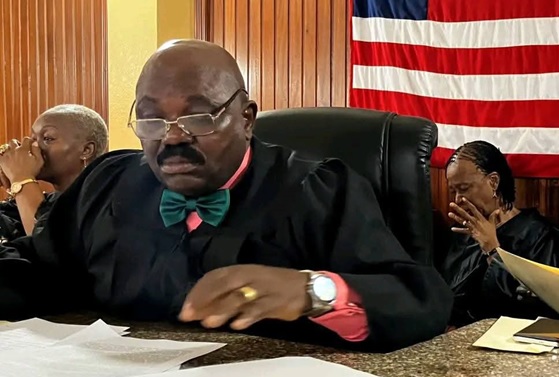
MONROVIA – Criminal Court “A” Judge Roosevelt Z. Willie has declared a mistrial and ordered the dissolution of the entire jury panel in the Capitol Arson case involving former House Speaker J. Fonati Koffa and several co-defendants, a ruling that has immediately triggered an appeal to the Supreme Court of Liberia by defense lawyers.
Judge Willie issued the ruling on Friday, January 2, 2026, citing alleged juror misconduct that, according to the court, compromised the integrity of the trial. The decision brought a sudden halt to the proceedings and suspended the case until the next term of court, effectively nullifying weeks of testimony and jury deliberations.
The mistrial followed a formal application by state prosecutors, who argued that the jury had become “contaminated” and could no longer deliver an impartial verdict. The prosecution’s request stemmed from concerns raised after a juror openly questioned the credibility of video evidence introduced by the state during trial.
Immediately after the jury was disbanded, defense lawyers representing former Speaker Koffa and the other accused individuals announced their intention to challenge the ruling before the Supreme Court. Defense Counsel Cllr. Wilkins Wright stated in open court that the defense had taken exception to the decision and would proceed under the controlling statute to seek appellate review.
Alongside the appeal, the defense filed an application requesting that all defendants be released on bail. Cllr. Wright argued that a previously approved criminal appearance bond remained valid, emphasizing that the bond was never vacated by the court and was later supplemented with human sureties in compliance with legal requirements.
The defense further described the prosecution’s move to dissolve the jury as an admission that the state’s case lacked sufficient evidence. According to the defense, the juror’s questioning of video evidence reflected legitimate doubt rather than misconduct warranting the collapse of the entire trial.
State Prosecutor Cllr. Augustine Fayiah objected to the bail application, arguing that it was procedurally defective and inconsistent with established legal precedent. He maintained that the issue of bail should have been addressed earlier in the proceedings and cautioned that granting bail at this stage could violate the principle of stare decisis.
In his response, Judge Willie acknowledged and granted the defense’s exception to the mistrial ruling but declined to immediately approve the bail request. He referenced an earlier ruling that imposed specific bail conditions, noting that those conditions had not yet been fully satisfied by all defendants.
Court sources disclosed that while three defendants had previously been placed on flat rate bail, other accused individuals would still require further assessment to determine potential flight risk before any final bail decision could be made by the court.
The jury was formally disbanded following a prosecution request made on December 29, during the 41st day of jury sitting in the November Term of Court. The request came amid intensifying disputes over the prosecution’s evidence, including contested forensic claims and video footage that jurors reportedly questioned, developments that ultimately culminated in the mistrial and the impending Supreme Court appeal.