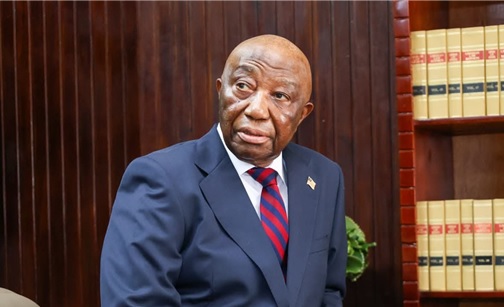
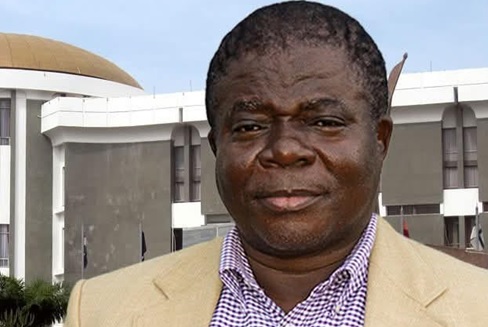
MONROVIA – Following the submission of President Joseph Nyuma Boakai’s Draft National Budget for Fiscal Year 2026 to the Legislature on Friday, November 7, 2025, Mr. Othello S. Tarbah, Director of the Legislative Budget Office (LBO), has urged for principled oversight, strategic coordination, and broad civic engagement in the budget review process. The proposed budget, totaling US$1.211 billion, is structured under the ARREST Agenda and earmarks US$280 million for the Public Sector Investment Plan (PSIP), targeting critical sectors including Agriculture, Roads, Rule of Law, Education, Sanitation, and Tourism.
Highlighting the ambitious fiscal framework, Mr. Tarbah noted that 94 percent of the budget will be sourced domestically, including a US$200 million Mittal Sign-on Bonus. “This budget is not just a financial document; it is a civic contract. Every dollar must speak to national priorities, uplift communities, and reflect the trust placed in public institutions,” he emphasized during a press briefing.
The LBO Director stressed that his office will lead a transparent and rigorous oversight process, ensuring that public spending is program-based, impact-driven, and fully aligned with Liberia’s Medium-Term Expenditure Framework (MTEF). The Legislative Budget Office will also provide technical expertise and analytical support to the Joint Legislative Committee on Ways, Means, Finance and Development Planning, enabling lawmakers to conduct a thorough and evidence-based review of the budget.
In a push for inclusivity, Mr. Tarbah announced plans to convene sectoral hearings that will engage development partners, youth representatives, and grassroots leaders. Special attention, he said, will be given to assessing the sustainability of one-off revenues and verifying the credibility of contingent projections in the proposed fiscal plan.
Mr. Tarbah further revealed that the LBO intends to pilot AI-assisted budget analysis tools, designed to strengthen transparency, monitor performance, and improve institutional readiness. “We are not here to rubber-stamp. We are here to elevate. Our oversight will be strategic, inclusive, and grounded in law,” he stated.
The Director highlighted that the PSIP allocations under the Draft National Budget prioritize long-standing national challenges. Investments in infrastructure, agriculture, and education, he said, are aimed at bolstering productivity, enhancing livelihoods, and promoting equitable growth. Moreover, funding for rule of law and sanitation projects reflects a commitment to improving public services and community welfare across Liberia.
Mr. Tarbah also stressed that the budget process is a unique opportunity for Liberians to participate in shaping the nation’s fiscal priorities. By engaging citizens, civil society organizations, and the media, he said, the LBO aims to foster accountability, civic trust, and collective ownership of public resources.
The LBO Director cautioned against overreliance on temporary or one-off revenues, noting that sustainable and predictable funding remains crucial to ensuring the effectiveness of public programs. The Mittal Sign-on Bonus, while substantial, must be managed prudently to maximize long-term developmental impact and avoid fiscal risks.
Mr. Tarbah underscored the importance of rigorous monitoring and evaluation, stating that every expenditure must be justified by clear objectives and measurable outcomes. He called on legislators and stakeholders to hold government agencies accountable for delivering on the promises embedded in the budget, warning that failure to do so could undermine public confidence in national institutions.
Concluding his remarks, the LBO Director encouraged all Liberians to follow the budget process closely and engage constructively. “The Draft National Budget for Fiscal Year 2026 is a roadmap for Liberia’s development. It demands our vigilance, our insight, and our collective effort to ensure that it translates into tangible benefits for every citizen,” Mr. Tarbah affirmed, reiterating the Legislative Budget Office’s commitment to strategic, transparent, and accountable fiscal oversight.