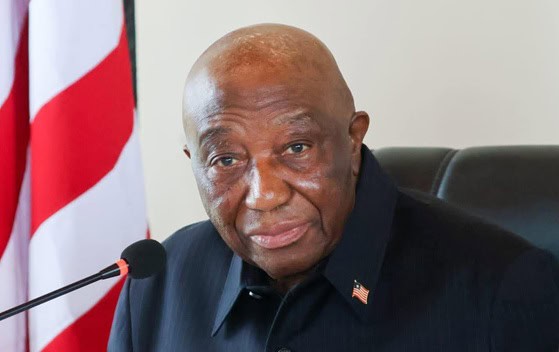
MONROVIA – President Joseph Nyuma Boakai is coming under mounting pressure following the release of Liberia’s latest Extractive Industries Transparency Initiative (LEITI) report, which reveals that the country earned only a small share of the enormous wealth generated from its natural resources. The 16th LEITI report for FY2023 shows that although Liberia exported natural resources valued at approximately US$1.4 billion, the government received just about US$152 million in revenue, representing a mere 10.8 percent return.
The report, which focuses on iron ore, gold, diamonds, rubber, palm oil, and logs, was produced by the LEITI Secretariat under the leadership of Executive Director Jeffrey Yates. It presents a detailed account of export volumes, values, and revenues, while exposing the persistent disconnect between Liberia’s resource wealth and the harsh living conditions endured by most citizens.
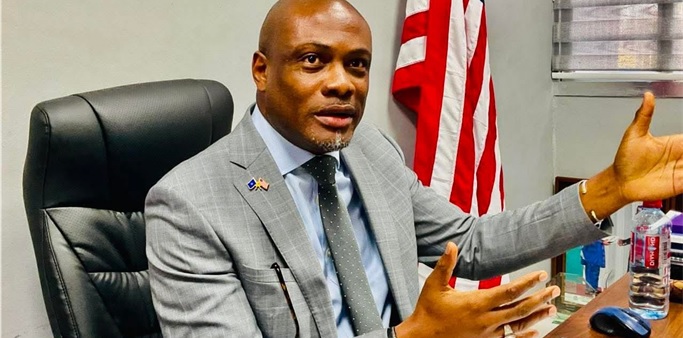
Liberian activist Martin K. N. Kollie described the figures as evidence of a troubling national paradox. “Liberia lives in the middle of the sea, yet we suffer from drought,” Kollie said, arguing that the country’s poverty is not the result of scarcity, but of how natural resources are governed and exploited. He questioned why a resource-rich nation continues to struggle with unemployment, underdevelopment, and inequality.
According to the LEITI report, more than 12,379 kilograms of gold valued at US$660.34 million were exported in just one year, an amount equivalent to more than half of Liberia’s national budget. Yet counties such as Cape Mount, Bong, and River Cess, where much of this gold originates, still lack access to safe drinking water and basic social services.
Iron ore exports generated an additional US$482.7 million from over four million metric tons shipped abroad. Despite this, Kollie pointed out that communities in Nimba, Bong, Bomi, and Grand Bassa remain characterized by substandard housing. “Most of our people in these areas still live in huts and shacks,” he said, underscoring the contrast between resource extraction and local living conditions.
The report further shows that diamond exports earned US$17.91 million, rubber exports accounted for US$103 million, palm oil exports brought in US$84.26 million, and log exports generated US$4.32 million. However, counties such as Grand Kru, Gbarpolu, Lofa, Sinoe, Margibi, and River Gee continue to face electricity shortages, unsafe water sources, and widespread youth unemployment.
Kollie emphasized that Liberia’s national budget of about US$1.2 billion is still lower than the value of natural resources exported in just one year. “Out of approximately US$1.4 billion generated, Liberia only got US$152 million,” he said. “Who really owns the resources then, Liberians or the concession companies?”
He also accused some concession companies of benefiting from extensive tax holidays, credits, and incentives while underreporting export figures. Kollie argued that such arrangements are enabled by political actors who approve concession agreements that mortgage Liberia’s natural wealth. “No country serious about development can settle for this peanut,” he said.
Turning attention to the current administration, Kollie questioned President Boakai’s response to the revelations. He called for a comprehensive review and renegotiation of all concession agreements, a shift toward profit-sharing arrangements, enforcement of penalties for long-standing compliance breaches, and a review of tax incentives that reportedly cost Liberia more than US$300 million annually.
As debate intensifies over Liberia’s economic direction, Kollie said the LEITI report should serve as a wake-up call for both leaders and citizens. “Liberians should not be poor and jobless,” he said, stressing that natural resource mismanagement is robbing current and future generations. “The companies are not paying their fair share. But what is President Boakai doing about this? They need to pay.”