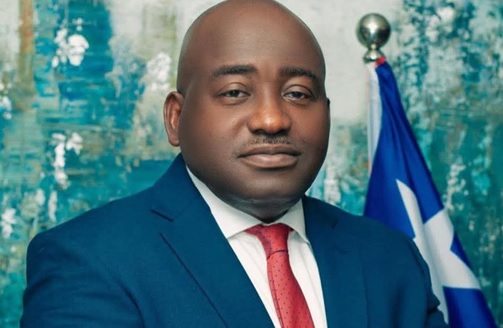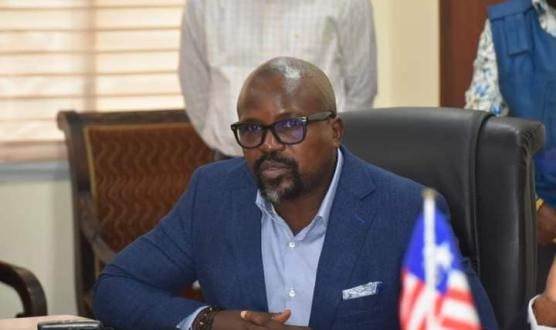
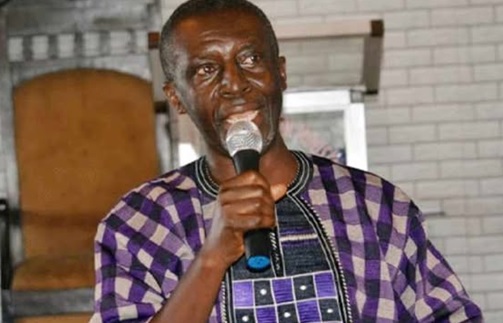
MONROVIA – Prominent human rights advocate and Senior Counsellor-at-Law, Cllr. Tiawan Saye Gongloe, has called on the Liberian Senate to refrain from passing any legislation that could obstruct the establishment of a War and Economic Crimes Court. In an open letter addressed to the Senate on Tuesday, November 11, 2025, Gongloe cautioned lawmakers against actions that could undermine Liberia’s obligations under international law and its commitment to justice for victims of the civil war.
Cllr. Gongloe reminded the Senate of Liberia’s binding international obligations under several treaties, including the Geneva Conventions, the African Charter on Human and Peoples’ Rights, and the Rome Statute of the International Criminal Court. “Liberia must search for and bring before its courts persons alleged to have committed, or to have ordered to be committed, grave breaches,” he wrote, referencing the Geneva Conventions. He added that these legal instruments impose a “moral and legal duty” on Liberia to prevent and punish grave violations of human rights and humanitarian law.
He emphasized that no branch of government, executive, legislative, or judicial, has the authority to contravene these obligations. “These obligations are binding; no organ of government may lawfully contravene them,” Gongloe declared. He further invoked the Vienna Convention on the Law of Treaties, stressing that Liberia cannot invoke internal law as an excuse for failing to perform its international duties.
Quoting Article 27 of the Vienna Convention, Gongloe asserted, “A party may not invoke the provisions of its internal law as justification for its failure to perform a treaty.” He explained that any legislative effort to frustrate Liberia’s international commitments would be “ultra vires and void under Article 2 of the 1986 Constitution,” which affirms the supremacy of law and Liberia’s dedication to international cooperation and justice.
The veteran lawyer, who once served as Solicitor General of Liberia, reminded senators that their constitutional role under Article 34(f) is to approve treaties and ensure their implementation. He argued that to enact any law preventing the establishment of the Hybrid War and Economic Crimes Court would amount to “obstruction of justice” and a direct violation of Liberia’s solemn international commitments. “The Senate’s duty is therefore to give effect to treaties, not to frustrate them,” he stated pointedly.
Gongloe urged the Senate to remain consistent with its own prior resolution endorsing the implementation of the Truth and Reconciliation Commission (TRC) recommendations, including the creation of the War and Economic Crimes Court. He lauded the ongoing efforts of Cllr. Jallah Barboe, head of the War and Economic Crimes Court Secretariat, noting that the Secretariat has been “diligently working with the support of international criminal law experts on draft legislation for submission to the Legislature.”
He called on the Senate and the House of Representatives to ensure that adequate funding is allocated in the 2026 National Budget to support the Secretariat’s work. According to Gongloe, the success of this effort would reflect Liberia’s seriousness about justice and accountability. He stressed that both the War and Economic Crimes Court and a proposed Anti-Corruption Court are essential pillars of national integrity.
Drawing lessons from other African nations, Gongloe warned against relying solely on domestic courts to try war crimes. He cited examples from Uganda, South Sudan, and the Democratic Republic of Congo, where domestic courts have struggled with political interference and weak institutional capacity. “These examples show that credible prosecution of mass atrocities requires hybrid mechanisms, courts that combine national ownership with international expertise and oversight,” he wrote.
The former presidential candidate cautioned that the notion of preserving peace by avoiding accountability is misguided. “Peace without justice is the peace of the graveyard,” he declared, invoking the examples of Sierra Leone and Rwanda, where post-war tribunals were central to national healing. He argued that Liberia’s continued failure to deliver justice sixteen years after the TRC’s report has deepened the wounds of victims and emboldened perpetrators.
“Honourable Senators, every public official’s oath of office binds him or her to uphold and defend the Constitution and the laws of the Republic, including its international obligations,” Gongloe wrote in a direct appeal to lawmakers’ sense of duty. He warned that passing any legislation obstructing accountability for war crimes would “make the Senate complicit in the perpetuation of impunity and a betrayal of the Republic’s founding ideals.”
In his closing remarks, Gongloe called on senators to seize the moment to restore Liberia’s moral credibility. “Let this Legislature be remembered not for shielding the guilty but for restoring Liberia’s moral credibility before its people and the world,” he urged. He insisted that true peace and development can only be achieved through justice and accountability, not avoidance or political expediency.
“No Constitution bars a nation from doing what is right,” Gongloe concluded powerfully. “No law can silence the cries of the innocent. To obstruct justice is to betray the Republic.” His letter, addressed with “profound respect,” serves as a moral and legal reminder that Liberia’s path to national healing lies not in silence, but in courage and accountability.