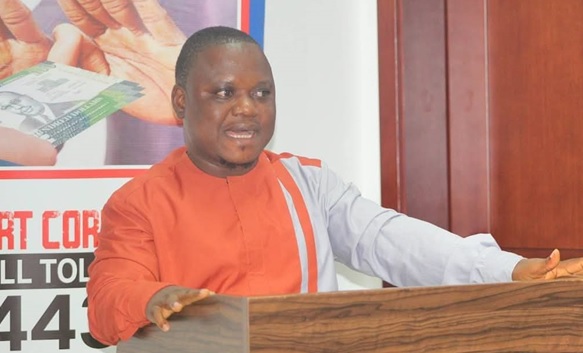
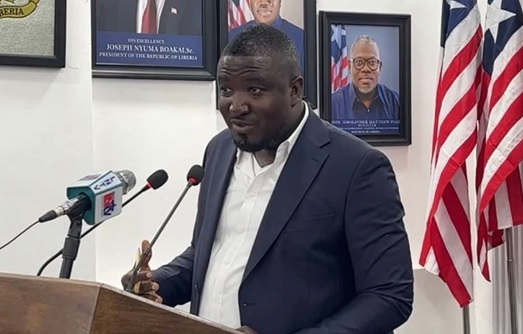
MONROVIA – Deputy Information Minister Daniel Sando has reacted sharply to civil society criticism regarding the construction of a Presidential Villa in Foya District, Lofa County, linked to President Joseph Nyuma Boakai, Sr. Appearing on Punch FM on Monday, September 29, 2025, Sando dismissed the criticism as politically motivated and misguided. “We expect that when Mr. Jarwolo speaks, his utterance should represent him,” Sando said. He added that the criticism attempts to draw a false equivalence, suggesting that because former President Weah built a condominium, President Boakai is now building a villa. “That is evil of Mr. Jarwolo,” he said. Sando emphasized that the construction is part of a broader Mano River Union project, which would have proceeded regardless of the sitting president.
The remarks come in response to Eddie D. Jarwolo, Executive Director of NAYMOTE-Liberia, who raised concerns over the $10 million villa, questioning why such vast funds are spent on personal prestige in a district where residents lack basic services and economic opportunities. According to Jarwolo, the construction is being undertaken by MUSNS Groups Incorporated, led by Joe Mulbah, a close associate of the President, with Edward Yamba serving as Chief Engineer. Construction began on September 10, 2024, but the source of financing remains unclear, and the involvement of the Public Procurement and Concessions Commission (PPCC) is uncertain. State Security now guards the site, raising further questions about transparency. Jarwolo argued that the money could have been used to establish a factory or other economic project to directly benefit residents of Lofa County.
This clash between government defense and civil society critique highlights a broader debate over governance, accountability, and the use of public resources in Liberia. While officials defend the villa as part of a regional initiative, citizens are left questioning the prioritization of funds in a nation still struggling with gaps in healthcare, education, and infrastructure.
Sando’s framing of the villa as a Mano River Union initiative does little to address public concerns about financial transparency, oversight, or tangible benefits to local residents. Without clear disclosure of funding sources and governance mechanisms, skepticism is likely to persist. The involvement of State Security, while presented as protection, only intensifies perceptions of secrecy and restricts accessibility to information.
The wider implications extend beyond Foya District. Leadership decisions in Liberia are scrutinized for ethical, social, and economic impact. Projects like this villa, regardless of political or regional justification, send signals to the public about government priorities. Civil society advocates argue that true leadership is measured by service, accountability, and equitable distribution of resources, rather than personal prestige or politically convenient symbolism.