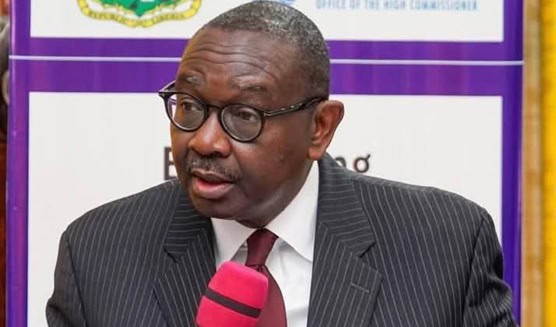

MONROVIA – Former Education Minister George Werner has sounded a stark warning that Liberia risks repeating the same pattern of “growth without development” that marked the Tubman era, cautioning that fiscal achievements may mask persistent human development gaps. In a recent commentary, Werner reflected on Liberia’s historical economic booms and drew parallels with the present, arguing that national progress remains largely invisible to ordinary citizens.
“There was a time in Liberian history when the economy was said to be booming. Rubber production was up, iron ore exports were strong, foreign investment was pouring in, and the capital city was expanding with new buildings and paved roads,” Werner wrote. “On paper, Liberia’s growth was the envy of the region. But for most Liberians, especially in rural areas, the boom was something they heard about, not something they felt.”
Werner contrasted the experiences of foreign investors with those of ordinary Liberians, noting that roads, schools, and health facilities remained underdeveloped despite high export earnings. “Economists later called it what Liberians felt all along, growth without development: numbers rising, people standing still,” he added, underscoring that the warning remains relevant today.
Citing Liberia’s recent Millennium Challenge Corporation (MCC) FY 2026 Scorecard, Werner acknowledged some governance successes. Liberia passed 12 of 22 indicators, including Fiscal Policy, Land Rights, Trade Policy, Gender in the Economy, and Access to Credit. “These are no small achievements, they show that Liberia can meet tough governance standards when it tries,” Werner observed.
However, Werner warned that the Draft FY 2026 National Budget presents a starkly different picture. Valued at approximately US$1.2 billion, it relies heavily on a one-off US$200 million “signature bonus” from a mining concession, a funding source he described as unsustainable. Meanwhile, the General Auditing Commission reported US$678 million in unsupported domestic-debt claims, nearly 88 percent of which lacked documentation. Werner argued that while Liberia may appear disciplined on paper, the fiscal foundation remains fragile.
Highlighting the human toll, Werner pointed to daily struggles faced by Liberians. In Bomi County, Sona still walks nearly a mile for water; in Buchanan, young teacher Wleemongar instructs forty students with half a stick of chalk; and in Greenville, market woman Dehkonti battles poor roads that disrupt her supply chain each rainy season. “Liberia passes fiscal indicators but fails the human ones,” Werner noted, citing UNICEF and World Bank data on high maternal mortality, school absenteeism, and youth unemployment.
Werner criticized the government’s self-styled moniker, “The Rescue Mission,” arguing that its promise rings hollow if the FY 2026 Budget prioritizes debt servicing over basic services. “Rescue should mean clean water in Sona’s village, a steady salary for Wleemongar, and passable roads for Dehkonti’s business,” he wrote, stressing the need for tangible results beyond fiscal metrics.
Drawing parallels with President Tubman’s era, Werner warned that Liberia risks repeating historical mistakes. “Tubman’s Liberia grew without developing. The danger today is that we may repeat that pattern, this time under global applause for passing indicators instead of delivering results,” he wrote.
Werner concluded that the challenge for the current government is to bridge the gap between scorecards and service delivery. “Until ordinary Liberians begin to feel what the numbers promise, we will remain caught in the same paradox, a country celebrated for progress, yet haunted by its past,” he said.
George Kronnisanyon Werner, writing from Monrovia, emphasized that genuine development must translate into visible improvements in citizens’ lives. “That, in every sense, is growth without development,” he concluded, urging leaders to prioritize tangible impact over accolades and statistics.