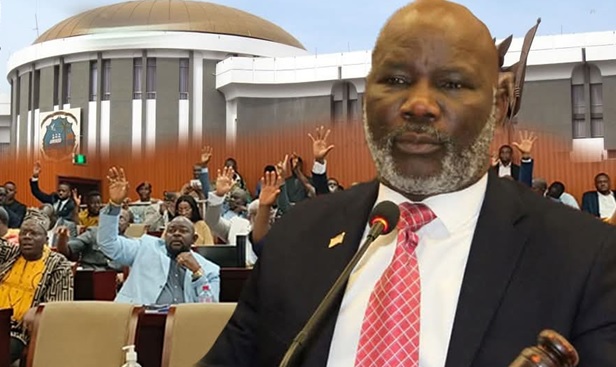
MONROVIA – The House of Representatives has taken a major step toward overhauling Liberia’s decades-old framework for managing state-owned enterprises (SOEs), voting on Tuesday, November 25, 2025, to repeal Article 11 of the Interim National Assembly Decree No. 8 of 1985, the law that created the Bureau of State Enterprises Authority, commonly known as SEAL. The move sets the stage for the establishment of a new State-Owned Enterprises Authority of Liberia, marking what lawmakers describe as a shift toward modern governance and accountability.
The decision came during the 12th Day Sitting of the 3rd Quarter of the 2nd Session, after the House received a detailed report from its Joint Committee on State Enterprises & Autonomous Agencies, Judiciary, and Good Governance & Government Reform. The Committee had been reviewing a proposed Act submitted by the Chief Executive, which calls for the repeal of the 40-year-old SEAL law and the creation of a more efficient agency to supervise SOEs across the country.
Lawmakers said the proposal reflects a national effort to restructure SOE administration amid mounting concerns over weak oversight, poor financial management, and the lingering challenges associated with outdated legal and operational frameworks. The Chief Executive’s submission argues that the current governance structure, designed under military rule in 1985, no longer aligns with the country’s modern economic environment or its public-sector reform agenda.
Following weeks of scrutiny, the Joint Committee endorsed the proposed restructuring, saying the updated law would amend Title 30 of the Public Authorities Law and replace obsolete provisions that have hindered effective SOE supervision. The Committee stressed that the reform is critical to improving performance, transparency, and accountability within the country’s most strategic state-owned entities, many of which continue to face operational and financial difficulties.
In its final report to plenary, the Committee stated that after thoroughly reviewing the proposed repeal and the new SOE framework, the Act should be approved without delay. It described the new legislation as essential to aligning Liberia’s SOE governance with international best practices and providing a more coherent structure for monitoring state-run institutions.
Plenary adopted the Committee’s recommendation following a motion by Lofa County District #4 Representative Hon. Gizzie Kollince, clearing the way for the bill to move to the next phase of the legislative process. Lawmakers who supported the decision said modernizing SOE governance is long overdue and must be treated as a national priority.
During the session, several representatives privately expressed that the SEAL framework has outlived its usefulness, noting that many state-owned enterprises have operated with minimal oversight for years. The repeal, they believe, could be an important first step toward curbing systemic inefficiencies and strengthening public financial management, especially as Liberia continues to grapple with revenue challenges and stalled economic reforms.
The House’s approval also signals support for broader government efforts to dismantle outdated legal instruments dating back to the military era, many of which remain embedded in the current governance structure. Lawmakers say the proposed State-Owned Enterprises Authority of Liberia will be equipped with stronger regulatory and supervisory powers, enabling it to enforce standards, monitor compliance, and help improve service delivery across the SOE sector.
As required by legislative procedure, the Speaker has instructed the Secretariat to prepare and forward the engrossed bill to the Liberian Senate for concurrence. If the Senate affirms the decision, the Act will proceed to the President for signature, officially retiring the SEAL law and ushering in a new chapter in Liberia’s state enterprise governance.
The outcome of this reform now rests with the upper chamber, but members of the House say the message is clear: Liberia cannot continue to rely on structures crafted in 1985 to manage institutions that underpin its economic stability and national development.