MARGIBI COUNTY, LIBERIA – The 44th meeting of the GIABA Technical and Plenary Commission opened Thursday at the Farmington Hotel in Margibi County, drawing regional dignitaries, technical experts, and anti–money laundering specialists who gathered to assess West Africa’s progress in combating transnational financial crimes. The ceremony was marked by strong affirmations of political will, renewed commitments to regional cooperation, and a call for deeper reforms across member states.
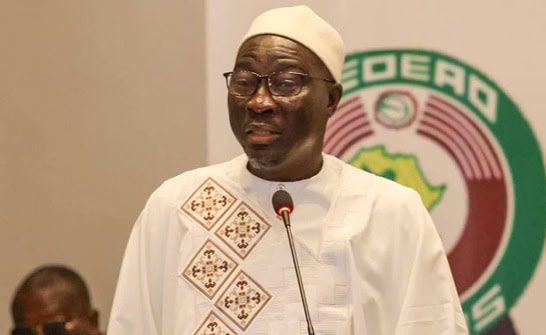
Edwin Harris, Director-General of the Inter-Governmental Action Group Against Money Laundering in West Africa (GIABA), delivered the keynote address, expressing profound gratitude to Liberia for hosting the high-profile event. “It is with immense gratitude and profound honor I mount this podium and wholeheartedly welcome you all,” Harris said as he acknowledged the presence of ministers, heads of law enforcement, central bank representatives, and international partners.
Harris praised Liberia’s hospitality and highlighted President Joseph Nyuma Boakai’s support for GIABA’s mission. “Let me begin by extending, on behalf of the GIABA Secretariat, our heartfelt gratitude to His Excellency President Joseph Nyemah Boakai, the Government, and the good people of Liberia for their gracious hospitality,” he said, noting that Liberia’s leadership demonstrated “the true spirit of ECOWAS solidarity.”
Reflecting on GIABA’s 25-year history, Harris told delegates that the institution has made “significant strides” in helping West African states strengthen financial governance and curb organized crime. He said the journey has been long but transformative, marked by regional efforts to defend financial integrity against threats such as money laundering, terrorist financing, corruption, and drug trafficking.
According to Harris, the evolution of regional cooperation has been essential in promoting governance systems that prioritize rule of law over illicit enrichment. “Efforts are being made to have a financial system known for its integrity, a governance system that places the rule of law over profit and the acquisition of ill-gotten wealth,” he said.
He underscored GIABA’s role as ECOWAS’ specialized institution responsible for safeguarding the region’s financial systems. Through mutual evaluations, technical support, and capacity strengthening, Harris explained, GIABA continues to help member states align with global anti–money laundering and counter-terrorist financing (AML/CFT) standards.
Harris highlighted major achievements under his leadership since August 2022, emphasizing the removal of several member states from the Financial Action Task Force (FATF) grey list. “I am pleased to report that all our Members on the FATF grey list have been removed with the exception of Cote d’Ivoire,” he said, praising Nigeria and Burkina Faso for what he called “the demonstration of strong political will” that led to their removal from the list in October 2025.
He further announced that Nigeria has become the second GIABA member to earn guest membership at FATF, following Senegal. Harris described this as a testament to regional progress, but insisted that full joint membership is now necessary. “We strongly believe that it is time to have joint membership as an FSRB,” he said, arguing that West Africa’s population of over 400 million and its economic significance justify such a request.
Harris disclosed that the applications of three non-ECOWAS AES countries seeking GIABA affiliation were approved by the GIABA Ministerial Committee in July 2025. These applications, he said, will be forwarded to the ECOWAS Council of Ministers for further consideration later this year.
Turning to internal reforms, Harris commended member states for efforts underway as part of the third round of mutual evaluations. He urged governments to deepen domestic cooperation and equip relevant authorities with the tools needed to combat financial crimes. “National governments carry the greater responsibilities to ensure that competent authorities are resourced,” he warned.
Harris stressed the importance of asset recovery as a central pillar of the region’s anti-corruption efforts. “Denying access to the proceeds of crime is one surest way to take the profit out of crime,” he said, calling for stronger cross-border collaboration to trace and seize illicit wealth.
During the plenary, delegates are expected to review a wide slate of documents, including mutual evaluation follow-ups, typologies, FATF outcomes, and reports from GIABA’s technical working groups. Harris expressed optimism that the deliberations will “produce actionable outcomes” that strengthen the region’s AML/CFT architecture.
In concluding his address, Harris extended appreciation to the people of Liberia and the management of Farmington Hotel for their cooperation and logistical support. “I wish you all fruitful deliberations and a pleasant stay in Liberia,” he said.
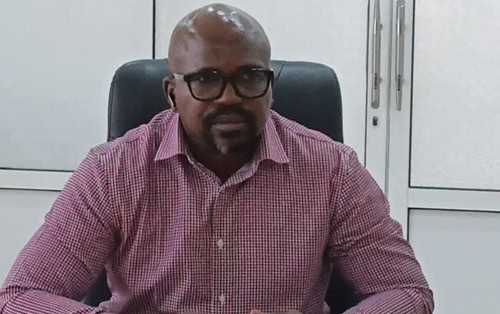
Earlier, Mohamed N. Nasser, Officer-in-Charge of the Financial Intelligence Agency of Liberia and the country’s GIABA National Correspondent, delivered welcoming remarks on behalf of the Liberian government. Nasser underscored the significance of the gathering and Liberia’s commitment to the GIABA framework.
“On behalf of the Financial Intelligence Agency of the Republic of Liberia, it is my distinct honor to welcome you to this important 44th GIABA Plenary,” Nasser said. He praised the delegates for the expertise and dedication they bring to the fight against financial crime, describing GIABA as “a pillar of coordination, knowledge-sharing, and technical excellence across West Africa.”
Nasser emphasized Liberia’s continued commitment to global AML/CFT standards. “Liberia remains steadfast in its commitment to GIABA and to the Financial Action Task Force framework,” he said. He stressed that success depends on “consistent technical strengthening, robust cooperation, and transparent compliance.”
He explained that the plenary serves as a critical forum for examining progress, confronting challenges, and building stronger mechanisms to detect and deter illicit financial activity. “Whether through enhanced information-sharing, improved risk assessments, stronger supervisory mechanisms, or targeted capacity-building, the work we do here will continue to shape the resilience of our national systems,” Nasser said.
The FIA official noted that the engagements are crucial to Liberia’s ongoing reforms. He emphasized the importance of peer support and collaborative learning within the GIABA community, stressing that Liberia remains an active and committed partner.
Nasser concluded by reaffirming Liberia’s commitment to the collective fight. “We are especially encouraged by the spirit of collaboration that defines the GIABA family,” he said. “Let me once again welcome each of you. I wish us productive discussions and a successful engagement.”
The 44th GIABA Plenary will continue through the weekend, with high-level sessions expected to produce binding decisions that shape the region’s financial governance landscape over the coming year.