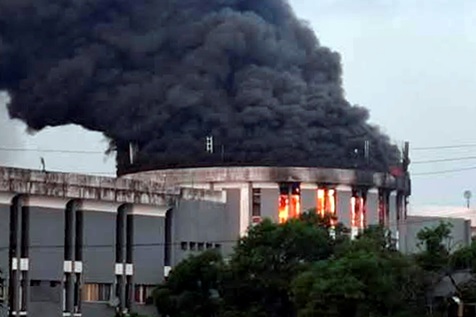
MONROVIA — A pivotal witness in the ongoing trial over the December 2024 arson attack on the Capitol delivered explosive testimony on Wednesday, December 10, 2025, directly implicating Amos Koffa, Dixon Seebo, and several other individuals in a coordinated plot to set fire to the national legislature.
The testimony took place during the 26th day of the November Term jury sitting at the Temple of Justice, where attention centered on a controversial audio recording allegedly containing incriminating evidence of the conspiracy. The defense team immediately challenged the credibility of the witness and the recording, arguing that the witness lacked the necessary qualifications in voice identification and that the recording itself constituted hearsay.
Defense counsel highlighted that even the Liberia National Police chief investigator, involved in the case, had admitted he was not trained in voice analysis. They argued that this undermined the validity of any conclusions drawn from the recording.
The court, however, overruled the defense objection, allowing the witness to testify based on his active participation in the investigation and the validation of the audio through official channels, including the National Security Agency. The court noted that while questions regarding the chain of custody were raised, the content of the recording remained relevant and admissible for consideration.
During cross-examination, the defense team raised concerns over a Special Investigation Report submitted by the state. They argued that the report was introduced late and had not been disclosed during the discovery process, claiming that this hindered their ability to fully prepare their case.
The defense requested permission from the court to photocopy the report to review it with their clients and ensure proper cross-examination. They stressed that the request was made in good faith and was essential to securing a fair trial and understanding the allegations in their entirety.
Defense lawyers repeatedly emphasized that the witness was not an expert in voice analysis but rather a criminal investigator, making him unqualified to identify the voices contained in the audio recording. They argued that relying on such testimony could mislead the jury and compromise the integrity of the trial.
The defense further contended that the audio recording lacked credibility and should be excluded from evidence entirely. They asserted that admitting the recording without proper verification could prejudice the case against the defendants.
While the court did not make a final ruling on the recording’s admissibility during Wednesday’s session, it officially noted the defense’s exceptions and objections for the record.
The witness’s statements have intensified scrutiny on the alleged roles of Koffa, Seebo, and others in orchestrating the Capitol attack. The testimony is expected to play a central role as the trial proceeds, particularly in establishing a potential conspiracy network.
The court proceedings highlighted the tension between evidentiary rules and investigative practices, especially in high-profile cases where digital and audio evidence play a critical role in supporting the state’s allegations.
Prosecutors maintained that the witness’s testimony, corroborated by the audio recording, is key to proving premeditation and coordination in the December 2024 arson attack. They argued that the evidence shows a clear connection between the accused and the planning of the incident.
Defense attorneys countered by emphasizing that procedural fairness must not be compromised. They argued that any evidence introduced late or without proper verification undermines the defendants’ constitutional right to a fair trial.
The trial is set to continue with further examination of the witness and additional evidence, as both the prosecution and defense prepare for critical arguments on the credibility of the audio recording and its role in linking the accused to the Capitol arson conspiracy.
Wednesday’s proceedings underscored the complex legal and technical challenges facing the court as it navigates a case of national significance, with the outcomes likely to set precedents for future criminal trials involving digital and audio evidence in Liberia.