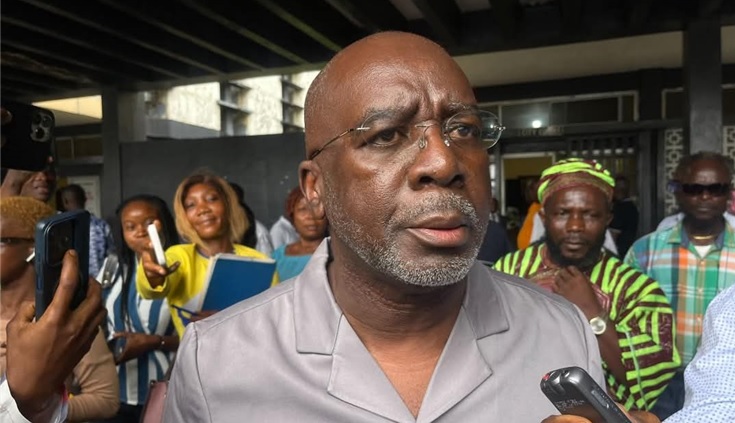

MONROVIA – Labor Minister Cllr. Cooper W. Kruah has launched an immediate investigation into claims of labor rights violations at the China Road and Bridge Corporation’s (CRBC) overhead bridges construction project in central Monrovia. The move follows a troubling exposé by Spoon Network, which featured workers alleging exploitation, lack of safety gear, unpaid overtime, and undocumented cash payments. The revelations have sparked widespread public concern and renewed scrutiny of foreign companies operating in Liberia’s labor sector.
During a surprise visit to the construction site on Monday, November 17, 2025, Minister Kruah discovered multiple breaches of the Decent Work Act, including workers performing high-risk tasks without helmets, gloves, safety boots, or reflective vests. Several craftsmen told the minister that intimidation was common and that complaints to supervisors were often dismissed. Some expressed fear of losing their jobs if they questioned management over pay or safety concerns.
Workers recounted their frustrations directly to the minister in plain terms. “We don’t receive pay slips. We are paid hand to hand without knowing how much we actually earn. We work overtime without pay,” one of the craftsmen said. Their testimonies echoed the findings of the Spoon Network report, which documented long hours, hazardous conditions, and the absence of formal employment records.
Minister Kruah immediately ordered CRBC to correct the violations by providing adequate protective gear, compensating workers for all unpaid overtime, and issuing pay slips for every salary payment. He sternly reminded management that Liberia’s labor laws apply equally to all companies, foreign and domestic. While acknowledging CRBC’s contributions to Liberia’s infrastructure development, he warned that economic investment cannot come at the cost of workers’ dignity and safety.
The controversy surrounding CRBC has revived long-standing concerns about poor labor practices in concession areas across Liberia. Over the years, workers in sectors including mining, rubber, oil palm, and forestry have frequently accused concessionaires of abuse, underpayment, and harsh working conditions. Reports in Liberian media have highlighted cases at several major concessions, such as Firestone Liberia, where tappers have complained of excessive quotas; ArcelorMittal Liberia, where contract workers have repeatedly protested for better wages; Golden Veroleum Liberia (GVL), which has faced allegations of intimidation and unsafe conditions; and the defunct Sime Darby Plantation, where employees claimed poor housing and inadequate medical services.
These recurring cases suggest systemic gaps in labor oversight, particularly in rural concession hubs where monitoring is weaker and workers fear retaliation. Civil society organizations have long argued that Liberia’s labor violations persist not only because of the actions of foreign companies but also because successive governments have not enforced compliance consistently across the board. The CRBC case, occurring in the heart of Monrovia, has brought visibility to issues often faced quietly by workers in remote counties such as Nimba, Grand Bassa, Sinoe, and Margibi.
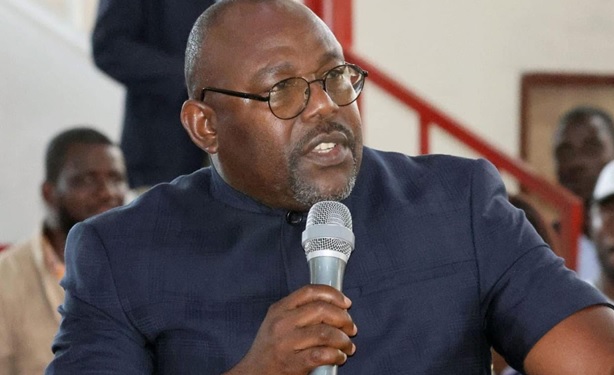
Minister Kruah used the site visit to assure workers that the Ministry of Labor stands ready to intervene whenever violations are reported. “When you have issues, call us, we will come. When workers have issues, they should also call us. We are here to maintain peace and protect everyone’s rights,” he said. His comments reflected an attempt to encourage both employers and employees to rely on the ministry as a dispute-resolution body rather than allowing grievances to escalate into protests or work stoppages.
The ministry has confirmed that its investigation into CRBC is ongoing and that findings will determine the government’s next steps in regulating foreign contractors. Officials say the probe is part of a broader push to tighten enforcement of the Decent Work Act and reduce impunity among companies that violate labor laws. If the allegations are substantiated, CRBC could face fines, sanctions, or mandatory corrective measures to ensure full compliance.
The situation has also underscored the rising importance of investigative journalism in Liberia. The Spoon Network report not only exposed the alleged abuses but has now triggered government action, marking another instance in which media scrutiny has forced public accountability. Similar exposés in the past, particularly in the mining and agricultural concession sectors, have led to wage investigations, management reshuffles, and in some cases, suspension of operations.
As the investigation continues, labor rights advocates say the CRBC case could become a turning point if the government uses it to send a clear message to all concessionaires. Many argue that strengthening worker protections should be a national priority, especially as Liberia continues to depend heavily on foreign investment. For the workers at the overhead bridge project, however, the hope is simple: safer conditions, fair wages, and respect for the law.
Whether the CRBC probe leads to meaningful reforms across the concession sector remains to be seen, but for now, the government’s swift intervention signals a renewed willingness to confront long-ignored labor abuses and a growing pressure on employers to uphold the rights of those whose hands build Liberia’s future.