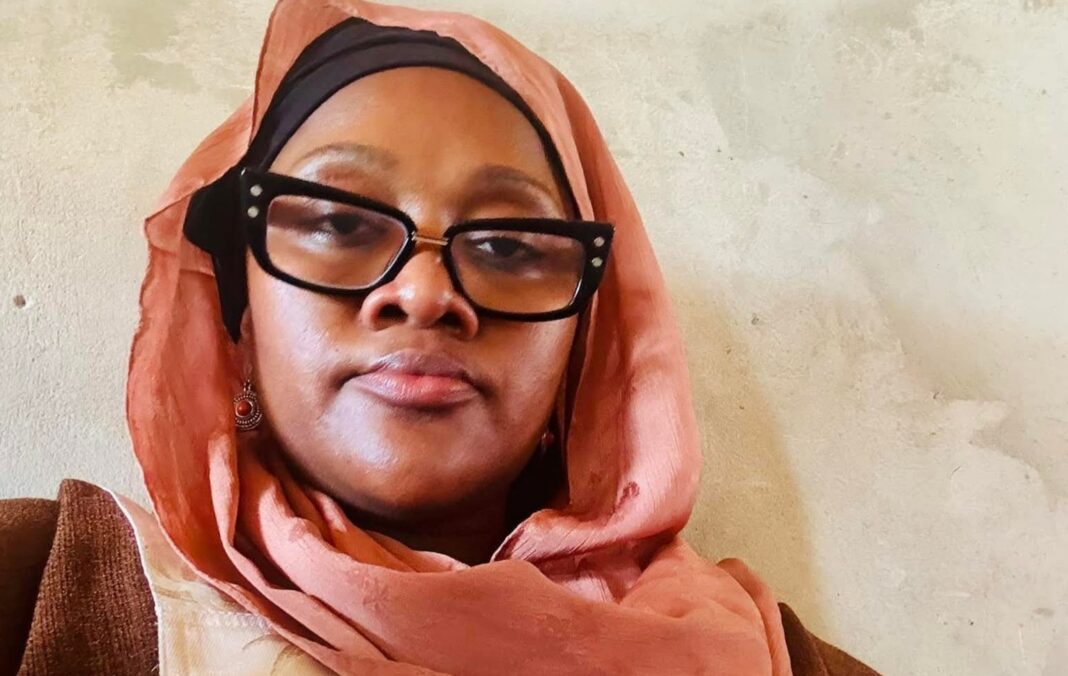
MONROVIA – Atty. Kula Bonah Nyei Fofana, Press Secretary to President Joseph Nyuma Boakai, is facing intense public criticism and outrage following her defense of the controversial “National Fulani Security” group. In a personal opinion published February 17, 2026, on the “Fulani Influence” Facebook page, Fofana sought to calm fears over the group’s activities, but her comments instead triggered a nationwide debate that threatens to overshadow her role in the government and fuel questions about her loyalty to national security.
Fofana, a stalwart of the ruling Unity Party and an active member of Liberia’s Muslim community, began her write-up with a disclaimer: “This is a personal opinion and does not reflect my office or portfolio.” She further stated, “I do not support any military or paramilitary organization whose purpose is to cause violence, intimidation, or destabilization in any form. The preservation of peace, national unity, and lawful order must remain paramount.”
Yet critics argue that the disclaimer did little to separate her personal views from her powerful public office. As Press Secretary, Fofana is one of the most visible voices of the administration, and her commentary on a sensitive national security matter has raised concerns about internal policy alignment within government.
In her analysis titled “Releasing the Accelerator a Bit: The Fulani Security Saga,” Fofana urged Liberians to resist panic. “Before judgment, facts must come before fear,” she wrote, emphasizing that public reaction to a viral video showing uniformed members of the group had been emotional and, in some cases, speculative.
She insisted the organization “did not emerge overnight” and has operated for years during major Islamic gatherings such as Ramadan prayers and Eid celebrations. According to her, the group has often worked alongside state security to maintain order during large religious events, including visits by international Islamic scholars.
Drawing from personal experience, Fofana stated that during high-profile visits by clerics such as Mufti Menk, the group helped manage overwhelming crowds. She described instances in 2018 and again in November 2024 where coordination prevented chaos and possible injuries when excitement nearly triggered stampedes.
Addressing allegations of militarism, Fofana asserted, “To the best of our understanding there has been no record of armed activity, no documented rebel affiliation, no history of political violence, and no organized intimidation campaigns linked to them.” She characterized members as ordinary young people, students, traders, and workers, who assemble periodically for religious events.
In a controversial comparison, she likened the Fulani group’s activities to Christian ushers and fellowship security teams that manage crowds during crusades and conventions. “The difference here appears not so much in the function but in the perception created by the name and structure,” she argued.
However, her call for restraint was met with fierce backlash. Social commentator Dominic Jayjay Musa openly challenged her position, suggesting her allegiance was compromised. “Even before coming to the defense of your Fulani family, we all knew what side you would have taken,” Musa wrote, accusing her of undermining government authority.
Musa went further, declaring, “It’s better for me to be called a xenophobic person today for defending my country and its people than for my entire generation to be wiped out.” He questioned whether a senior government official should publicly criticize or appear to question state security actions, and bluntly called for her resignation.
Another critic, Lemuel Sherman, warned on social media that “The Fulani Security is a test at our front door and if we let it be Liberia is sitting on a time bomb.” Such statements reflect growing unease among segments of the population who view any organized ethnic-based security structure as a potential threat.
Despite the mounting criticism, Fofana maintained that the real issue is perception and structure, not intent. She suggested proper registration, clear operational guidelines, and integration into community policing frameworks rather than outright condemnation. “Guidance is better than rejection,” she emphasized.
She also framed the controversy as a broader lesson for authorities. Rather than “accelerating toward confrontation,” she urged the Ministry of Justice and law enforcement agencies to provide oversight and legal clarity. “Community volunteerism should not automatically be criminalized if it can be properly regulated,” she argued.
In her closing reflection, Fofana invoked Pastor Martin Niemöller’s famous warning about silence in the face of injustice, signaling her belief that unchecked public hysteria could marginalize an entire community. “The question should not merely be whether they should exist, but how they should exist lawfully,” she wrote.
Now, the focus has shifted squarely onto Fofana herself. Is she exercising her constitutional right as a citizen to express a personal view, or has she crossed the delicate line that separates public duty from private conviction? As the Fulani security debate intensifies, the political cost of her intervention may eventually prove far greater than the controversy she sought to calm.