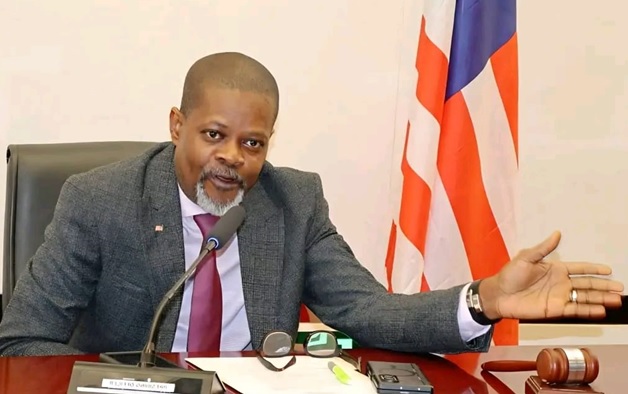
CAPITOL HILL – Senator Abe Darius Dillon has strongly refuted assertions by Representative Musa Bility that the Liberian Senate is acting in “constitutional error” by holding separate hearings on the national budget. In a detailed statement, Dillon described Bility’s claim as legally unfounded and misleading, stressing that the Constitution grants the Senate full authority to review, amend, and approve the budget after it has passed the House of Representatives.
“While the Constitution requires budget legislation to originate in the House, it does not limit the Senate’s role in conducting hearings or exercising its concurrence powers,” Dillon said. He emphasized that the Senate cannot pass the budget before the House acts, but it retains the authority to prepare for its review and propose amendments. Dillon explained that any differences between the House and Senate versions are resolved through a conference committee, producing a single harmonized budget for submission to the Executive.
The clarification comes amid a formal petition by Rep. Musa Hassan Bility of Nimba County District 7, who has asked the House of Representatives to intervene in what he describes as an unconstitutional move by the Senate. In his communication to Speaker Richard K. Koon, Bility cited Article 34(d)(i) of the 1986 Constitution, which gives the House exclusive authority to originate fiscal legislation, including the national budget.
Rep. Bility raised three key concerns in his petition. He argued that the Senate is assuming powers not granted by the Constitution, that its hearings are procedurally improper because the House has not yet reviewed the draft budget, and that the move risks creating institutional conflict and legislative disorder. He urged the House to request that the Senate suspend its hearings until the House fulfills its constitutional mandate.
Senator Dillon countered Bility’s assertions by highlighting the distinct powers assigned to each chamber under Liberia’s constitutional framework. “The Senate’s hearings are part of our constitutional role to ensure proper review and concurrence,” Dillon said. “These hearings do not infringe on the House’s exclusive power to originate the budget; they merely prepare the Senate to exercise its statutory functions efficiently.”
Dillon also referenced past experiences where similar claims were made against his positions. He recalled that during last year’s House speakership saga, legal commentator Cllr. Garrison Yealue opposed Dillon’s interpretation of procedural violations in the House. “By then, Cllr. Yealue suggested that I was wrong, insisting that the House’s actions were legal and constitutional,” Dillon said.
He further noted that the Supreme Court ultimately confirmed his position, declaring the House’s actions unconstitutional and leading to the resignation of the former Speaker. Dillon recounted the episode with a touch of humor, saying, “Cllr. Yealue went cold since then! He na start countering me again!! I jeh laugh.”
The dispute between Dillon and Bility underscores broader tensions over constitutional interpretation and legislative procedure in Liberia. Analysts say that such disagreements can impact the timely passage of the national budget, potentially affecting government operations and public service delivery.
The House of Representatives is expected to deliberate on Bility’s communication in the coming days. Lawmakers face the task of balancing constitutional mandates with the practical need to ensure that budget review and approval processes are completed on schedule.
Senator Dillon’s response reaffirms the Senate’s determination to exercise its constitutional oversight responsibilities. As he concluded, “Our duty is to safeguard the legislative process while ensuring that the budget reflects careful scrutiny, accountability, and the interests of all Liberians.”