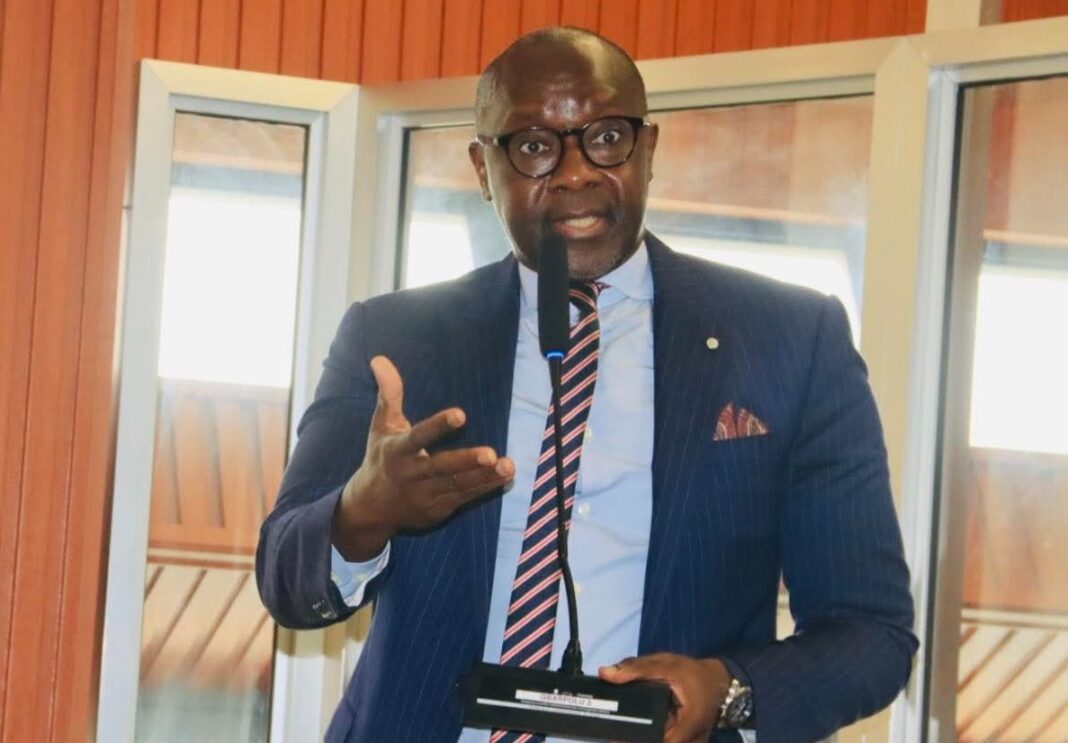
MONROVIA – What began as a Senate intervention by Gbarpolu County Senator Amara Mohammed Konneh has now spiraled into a heated national debate, with critics accusing him of fueling tribal politics after he alleged that checkpoints are disproportionately targeting the Mandigo ethnic group.
During Senate plenary on February 18, 2026, Konneh highlighted what he described as the economic strain and harassment caused by security checkpoints, particularly affecting his ethnic group. In a subsequent Facebook post, he reiterated his concern, stating that his remarks were intended to address the “economic impact and harassment caused by checkpoints, especially targeting my ethnic group,” and backed calls for the Senate Defense, Security, and Intelligence Committee to invite the Ministry of Justice and the Fulani Security Company for questioning.
However, his comments quickly drew mixed reactions, including a direct response from social commentator Paul Kanneh. In a Facebook post addressed to the senator, Kanneh wrote: “Senator Konneh, you are very correct. Indeed your kinsmen are often harassed at check points. But here is one main reason I know. A lot of your kinsmen with no citizenship right troop into Liberia daily. Sometimes, they are aided by some of you on claims they are your siblings.”
Kanneh’s remarks both acknowledged and challenged Konneh’s position. While agreeing that Mandigo individuals face harassment, he attributed the heightened scrutiny to alleged cross-border migration and documentation concerns. His statement shifted the debate from ethnic profiling to questions of citizenship verification and immigration enforcement.
Journalist Charles Yates, who took to his official Facebook page with a blunt rebuttal. “Guinea Mandingoes are not Liberians and the security people have all the right to check them,” Yates wrote. “We know our Liberia Mandingo people. Let the Senator stop!”
Yates went further, directly challenging Konneh’s framing of the issue. “I beg to differ Senator Amara Konneh on your assertion that your ‘tribal people’ are being targeted by the national security at the various checkpoints. This statement from you is very childish, tribalistic, lacks leadership and foolish! I am extremely disappointed in you, Senator Konneh,” he posted.
In a critique, Yates questioned whether Konneh sees himself as a national legislator or merely a tribal representative. “Are you senator for your tribal people? Did only Mandingo people vote for you? Why you love to push tribal politics in Liberia?” he asked, warning that such rhetoric could damage the Senator’s broader political ambitions.
Yates also argued that harassment at checkpoints is not unique to any single ethnic group. “Do you know how many ordinary Liberians from different tribal groups are harassed on a daily basis?” he wrote, emphasizing that national leaders must be cautious not to inflame ethnic divisions while addressing security concerns.
The journalist further linked the controversy to growing public anxiety over the formation of Islamic or Fulani security groups, suggesting that statements framed along ethnic lines only deepen suspicion. “We don’t have no Mandingo senator in Liberia. We have senators that represent counties,” Yates asserted, reminding Konneh that he represents Gbarpolu County and the Republic at large.
Konneh’s supporters, however, argue that raising concerns about disproportionate impact does not equate to tribalism but rather reflects responsible advocacy. They maintain that if certain communities are being unfairly targeted, it is the duty of lawmakers to speak out and demand oversight.