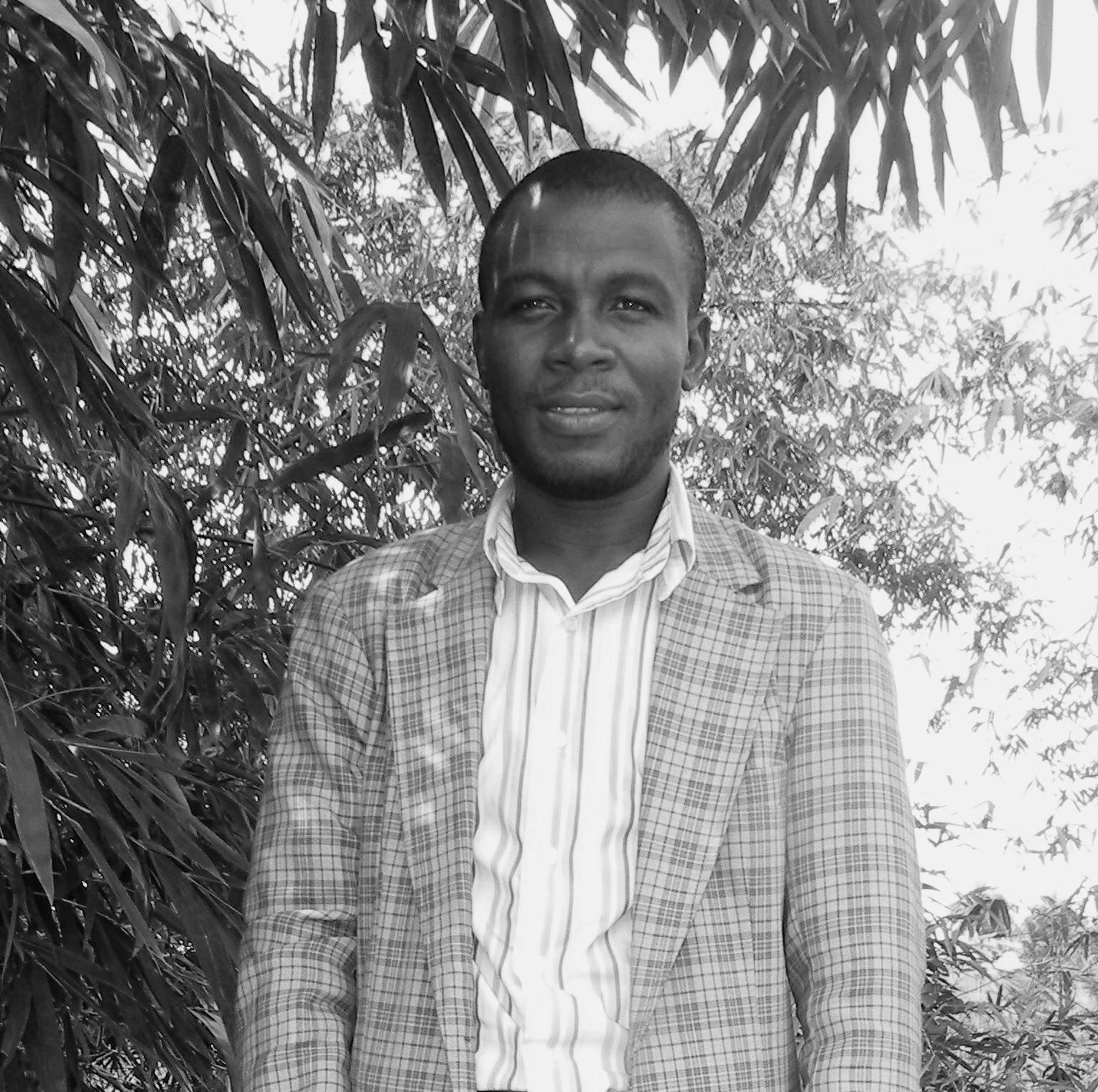
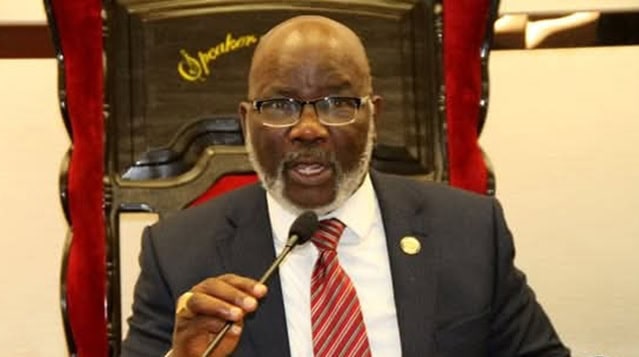
MONROVIA – A wave of public outrage has intensified across Liberia after exiled activist Martin K. N. Kollie condemned Speaker Richard Nagbe Koon for issuing what he described as an alarming threat against journalists assigned to the Capitol. Kollie, Chief Convener of Voices from Exile (VEx), said in a statement released on Tuesday, November 25, 2025, that the Speaker’s remarks represent an unacceptable assault on press freedom and a dangerous throwback to Liberia’s authoritarian past. His call adds significant pressure on Liberia’s political establishment as concerns grow about shrinking democratic space under the current legislature.
Kollie said he was deeply troubled after listening to a recording in which Speaker Koon warned that journalists could be jailed if found recording what he termed an “illegal session.” According to the activist, this threat is not only unjustifiable but diametrically opposed to the principles that underpin the office of the Speaker. Kollie stressed that Koon took an oath to protect the Constitution, which guarantees press freedom and free expression, rights that journalists were exercising while covering legislative proceedings. He insisted that such conduct from a sitting Speaker undermines the moral and constitutional integrity of the Legislature.
In his statement, Kollie declared: “We condemn Speaker Richard Nagbe Koon for threatening to jail journalists. We just listened to a disturbing recording of Speaker Richard Nagbe Koon threatening to jail assigned reporters covering legislative activities on Capitol Hill.” He said the threat served as “a blunt reminder of the dark past that Liberia and Liberians endured under autocratic systems and structures,” arguing that no public official should unilaterally decide what journalists can or cannot record in a space funded by taxpayers and meant to serve the public interest.
The Legislative Press Pool (LEGISPOOL), the official body representing journalists assigned to the Capitol, also expressed deep concern over the Speaker’s remarks. In a statement issued Tuesday and signed by Gibson Gee, Secretary General, and approved by President Emmanuel T. J. Kollie, LEGISPOOL said Speaker Koon was heard over a loudspeaker threatening journalists with detention during the 12th Day Sitting of the 3rd Quarter of the 2nd Session. The organization said the comments have “raised alarm within the media community,” warning that any form of intimidation or threat of arrest directed at its members is unacceptable.
LEGISPOOL reminded the public that journalists assigned to the Legislature play a vital role in ensuring transparency and accountability, serving as the eyes and ears of the public in a democratic system. The group urged its members and the wider journalism community to remain calm and professional as its leadership engages Speaker Koon for clarity on his remarks. LEGISPOOL emphasized that its top priority is ensuring that journalists perform their duties freely, safely, and without censorship or intimidation. The body reaffirmed its commitment to protecting the rights and security of all reporters on Capitol Hill and called on relevant authorities to uphold press freedom.
Kollie, meanwhile, noted that the journalists targeted by the Speaker were simply performing their reportorial duties, and therefore the threat amounted to an “assault on and an aggression against the very oath that Speaker Koon took.” He demanded an immediate and public retraction from the Speaker, warning that Liberia must not tolerate any form of intimidation, harassment, or coercion directed at the press. Kollie emphasized that his platform, Voices from Exile, intends to remain vocal in defending press freedom regardless of who occupies political office.
The activist added that Liberia’s democratic stability depends heavily on the vibrancy and independence of the media. He stated that his movement “did not allow this anti-democratic posturing to happen yesterday” and would not allow it today or in the future. According to him, public officials must recognize that power is not a weapon to be used against journalists but a responsibility to uphold transparency, accountability, and constitutional norms. “Journalism is not a crime,” Kollie stressed, concluding his statement with a call for national vigilance in protecting democratic values.
The controversy erupted after reporters covering the Legislature revealed that Speaker Koon cautioned them on Tuesday that they could be jailed if found recording conversations at the Capitol before official sessions begin. Journalists say the warning came as lawmakers discussed unresolved matters from previous sittings, prompting Koon to insist that reporters were barred from capturing any informal discussions prior to the commencement of session. His directive was met with shock among legislative correspondents, who viewed it as an attempt to conceal information of public interest.
Informal conversations at the Capitol often reveal the political dynamics, internal disagreements, and policy positions that shape national governance. Preventing journalists from documenting these exchanges limits public access to crucial information and weakens the media’s ability to hold power to account. Liberia’s democratic progress since the end of the civil conflict has been strongly tied to an open media environment, making any threat against journalists a matter of national concern.
The incident has triggered fresh debate over whether the Legislature is becoming increasingly intolerant of scrutiny. Threats from political leaders create a climate of fear, potentially fostering self-censorship at a time when Liberia is grappling with governance, economic, and accountability challenges. A Legislature that resorts to intimidation contradicts the transparency and openness expected of a democratic institution and may set a troubling precedent if left unchallenged.
Adding to the controversy, V. Vehzelee Sumo, a media-focused official in the Speaker’s office, defended Koon’s position, stating: “The Speaker’s stern warning was in place! We can discuss the tone in another argument.” His comments, however, did little to ease concerns, instead reinforcing fears that the Speaker’s office sees no issue with restricting press access. The statement has been widely criticized as dismissive and indicative of a troubling mindset regarding the role of journalists in a democratic society.
The unfolding dispute highlights far-reaching implications for press freedom in Liberia. If unchecked, activists warn, such threats normalize hostility toward journalists, embolden other public officials to silence scrutiny, and erode public trust in state institutions.