Citizens Movement for Change (CMC) critiques President Joseph Nyuma Boakai’s State of the Nation Address, calling out overstated achievements, insufficient job creation, and limited economic transformation across Liberia.
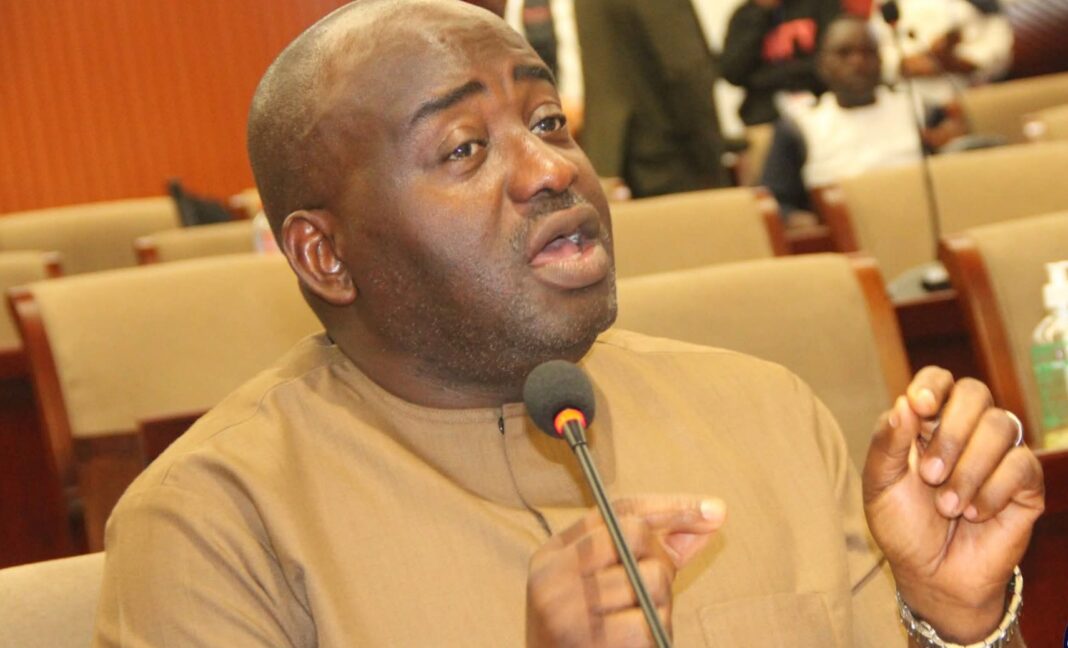
MONROVIA – The Citizens Movement for Change (CMC) has issued a pointed critique of President Joseph Nyuma Boakai’s 2026 State of the Nation Address (SONA), arguing that the speech overstated accomplishments while failing to address Liberia’s persistent structural challenges. The response, delivered by CMC political leader Rep. Musa Hassan Bility, stresses the urgent need for honest dialogue, accountability, and sustainable reforms.
“Fellow Liberians, the CMC welcomes the opportunity to respond to the State of the Nation Address delivered by President Boakai,” Bility said. “But this is not an adversarial rebuttal; it is a constructive critique aimed at addressing the urgent realities confronting our nation.”
Bility emphasized that the SONA’s celebration of “paving a few miles of primary roads, grading some feeder roads, and proposing a development agenda” falls far short of addressing systemic issues such as extreme poverty, weak education and healthcare systems, limited employment opportunities, and inadequate drug rehabilitation programs.
“Today, Liberia is in its 179th year of independence,” Bility noted, “yet despite billions in international aid, foreign investments, and export proceeds, the average Liberian continues to live on less than $2 a day. Can we honestly say we have made progress? The answer is a resounding NO!”
The CMC highlighted Liberia’s poor human development indicators, citing a Human Development Index of 0.481, ranking the country 177th out of 194 nations. According to Bility, successive administrations have touted GDP growth and fiscal milestones, yet basic services like electricity and clean water remain inaccessible to the majority of citizens.
“Only 3 out of 10 Liberians have access to electricity, and 99 percent lack piped water,” Bility said. “Many still drink from polluted rivers. Minor illnesses claim thousands each year, and over 50 percent of the population goes to bed hungry daily.”
Bility criticized the President for emphasizing GDP growth, revenue increases, and fiscal discipline without demonstrating tangible improvements in the lives of ordinary Liberians. “The administration pledged to overhaul fiscal management, reduce inflation, and expand the tax base. Yet progress remains minimal, and the benefits have not translated into real impact,” he said.
The CMC also challenged claims of major investments under the SONA. “President Boakai cited $4 billion in committed investments, mentioning HPX and ArcelorMittal agreements,” Bility said. “Preliminary examinations indicate that actual investments, over several years, are far less than claimed, with ArcelorMittal’s portion estimated at no more than $900 million.”
Bility further criticized the government’s oil sector agreements. “The Total and Oranto production-sharing agreements are overstated,” he said. “Oranto lacks the capacity for deepwater exploration, and previous dealings suggest these concessions primarily enrich a few hidden beneficiaries, rather than the Liberian people.”
The CMC also addressed revenue gains highlighted in the SONA. While praising the transition from the General Sales Tax (GST) to the Value Added Tax (VAT) for boosting domestic revenue, Bility warned that the VAT shifts the tax burden onto ordinary citizens without broadening the tax base.
“The much-touted revenue surge is policy-induced rather than a sign of organic economic growth,” Bility said. “The bulk of new collections comes from sectors newly subjected to VAT, not from broader economic expansion or improved compliance.”
Bility highlighted challenges in the business environment, noting bureaucratic hurdles, inconsistent policies, and a lack of tangible support for agriculture and small enterprises. “Promises to modernize agriculture and support small businesses have yet to translate into meaningful economic transformation,” he said.
On governance, Bility warned that commitments to inclusive government and service delivery under the Local Government Act remain largely unfulfilled. “Inefficiencies, slow implementation, and limited citizen involvement persist, leaving urgent needs unmet,” he said.
The CMC questioned claims of economic growth, noting that Liberia’s economy remains dependent on extractive industries and is vulnerable to external shocks. “Reported growth of 5.1 percent in 2025 is largely driven by mining expansion and exports, and has not translated into sustainable employment or improved living standards for the majority,” Bility said.
Bility also questioned the reported inflation reduction to 4 percent, noting that the statistics primarily reflect Monrovia, while 75 percent of the population live in rural areas where goods are more expensive. “Many Liberians continue to struggle with high food and fuel prices, offering only modest relief,” he said.
The CMC further criticized fiscal reliance on external loans and grants. “New donor commitments totaling over US$700 million demonstrate that fiscal resilience remains fragile,” Bility said, highlighting how abrupt funding cuts in 2025 caused permanent job losses and hardship.
Infrastructure gains cited in the SONA, such as road paving and electricity expansion, were described by Bility as insufficient relative to the country’s needs. He noted that many projects remain incomplete, delayed, or heavily reliant on foreign financing.
The 70,000 jobs touted in the SONA were also challenged. “These are largely temporary positions tied to short-term projects,” Bility said. “There is no evidence of sustainable, private-sector-driven employment that would indicate real economic transformation.”
On social services, Bility acknowledged incremental improvements, including immunization coverage and reductions in medicine stockouts, but stressed that significant gaps remain. “Maternal deaths remain high, educational and healthcare systems remain under-resourced, and the labor market continues to struggle with underqualified personnel,” he said.
In conclusion, the CMC called on the Boakai administration to embrace transparency, accountability, and inclusive governance. “Liberia cannot afford to squander more opportunities,” Bility said. “The government must confront uncomfortable truths and implement reforms that truly serve all citizens. The time for action is now.”