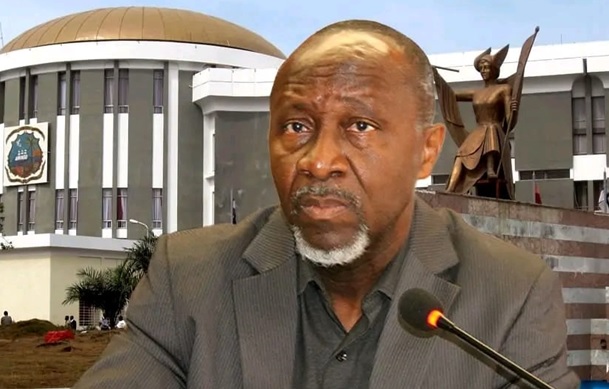
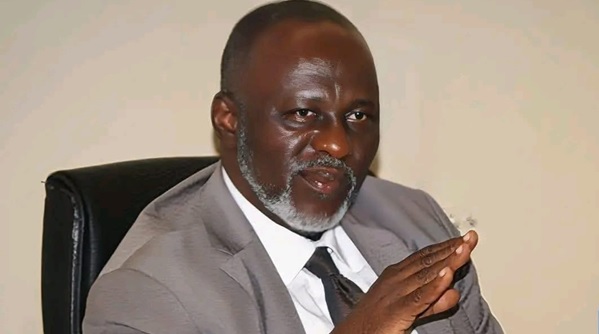
MONROVIA – Senator Nathaniel McGill has thrown down a gauntlet, challenging the ruling Unity Party (UP) to prove its continued public support by submitting the administration of President Joseph Nyuma Boakai and Vice President Jeremiah Koung to a fresh national election. McGill’s call came amid growing frustration among some Liberians who argue that political legitimacy should be periodically reaffirmed, especially given recent controversies and governance disappointments. In a message on his Facebook page early Thursday, November 27, 2025, McGill dismissed concerns that his demand could destabilize the country, insisting instead that an election would restore confidence: “If you truly believe you have the people’s support, be a man and take the challenge, and stop crying wolf.”
McGill’s demand echoes against a backdrop of widespread commentary and analysis about the collapse of support for the former ruling Coalition for Democratic Change (CDC), which lost power in the 2024 general election. Former CDC leaders have blamed the defeat on internal disunity, policy failures, and poor public relations, rather than external manipulation or electoral fraud. As one post-mortem reflection from a leading party figure put it, the CDC “worked against ourselves and lost,” acknowledging that internal friction and self-sabotage rather than outside forces led to its defeat.
In the wake of that loss, the CDC’s collapse has accelerated, with once-loyal coalition partners such as the National Patriotic Party (NPP) and the Liberia People Democratic Party (LPDP) severing ties, arguing that they had been marginalized within the coalition. Many former high-ranking officials and lawmakers have either exited the party or distanced themselves, citing failure to trust CDC’s internal leadership or strategy.
This wider collapse raises important questions about McGill’s proposal. If the CDC, a party once dominant and now fracturing, can fall so sharply, does that likewise call into question whether the Unity Party itself has stable popular base it claims today? McGill seems to think so. His challenge effectively asks whether the UP’s current dominance is built on real public support or simply on the weakness and disreputation of its main rival.
Moreover, the call for a repeat national election recalls deeper doubts over public trust, governance performance, and the legitimacy of leadership. For many Liberians, the 2024 election was not just a transfer of power, it was a referendum on years of perceived underperformance under the CDC government.
McGill’s demand also forces a discussion about what true popular support looks like in Liberia’s political environment. Is it measured by raw election results, or must it be maintained through consistent performance, accountability, and responsiveness to citizen needs? The senator’s challenge suggests that legitimacy is not a one-time certificate but a continuous responsibility.
The Unity Party has yet to publicly respond to McGill’s demand. Silence or avoidance could be read by many Liberians as a sign of uncertainty or weakness, but a clear rejection might harden divisions ahead of the next electoral cycle.
For now, McGill’s proposal stands as a provocative test of the Unity Party’s confidence. The question on many minds is whether President Boakai really has the popular mandate to keep governing until the next scheduled polls, or if McGill has tapped into deeper public ambivalence that demands a fresh national verdict.