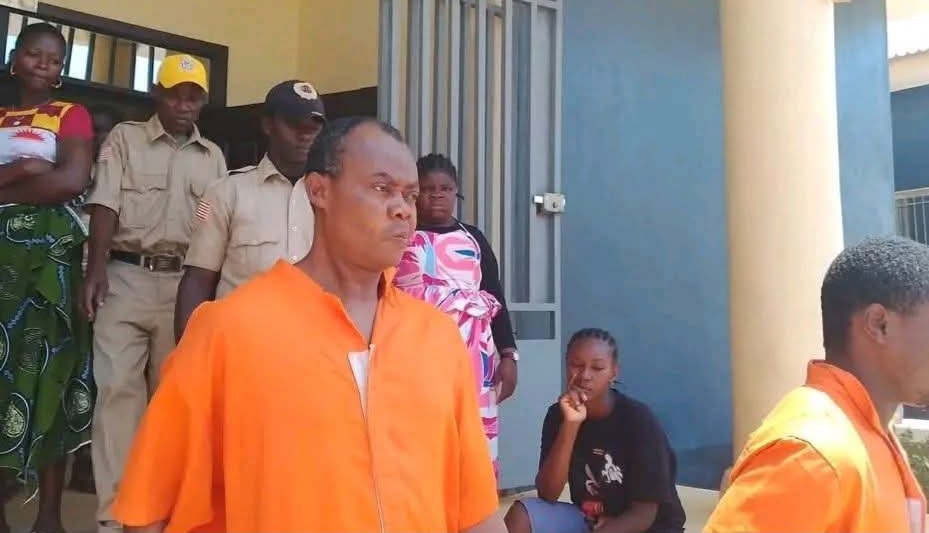

MONROVIA – The debate surrounding the six-month imprisonment of Justin Oldpa Yeazehn, widely known as Prophet Key, has taken on constitutional, political, and moral dimensions. While critics insist the ruling was excessive and unconstitutional, Cllr. Kanio Bai Gbala has drawn a firm line in defense of the judiciary, arguing that the issue at stake is far bigger than one man’s punishment. According to him, it is about protecting the very foundation of Liberia’s justice system.
Appearing on LNTV Live on ELBC radio on Wednesday, February 18, 2026, the Assistant Professor of Law at the Louis Arthur Grimes School of Law at the University of Liberia did not mince words. “To expose a judge or justice to ridicule is tantamount to undermining the integrity and respect of the courts,” he declared. In Gbala’s view, mocking a judge is not harmless speech or emotional outburst. It is an assault on the authority that sustains the rule of law.
Gbala directly confronted those who argue that the Supreme Court overstepped its constitutional boundaries. He dismissed the notion that the Chief Justice operates separately from the Court as an institution. “People think that the Chief Justice in the execution of his mandate is different from the Supreme Court. No. The Chief Justice is the embodiment of the Supreme Court. Where the judge is, that is where the court is. When the judge speaks, the court has spoken,” he asserted.
That argument strikes at the center of the controversy involving Chief Justice Yamie Quiqui Gbeisay. According to Gbala, insults directed at the Chief Justice are not personal attacks detached from institutional authority. They are direct affronts to the Supreme Court of Liberia itself. The dignity of the Bench, he implied, cannot be separated from the individuals who constitute it.
The case against Justin Oldpa Yeazehn centered on repeated public statements deemed abusive and insulting toward the judiciary. After hearing arguments from both sides, the Full Bench found him guilty of contempt and imposed a six-month prison sentence at the Monrovia Central Prison. The Court further ordered him to publish formal apology notices in newspapers for five consecutive days, addressing both the Court and women, as part of a behavior bond.
Lawyers representing Prophet Key pleaded for mercy, highlighting his remorse and framing his conduct as non-intentional. They urged the justices to temper justice with leniency. However, legal representatives for the Chief Justice rejected the appeal, arguing that failing to impose meaningful sanctions would erode judicial authority and embolden similar conduct in the future.
Gbala reinforced that contempt powers are not extraordinary tools reserved for dramatic moments. They are inherent powers possessed by every court in Liberia, from the lowest magisterial court to the Supreme Court. He illustrated how even dismissing a bailiff serving court papers with insults could trigger immediate contempt proceedings. The authority to protect the court’s dignity, he argued, is essential to maintaining order and respect for the law.
“It is not the chief justice being referee and judge,” Gbala emphasized. In contempt matters, the Court ensures due process by allowing representation, appointing counsel where necessary, and even calling on amici curiae to assist in arguments. The ruling against Prophet Key, he noted, was unanimous. All five justices signed it. That unanimity, he suggested, underscores that the decision was institutional, not personal.
The Supreme Court also made clear that while Liberia’s Constitution guarantees freedom of expression, that freedom is not absolute. Speech that crosses the line into conduct that undermines judicial independence may attract legal consequences. The Bench signaled that public platforms and smartphones do not grant immunity from accountability when statements descend into contempt.
Gbala’s warning reframes the national conversation. The issue, he insists, is not about silencing criticism or shielding judges from scrutiny. It is about preserving respect for the highest court in the land and safeguarding national stability. In a fragile democracy, he suggests, the erosion of judicial authority is not activism. It is a dangerous gamble with the rule of law.