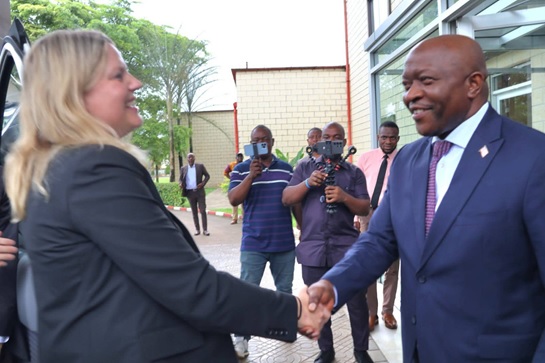
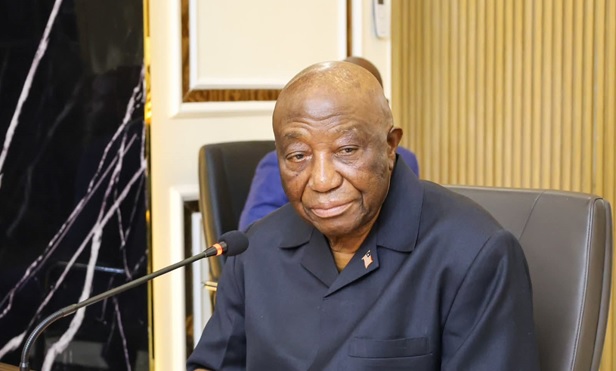
MONROVIA, LIBERIA – In September 2025, President Joseph Nyuma Boakai announced the signing of four new Production Sharing Contracts (PSCs) between the Liberia Petroleum Regulatory Authority (LPRA) and Atlas/Oranto Petroleum. These agreements grant exploratory rights over offshore blocks LB-15, LB-16, LB-22, and LB-24, marking a significant step in Liberia’s effort to revitalize its oil and gas sector. Each contract carries a signature bonus of US$12 million and an estimated investment value of US$200 million per block, signaling renewed investor confidence in Liberia’s offshore potential.
While the announcement was hailed as a milestone for the country’s energy ambitions, it comes with a backdrop of historical controversy surrounding Oranto Petroleum. In 2007, the company acquired exploratory rights to offshore blocks LB-11, LB-12, and LB-14 for a mere US$200,000. Those blocks were subsequently transferred to Chevron in a transaction reportedly valued at US$150 million, raising questions about transparency and fairness. Critics argue that Liberia did not fully benefit from that deal, and concerns remain about the mechanisms to ensure equitable gains from future agreements.
The National Oil Company of Liberia (NOCAL), which oversaw the previous agreements, faced criticism for inadequate oversight, weak enforcement of local participation clauses, and limited capacity to safeguard national interests. This historical context casts a critical lens on the new PSCs and underscores the importance of ensuring that Liberia’s resources are managed responsibly, transparently, and in accordance with national laws.
President Boakai emphasized that the new agreements will adhere strictly to Liberia’s legal and regulatory framework. “Our goal is to ensure that Liberia’s resources are managed with transparency and responsibility. These contracts will be implemented with strict standards of environmental protection, strong local participation, and clear accountability so that Liberians benefit directly from the opportunities created,” he said during the signing ceremony in Paris, France.
Atlas/Oranto Petroleum, a privately held African oil group founded in 1991, operates across multiple African countries and has a mixed track record in resource development. Its return to Liberia provides an opportunity to demonstrate that past controversies will not repeat, provided there is strong governmental oversight and rigorous contract enforcement. The company’s activities in Liberia are expected to be guided by national law and monitored closely to ensure compliance with environmental safeguards, fiscal responsibilities, and local content requirements.
The four PSCs are now subject to ratification by Liberia’s National Legislature. Once approved and signed by the President, the agreements are expected to boost investment in the country’s energy sector, create employment opportunities, and contribute to long-term development objectives outlined in President Boakai’s ARREST Agenda. The agenda, which emphasizes accountability, revenue generation, and sustainable economic growth, provides a framework for ensuring that natural resource exploitation benefits Liberians directly.
Despite the potential benefits, observers caution that vigilance is necessary. Civil society groups, energy analysts, and journalists have repeatedly highlighted past weaknesses in Liberia’s oil governance, including the management of revenues, contract enforcement, and transparency in negotiations. Lessons learned from prior PSC deals underscore the need for Liberia to strengthen institutional capacity, implement robust monitoring mechanisms, and ensure that all contracts deliver tangible benefits to the nation.
Experts argue that beyond immediate economic gains, Liberia must focus on building domestic capacity in the oil sector. This includes developing technical skills among local workers, fostering national expertise in exploration and production, and ensuring that a substantial portion of the workforce is Liberian. Without such measures, the country risks allowing foreign investors to reap most of the benefits while leaving limited long-term value for the local population.
Environmental considerations are also critical. Offshore oil exploration carries risks of ecological damage, including potential oil spills and disruption of marine life. President Boakai stressed that all PSC activities will comply with rigorous environmental standards and international best practices to minimize risks and protect Liberia’s natural heritage.
Furthermore, the new agreements must be transparent to maintain public trust. Publishing contract terms, project timelines, and expected benefits can help Liberia avoid the opacity that marred previous deals. Transparent reporting ensures that citizens, civil society organizations, and the media can hold both government agencies and foreign investors accountable.
The return of Oranto Petroleum to Liberia represents a pivotal moment for the country’s energy sector. It offers a chance to correct past mistakes, strengthen governance, and demonstrate that Liberia is capable of attracting credible investors while safeguarding national interests. President Boakai’s leadership, coupled with effective oversight from the LPRA, NOCAL, and the National Legislature, will be essential to ensuring that these PSCs contribute to sustainable development, job creation, and increased national revenue.
In conclusion, while the new PSCs with Atlas/Oranto Petroleum mark a promising step for Liberia’s oil and gas ambitions, they also carry risks rooted in the country’s past experiences with offshore contracts. The success of these agreements will depend on strict enforcement, transparency, accountability, and a commitment to ensuring that the Liberian people benefit equitably from their nation’s natural resources. President Boakai’s administration faces a critical test in demonstrating that Liberia’s oil wealth can be a force for long-term development rather than a source of controversy and missed opportunities.