
Liberia is witnessing one of its most extensive road and bridge construction pushes in years as the Ministry of Public Works accelerates work on critical corridors linking counties, commercial hubs, and rural communities, signaling a renewed focus on infrastructure as a foundation for economic recovery and national integration.
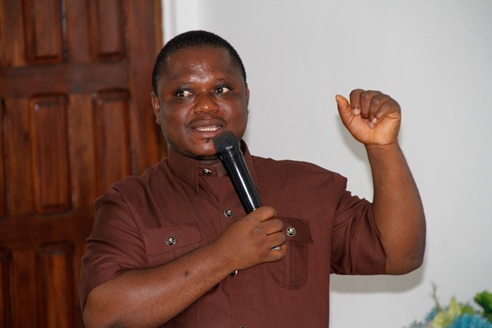
Under the leadership of Public Works Minister Roland Lafayette Giddings, the Ministry has rolled out an ambitious portfolio of ongoing, restarting, and planned road and bridge projects cutting across Montserrado, Bong, Lofa, Nimba, Grand Gedeh, River Gee, Grand Kru, Sinoe, Bomi, Grand Cape Mount, Rivercess, and Grand Bassa counties.
At the center of the effort is the government’s determination to move beyond Monrovia-centric development by improving feeder roads, urban streets, and long-neglected regional highways that support trade, agriculture, education, and access to health services.
In urban Monrovia and its environs, Public Works is actively undertaking asphalt patching works in central Monrovia and surrounding areas, while major corridors such as the Ministerial Complex Bypass Road linking Peace Island, Pagos Island, and the SKD Boulevard are progressing to ease congestion and improve mobility within the capital.
Community-level interventions are also gaining momentum through the Community Gravel Roads Improvement Project (C-GRIP), which targets underserved neighborhoods and peri-urban settlements, ensuring that development reaches ordinary Liberians beyond the main paved arteries.
Several strategic bridges are either under construction or advancing toward completion, including the Grand Bassa Community College Bridge, the Cestos River Bridge, the Kpayekwelleh Bridge linking Bong and Gbarpolu counties, and the Clay Ashland Bridge in Montserrado County, all of which are critical to year-round connectivity.
In Lofa and Bong counties, the Gbarnga–Salayea Road, a lifeline for northern Liberia, has reached 93 percent physical completion, with approximately 70 kilometers already paved. Construction has recommenced with authorities targeting full completion of the 81-kilometer corridor during the current dry season.
Closely linked to this is the Salayea–Konia and Konia–Voinjama road network, totaling 114 kilometers. Works on the Salayea–Konia segment are expected to begin this dry season, while financing partners have, in principle, agreed to support the remaining Konia–Voinjama stretch, promising a major boost to connectivity in Lofa County.
Further north, the Voinjama–Mendikorma Road, spanning 80 kilometers, is undergoing a detailed feasibility study funded by the African Development Bank under the MRU IV program. Subject to preparatory processes, construction could commence by 2027, extending Liberia’s paved network deeper into the Mano River Union corridor.
In Nimba County, progress is visible on multiple fronts. The Ganta–Sanniquellie section of the Ganta–Sanniquellie–Yekepa corridor has been completed in full, while discussions continue with ArcelorMittal Liberia on financing the remaining Sanniquellie–Yekepa segment, a key route for mining, trade, and cross-border movement.
The Sanniquellie–Logatuo Road has reached approximately 85 percent completion, with about 43 kilometers paved. Works have resumed after a prolonged suspension caused by delayed disbursements from the European Investment Bank, with alternative funding arrangements now being pursued through the African Development Bank and the FY2026 national budget.
Also in Nimba, construction has actively resumed on the Ganta–Saclepea Road under SECRAMP I, with physical progress estimated at 56 percent and over 26 kilometers of pavement already completed, restoring momentum on a project long awaited by local communities.
The Saclepea–Tappita Road under SECRAMP II stands at about 93 percent completion, with approximately 56 kilometers paved, positioning the corridor as one of the near-finished projects expected to significantly improve movement between Nimba and Grand Gedeh counties.
In southeastern Liberia, the Tappita–Toe Town corridor under the Rural Economic Transformation Project (RETRAP I) is already under active construction, connecting Nimba and Grand Gedeh counties and supporting agricultural value chains.
Complementing this is the Toe Town to Zwedru road under RETRAP II, stretching 85 kilometers to the Ivory Coast border. Procurement processes for contractors and supervision consultants are being finalized, with construction expected to begin during the current dry season.
The Zwedru–John Davis Town corridor, spanning 48.5 kilometers, has completed detailed engineering designs, which have been submitted to the African Development Bank for review. Once approved, works are expected to commence this dry season, further opening up Grand Gedeh County.
Beyond that, the John Davis Town–Putuken–Kelipo Road, covering 61.5 kilometers across Grand Gedeh and River Gee counties, is nearing the end of procurement processes, with construction anticipated to begin during the dry season.
The Kelipo–Fish Town Road in River Gee County has reached 85.16 percent completion, with the full 20 kilometers paved to binder course level. Although works are temporarily suspended, authorities say construction could resume pending FY2026 budget support from the African Development Bank.
On the coastal axis, the Barclayville–Sass Town Road, spanning 50 kilometers across Grand Kru and Sinoe counties, is advancing through final procurement stages, with civil works expected to commence this dry season under EBID and Government of Liberia financing.
The ambitious Coastal Corridor linking Buchanan, Cestos Junction, and Greenville totaling 239.2 kilometers is also progressing through financing discussions with the African Development Bank, while detailed design works continue as a prerequisite for board approval.
In Montserrado County, the Gabriel Tucker Bridge–Freeport Road project, funded by a Japanese grant, has completed feasibility and engineering designs, with civil works slated to begin this dry season to improve access to the Freeport of Monrovia.
Similarly, rehabilitation of the Freeport–St. Paul Bridge Road is set to recommence, with plans to pave the full 6.5-kilometer stretch and expand it to four lanes, easing traffic flow along one of the capital’s busiest routes.
Beyond these, the St. Paul Bridge–Klay–Tubmanburg corridor, implemented under a public-private partnership with Pavifort AI Associates, is expected to enter the construction phase during the dry season, linking Montserrado, Bomi, and Grand Cape Mount counties.
Taken together, the scale and geographic spread of these projects reflect a strategic shift by the Ministry of Public Works toward nationwide road connectivity rather than isolated interventions.
While challenges remain, particularly around financing continuity and timely disbursements, the resumption and rollout of works during the dry season underscore government efforts to overcome years of stalled infrastructure development.
As construction equipment rolls out across counties, the success of this road construction drive will ultimately be measured by how quickly Liberians can travel, trade, and access services, turning paved corridors and reinforced bridges into tangible improvements in everyday life.