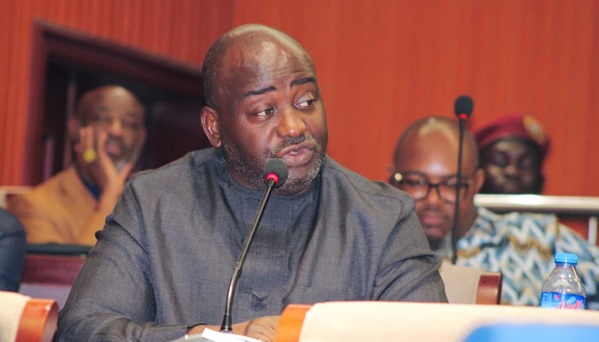
MONROVIA — Representative Musa Hassan Bility of District 7, Nimba County, has publicly explained his opposition to the passage of the 2026 National Budget by the House of Representatives on Thursday, December 11, 2025, while also clarifying his support for the HPX agreement. In a statement issued following the legislative vote, Bility emphasized that his decisions were guided by what he believes to be in the best interest of the Liberian people.
Bility revealed that he voted against the combined Total Energy and Oronto Bill but supported the HPX deal. He explained that his opposition to the omnibus bill stemmed from the way it was structured, combining the Total Energy Bill with the controversial Oronto Deal into a single vote.
“I would have supported the Total Energy Bill if it had been brought separately,” Bility said. “However, with no justification and without logical explanation, it was bundled with the Oronto Deal, which constrained me to vote against the combined instrument. This is a strategy often used to push through less popular legislation by linking it to more essential bills.”
The representative criticized the Oronto Deal, arguing that the company’s business model focuses on acquiring Liberian assets for profit rather than investing in sustainable national development. He further stressed that such deals, if ever approved, should prioritize Liberians, ensuring that citizens, not foreign investors, benefit from the country’s resources.
“Although the Bill was ultimately passed by my colleagues, I remain firmly opposed to the Oronto Deal because it has no clear exploration plan,” Bility stated. “Given Oronto’s past record in Liberia, I do not believe such a company should again be entrusted with our national resources.”
Bility also voted against the 2026 National Budget, which totals $1.2 billion. He described the budget as a consumption-oriented plan rather than a transformational one, noting that it fails to improve the lives of ordinary Liberians or introduce serious innovations in public service delivery and economic growth.
In particular, he criticized the government’s decision to spend the $200 million Arcelor Mittal signing bonus over twelve months rather than investing it in sectors such as agriculture. Bility argued that such an investment could have created jobs, empowered Liberians, and produced long-term economic benefits.
Despite his opposition to the omnibus bill and the national budget, Bility expressed strong support for the HPX deal. He explained that this agreement presents strategic advantages for Liberia, focusing on infrastructure development and regional trade facilitation rather than simple resource extraction.
“This agreement is not just about extracting minerals; it leverages our land and rail corridor to create a competitive logistics hub,” Bility said. “It enhances our ability to move goods within Liberia, opens access to our inland port, and provides opportunities to serve landlocked neighbors like Mali who can use Liberia as a transit route.”
Bility highlighted that the HPX deal represents a model for sustainable development, linking infrastructure expansion with private sector growth and long-term economic transformation. He argued that agreements like this have the potential to position Liberia as a regional gateway in West Africa.
Throughout his statement, Bility emphasized that legislative decisions must prioritize the interests of Liberians and safeguard national resources. He stressed the importance of careful scrutiny, transparency, and accountability in all major deals and budgetary allocations.
He called on lawmakers to ensure that foreign investments and government expenditures work to empower Liberians, create jobs, and deliver tangible benefits to citizens, rather than serving short-term political or consumption objectives.
Bility concluded by reaffirming his commitment to his constituents and the broader Liberian population. “My votes today were guided by the best interests of Liberia and my district. We must ensure that foreign deals and government budgets serve Liberians first,” he said.