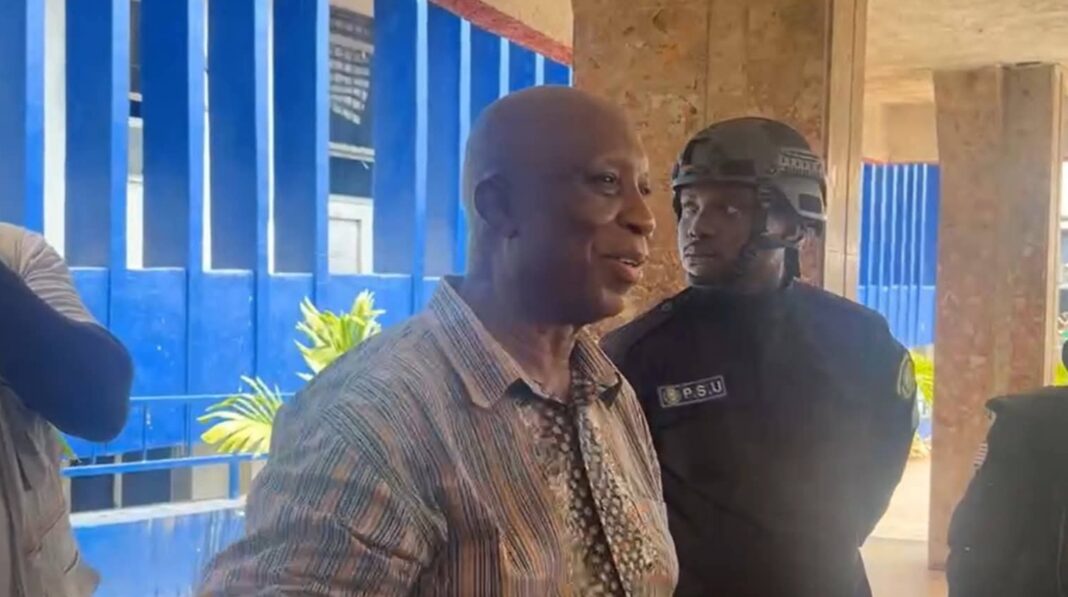
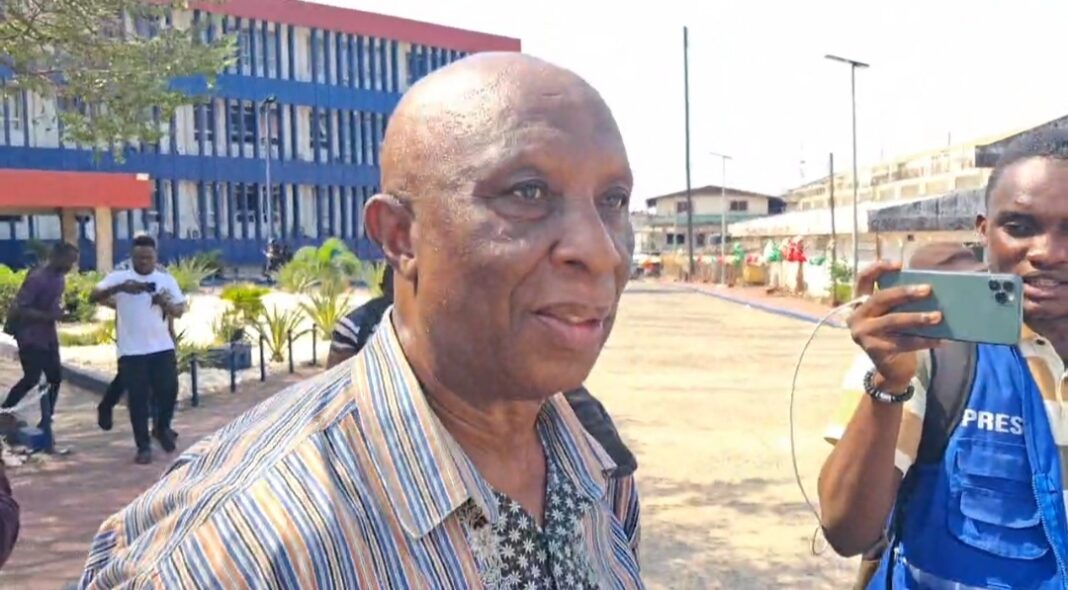
Liberia now finds itself confronting a tragedy buried deep in the nation’s history. At the center of it is economist Samuel Jackson, whose public confession has revived questions about the 1985 disappearance and killing of A.V. Sirleaf Sr. Police are currently investigating the suspicious death of his wife, Toni Jackson.”
For the Sirleaf family, the pain dates back more than four decades. In 1985, A.V. Sirleaf Sr. was reportedly taken from his home in the Stephen Tolbert Estate in Monrovia and never returned. His body was never recovered, leaving his family with grief but no closure. His disappearance became one of the many unresolved tragedies that marked Liberia’s turbulent years.
For decades, the family lived with unanswered questions. Time passed, governments changed, and Liberia attempted to move forward after years of conflict. Yet the mystery surrounding Sirleaf’s disappearance remained unresolved, buried beneath the silence that often surrounds the darkest chapters of national history.
That silence was suddenly shattered during a dramatic moment involving Jackson and officers of the Liberia National Police who had arrived at his Old Road residence in connection with the death of his wife. During a tense exchange captured on video, Jackson made a shocking statement that instantly revived the long-forgotten case.
During a live broadcast on his Facebook page, Jackson pointed toward one of the officers present and angrily declared: “Look at this other one here. His pa da Sirleaf. We killed his father during the war.” The remark immediately drew attention because the officer was reportedly the son of the man Jackson claimed was killed.
Jackson’s remark stunned bystanders, his neighbors in the Old Road community, police officers who came to investigate his wife’s death, and Liberians watching his live broadcast. The officer he appeared to recognize was reportedly the son of the very man he claimed to have helped kill. In that moment, the past collided with the present in a way few Liberians could have imagined.
For the family of A.V. Sirleaf Sr., the statement reopened wounds that had never fully healed. Among those speaking publicly about the tragedy is Queen V, who took to social media to remind the public that her father’s body was never recovered after he was taken from their home in 1985.
Her message was not framed as a call for revenge. Instead, it reflected a deeper desire shared by many families who lost loved ones during Liberia’s years of violence, the desire for truth and closure.
“Body never recovered,” she wrote while posting images of her father, emphasizing the enduring pain of a family that never had the opportunity to bury their loved one.
The confession also raises profound legal questions. Under criminal law, there is no statute of limitations for murder. This means that if credible evidence emerges, even decades later, the case can still be investigated and prosecuted.
For Liberia, the moment serves as a reminder that history rarely disappears. The country’s past is filled with unresolved killings, disappearances, and stories that were never formally investigated. Many families have spent years waiting for answers that never came.
Now, unexpectedly, one of those stories may have resurfaced through the words of someone who claims to have been directly involved.
Meanwhile, the immediate crisis surrounding Jackson continues to unfold. Police have confirmed that he is currently being treated as a suspect in the investigation into the death of his wife, Toni Jackson.
According to Liberia’s Police Inspector General, Gregory Coleman, Jackson and several individuals connected to his household are being detained at the headquarters of the Liberia National Police in Monrovia while investigators continue their work.
Coleman explained that under Liberian law, police have a 48-hour window to determine whether to formally charge Jackson and forward the case to court or release him pending further investigation.
Police have already conducted a search of Jackson’s Old Road residence, collecting specimens and other materials that could help determine the circumstances surrounding Toni Jackson’s death. Investigators have also interviewed relatives, staff members, and neighbors in an effort to reconstruct the timeline of events.
The investigation has attracted international attention as well, particularly because Toni Jackson was a South African national.
Yet beyond the legal process unfolding today lies a broader moral question for Liberia. If Jackson’s statement about the killing of A.V. Sirleaf Sr. proves credible, it would represent one of the rare moments when a decades-old truth surfaces unexpectedly in public view.
For the Sirleaf family, the issue is not about revenge. What they want is something far more fundamental, to know where their father rests and to finally bury him with dignity.
For Liberia as a nation, the moment poses a larger challenge, whether the country is willing to confront the painful truths of its past when they resurface, even decades later.
Because when a 41-year silence is suddenly broken, the real test is not whether the truth was spoken. The real test is whether anyone is prepared to act on it.