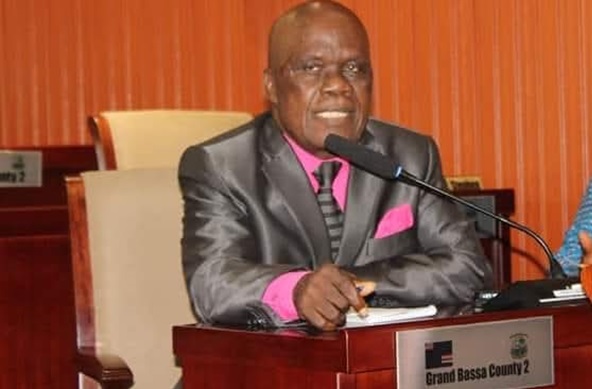
CAPITOL HILL, MONROVIA -The Liberian Senate has taken steps to address high electricity costs, following advocacy from Senator Numene T. H. Bartekwa of Grand Kru County. Lawmakers have inst ructed the Committees on Ways, Means, Finance & Budget, Public Corporations, and Mines & Energy to engage with the Liberia Electricity Corporation (LEC) and the Liberia Electricity Regulatory Commission (LERC) to explore the possibility of reducing the cost per kilowatt-hour from US$0.20 to US$0.15.
Senator Bartekwa has been vocal about the burden that expensive electricity places on industries and major businesses, noting that many are forced to rely on generators and other alternative power sources. According to him, this reliance increases operational costs, reduces competitiveness, and ultimately results in lost revenue for the government while limiting employment opportunities.
“High electricity prices are not only pushing businesses to use costly alternatives, but they also result in lost government revenue and fewer jobs for Liberians,” Senator Bartekwa said. His communication to the Senate underscored the need for urgent action to make energy more affordable for commercial and industrial users.
Liberia currently generates approximately 214 megawatts of electricity from multiple sources, including the Mount Coffee Hydro Plant with 88 MW, Heavy Fuel Oil plants producing 38 MW, Cross Border arrangements contributing 8 MW, CSLG/TRASCO supplying 50 MW, and Guinea Power Support providing 30 MW. Despite this capacity, the cost of electricity remains a significant obstacle for many businesses.
The Senate resolution directs the committees to conduct thorough engagements with LEC and LERC to assess ways to reduce tariffs while ensuring the sustainability of Liberia’s power sector. This includes reviewing operational efficiency, regulatory frameworks, and potential subsidy programs that could make power more affordable without compromising service quality.
Lawmakers noted that lower electricity costs could encourage industries to fully connect to the national grid, reducing reliance on expensive private generators and promoting regulatory compliance. The expected result would be lower operational costs, enhanced productivity, and improved government revenue through increased industrial activity.
The government has set a long-term goal of reaching 450 MW of national power capacity by 2030. The proposed reduction in tariffs aligns with broader objectives to expand electricity access, attract investment, and stimulate economic growth, particularly in manufacturing and export-oriented sectors.
Senators also stressed the need for collaboration between regulatory authorities and power providers to ensure that any tariff reductions are sustainable. The review process is expected to balance affordability with the need for continued investment in infrastructure and maintenance of the electricity network.