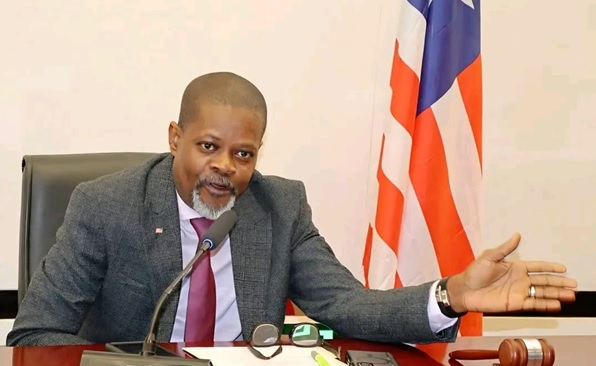
CAPITOL HILL, MONROVIA – Montserrado County Senator Abraham Darius Dillon has moved to tighten Liberia’s fight against corruption by sponsoring four key legislative amendments aimed at strengthening the Liberia Anti-Corruption Commission (LACC) and reforming the nation’s legal framework for tackling illicit enrichment and corrupt practices.
Writing on his official Facebook page on Wednesday, January 14, 2026, Senator Dillon said the proposed Bills were introduced during Tuesday’s plenary session of the Senate, reflecting urgent steps to enhance accountability and transparency in public service.
“The Bills we sponsored from the Executive are critical reform measures meant to strengthen the Liberia Anti-Corruption Commission and give it more ‘teeth to bite’ in the fight against corruption,” Senator Dillon said, highlighting the intent to make enforcement more robust and effective.
The four Bills include: An Act to Amend the Act Establishing the Liberia Anti-Corruption Commission (July 22, 2022); An Act to Amend Part V and Part XII of the National Code of Conduct for Public Officials and Employees; An Act to Amend Title 26 of the Penal Law to Provide for Illicit Enrichment and Corruption; and An Act to Amend Title 2 of the Criminal Procedure Law to Re-Define the Burden of Proof and Statute of Limitations for Corruption and Illicit Enrichment.
According to Senator Dillon, these amendments are designed to address longstanding gaps in Liberia’s anti-corruption legal framework, ensuring that public officials and employees are held accountable for misuse of office and financial misconduct.
“The Liberia Anti-Corruption Commission must have the necessary powers and legal backing to pursue corrupt practices aggressively,” Senator Dillon said, stressing that these reforms would remove procedural hurdles that have historically slowed or blocked investigations.
The Bills are now under review by the Senate Judiciary Committee, of which Senator Dillon is a member, for scrutiny, detailed examination, and the formulation of recommendations before returning to plenary within two weeks.
Senator Dillon emphasized that the amendments would specifically target illicit enrichment, redefine the burden of proof, and extend the statute of limitations for corruption-related cases, thereby closing loopholes that have often favored corrupt officials.
“The changes we are advocating are not merely technical; they are structural reforms to give LACC the capacity to act decisively against anyone, regardless of their position,” Senator Dillon wrote, framing the amendments as a direct response to recurring corruption challenges in Liberia.
If passed into law, the reforms would significantly expand the legal mandate of the LACC, strengthen enforcement mechanisms, and provide clearer pathways for prosecution, signaling a new chapter in Liberia’s efforts to hold public officials accountable and deter corruption nationwide.