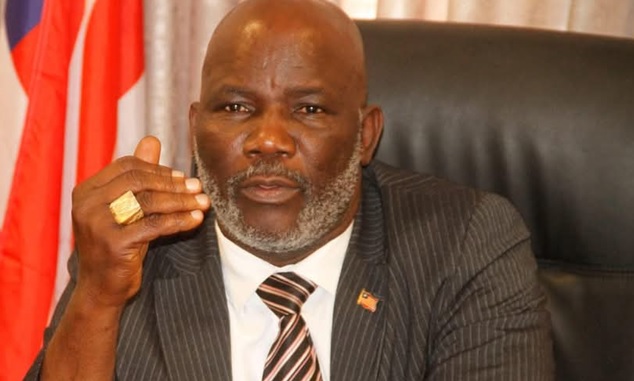
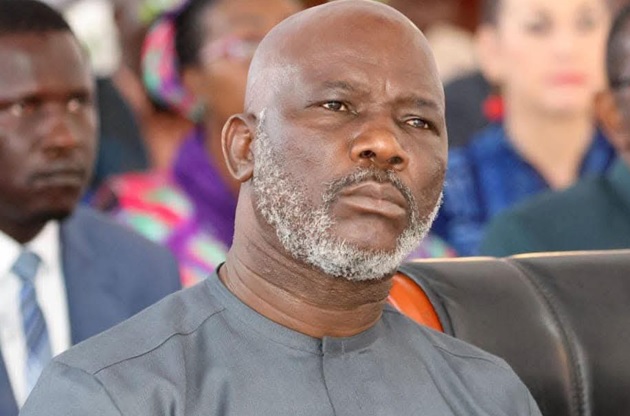
MONROVIA – The November 27, 2025, apology by Speaker of the House of Representatives Richard N. Koon to journalists over threats of arrest has drawn sharp criticism from human rights advocates and press freedom defenders. In a commentary on Friday, November 28, 2025, Cllr. Tiawan Saye Gongloe, a veteran human rights advocate with over 30 years of defending free speech, warned that an apology alone is insufficient and urged Liberians to demand more accountability from the Speaker.
Gongloe stressed that threatening journalists is far from a minor infraction, calling it “a constitutional violation, an unlawful act, and a dangerous step backward into a past that Liberia must never revisit.” He highlighted that the incident is part of a recurring pattern of intolerance toward the press, one that has historically resulted in the imprisonment, harassment, and even deaths of journalists and opposition voices during Liberia’s most repressive periods.
“This kind of intolerance and bigotry is not new in Liberia,” Gongloe wrote. He cited the imprisonments of journalists such as Tuan Wreh and Albert Porte, as well as the silencing of many others who spoke truth to power. Gongloe argued that every threat against the press evokes the painful history of crackdowns and intimidation, warning that “threats are not harmless. They are the first signs of tyranny.”
Gongloe was particularly critical of the Speaker’s demeanor, asserting that anger reveals character. He claimed that Speaker Koon’s remarks exposed “a deep intolerance for dissent and for the press” and reflected “disbelief in press freedom, ignorance of constitutional limits, forgetfulness of the laws repealed in 2018, and complete disregard for Liberia’s painful history with oppression.” According to Gongloe, this behavior shows a mindset incompatible with leadership in a democratic institution.
The commentary also underscored the legal dimensions of the matter. Speaker Koon, who swore to uphold the Constitution, allegedly violated Article 15(c), which guarantees that there shall be no limitation on the public’s right to be informed about government and its functionaries. Gongloe emphasized that the Kamara A. Kamara Law of 2018 abolished criminal speech offenses and strengthened press freedom, prohibiting exactly the kind of threats made by the Speaker. “By his conduct, the Speaker violated both constitutional and statutory guarantees,” Gongloe wrote, calling it “dishonorable conduct from the head of the House of Representatives.”
Gongloe argued that an apology without concrete commitment is meaningless. He outlined specific steps for the Speaker, including publicly pledging never to threaten journalists again, respecting constitutional rights, upholding the dignity of his office, studying Article 15(c) and the Kamara A. Kamara Law, and demonstrating conduct befitting the leadership of the Honorable House. “A simple apology does not restore damaged trust. Only a commitment to lawful behavior can,” he asserted.
Drawing comparisons with international standards, Gongloe noted that in countries such as the United Kingdom, Germany, and the United States, officials face public and legal consequences for similar or lesser offenses. “What Speaker Koon did would be intolerable in any serious democracy. Why should Liberia accept less?” he questioned, urging citizens to hold leaders accountable to the same standards expected globally.
Gongloe issued a direct message to Speaker Koon, reminding him that Liberia has endured a long history of repression and that anti-press practices were formally dismantled in 2018. “Do not resurrect what Liberia destroyed,” he warned. He insisted that the Speaker must actively heal the breach he created by ensuring that journalists can work freely and without intimidation.
The commentary concluded with a broader call to action for Liberians, emphasizing that the nation cannot afford to regress. Gongloe wrote, “Liberians have endured too much to tolerate new threats from old mindsets. Backward never. Forward ever.” He envisioned a Liberia where journalists are free, the law is respected, and leaders exemplify democratic principles.