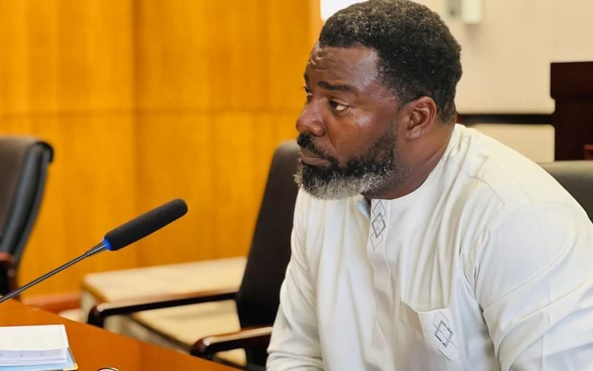
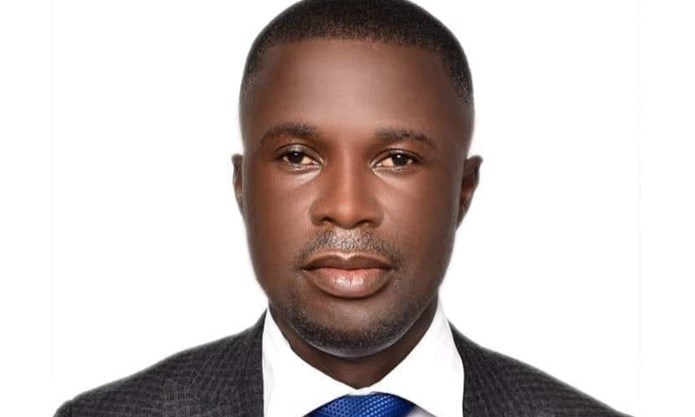
MONROVIA – The Press Union of Liberia (PUL) has officially acknowledged the receipt of an open letter from distinguished Liberian lawyer and statesman, Cllr. Tiawan S. Gongloe.
In a press release issued by the Press Union of Liberia (PUL) on Thursday, June 5, 2025, Cllr. Gongloe shared a significant and widely respected article addressing the pervasive issue of power dynamics within the Liberian government.
Titled The Day Monrovia Stood Still, this notable article was penned in May 1979 by Albert Porte, a prominent Liberian political journalist and social critic.
Cllr. Gongloe underscores the critical importance of this work, asserting that “the existence of the arrogance of power is a threat to peace and the maintenance of a stable social order in any nation.”
Reflecting on the actions of contemporary political figures, Cllr. Gongloe laments that “the failure of reason to prevail at crucial moments in Liberia remains persistent,” drawing parallels to the now-infamous protest of April 14, 1979, widely known as the ‘rice riot.’
This protest, organized by the Progressive Alliance of Liberia (PAL) under the leadership of Gabriel Baccus Matthews, tragically resulted in “deaths and destruction,” consequences that Cllr. Gongloe attributes to the government’s refusal to embrace reasoned dialogue.
In response to Cllr. Gongloe’s initiative, PUL President Julius Kanubah commends the lawyer for not only disseminating the article for public consideration but also for encouraging critical reflection on historical injustices to foster a brighter future for Liberia.
The April 1979 protest stemmed from a rise in rice prices and the government’s controversial requirement for permits for peaceful demonstrations, despite the constitutional guarantee of the right to assembly.
To ensure broader accessibility, the PUL has printed and published the complete text of The Day Monrovia Stood Still on its bulletin board, allowing both members and the public to engage with its contents.
As a lifelong advocate for press freedom and free speech, Cllr. Gongloe participated as a panelist during this year’s World Press Freedom Day celebrations, discussing the vital topic of “Sustaining Independent Journalism and Press Freedom in the Digital Age,” an event organized by the Press Union of Liberia (PUL). He highlighted the essential role of journalists in facilitating social transformation by raising awareness of the virtues and vices that shape our society.
The PUL stands in solidarity with Cllr. Gongloe, affirming his position that:
“By informing the public about commendable events, actions, and individuals contributing to a nation’s advancement, there exists a greater likelihood that citizens will be inspired to pursue what is beneficial for society. Conversely, by shedding light on detrimental events and actions that hinder progress, citizens may be prompted to avoid these vices. Ultimately, such sharing of information by journalists serves to foster enduring peace, progress, and prosperity upheld by the rule of law.”
Note: See attached the open letter of Cllr Gongloe to the PUL and the article The Day Monrovia Stood Still.
Julius K. Kanubah June 12, 2025
President
Press Union of Liberia
Clay Street, Monrovia
Dear Mr. President:
Re: Open Letter to the PUL
During my presentation at the recent celebration of World Press Freedom Day, I emphasized the fact that journalists have an important role to play in spearheading the social transformation of society by creating awareness about the virtues and vices that the people need to know. By informing the people about good events, actions and actors that have contributed to the progress of a nation, the chances are that a majority of the people will be influenced to do what is good for society. Similarly, by informing the people about bad events, actions and actors that have undermined the progress of a nation, a majority of the people may guide themselves repeated those vices. The end result of such information sharing by journalists is likely to be sustained peace, progress and prosperity protected by the rule of law.
In view of the foregoing, I am sending to you a very important article written by the Late Albert Porte on the April 14, 1979 protest organized by the Progressive Alliance of Liberia. From the article, The Day Monrovia Stood Still, it is clear that the deaths and destructions that took place on April 14, 1979 were due to the fact that the government did not allow reason to prevail. From recent and current actions of political actors the failure of reason to prevail at critical times in Liberia still continues. The existence of the arrogance of power is a threat to peace and the maintenance of a stable social order in any nation. Generally, what was wrong yesterday is wrong today and may be wrong tomorrow. This article was posted by the Historical Preservation Society of Liberia and taken from the Book, The Voices of Protest by Dr. H. Boima Fahnbulleh. Please share this letter as widely as possible among the journalists of Liberia. Thanks. I am sending it to some journalists also.
Tiawan Saye Gongloe
A Defender of Free Speech and Press Freedom
THE DAY MONROVIA STOOD STILL
By Albert Porte, May 1979
“The government is responsible for the tear-gassing of PAL Headquarters” says Albert Porte in the office of PAL on the morning of the fateful Easter Eve, April 14, 1979.
Albert Porte entered the picture after 5 o’clock p.m. on Good Friday, April 13, 1979. It was a double fast day in Liberia. A Christian fast, Good Friday; and a national fast, declared so by the Legislature as National Fast and Prayer Day, when President Tolbert sent his Aide-de- Camp, George E. Murray, to his home in Crozierville, inviting him to his official home in Bentol.
‘I have called you on this rice question,” President Tolbert told me. The President acknowledged a letter he had recently received from me following the broadcast of the Minister of Agriculture, Florence Chenoweth, expressing my unchanged opposition to the increase in the price of our staple food for reasons outlined in a letter to him as far back as November 1978.
He took a slip from his pocket which called for a peaceful demonstration for 3 o’clock p.m. on the following day, Saturday, April 14, 1979.
“I had heard sometime ago of a proposed ‘peaceful demonstration,” I replied, “but after hearing the announcement of the Minister of Justice refusing a permit for the demonstration, I had assumed that the idea had been abandoned. Are you sure that this is something recent?”
“Yes,” the President replied, “I have information that these leaflets were circulated on the streets yesterday, and that plans are going ahead for the demonstration tomorrow in defiance of government.”
“Well, Mr. President, I am not keen on demonstrations,” I said, “because they are fraught with too much potential danger of getting out of hand. Then something could be done on the other side accidentally or by design to place the blame upon the demonstrators.
“I am a patriotic, law-abiding citizen,” I went on, “and feel that if there is a law, it should be obeyed,” even though it may be unconstitutional, I thought to myself.
“Mr. President,” I went on, “I think those boys have some respect for me, and although it is rather late, I will volunteer to go down to Monrovia tonight and do what I can to call off the demonstration. I would feel better to have tried and failed, than have to blame myself later that I had not tried.”
During this brief interview, the President answered several phone calls with an “Excuse me, Mr. Porte” apology. Mr. Bright came in just at this time and was announced by an officer. The President had sent him word to “wait a little,” but suddenly changed his mind and turning to me, said: “Mr. Porte, let me see him first and he can go.” To the Messenger he said: “Tell him to come in.” They retired to a room behind closed doors. Returning, Mr. Bright was taking leave of the President.
“This is unique, Mr. President,” I interrupted. “Let the Minister of Justice be in on these ‘talks.’”
We all sat down and I reiterated what I had told the President.“I am personally opposed to the required ‘permit’ from the Minister of Justice legislation for demonstrations; and if it takes us 20 to 30 years, we will change that law.” I did not say that I considered it in conflict with the ‘at all times’ clause of the Bill of Rights of the Constitution of Liberia which states categorically and unequivocally:The people have a right, at all times, in an orderly and peaceable manner, to assemble and consult upon the common good; to instruct their representatives, and to petition the government or any public functionaries for the redress of grievances.–Constitution of Liberia, Article 1, Section 5I
I told the President in Mr. Bright’s presence that I felt the people did not believe and trust their leaders, that his advisers were withholding important information from him, and not giving him the right kind of advice.Minister of Justice Bright referred to a matter then before him through a letter from me, a copy of which I had forwarded the President, commenting that I had ‘reported’ him to the President. Without referring specifically to the issue, I said, “The Minister of Justice is also another politician, Mr. President.”The President turning to Mr. Bright, said: “I have told you to stick to the law and avoid politics.”Mr. Bright took me in his car to Ashmun Street, Monrovia, in front of the Foreign Affairs Ministry where he turned me over to Director of Police, Varney Dempster, in another car with a driver, who took me to the Police Station. I told Mr. Bright on our way to Monrovia that the Minister of Justice should have told the President that the ‘permit’ requirement legislation was in conflict with the ‘at all times’ clause of the right to orderly and peaceable assembly and petition guarantee of the Constitution, which with a good Supreme Court could be successfully challenged as unconstitutional.
“I will not send you in my car,” the Police Director said to me. “You will take a taxi and I will send someone along to direct you to the PAL office.” I was to return to the Police Headquarters where he would arrange for a vehicle to take me back home to Crozierville that night.
By now it must have been about 8 o’clock Friday night. I remained in the PAL office till after mid-night asking to see Mr. Matthews. He was nowhere around. There must have been about a hundred and fifty persons (males and females) on the PAL premises milling in and out of the small office. I seized the opportunity to speak to various small groups within the office and succeeded in convincing a very few, among them being Matthews’ parents, that it was illegal to break the law and harm their cause. A number of students and more matured men were impressed with my reasoning. As I sat there in the office for nearly five hours, I noticed this small core of convinced persons moving among the crowd trying to influence others to caution, reason and restraint.
On the other hand, the majority of the rank and file of the group did all but hurl vulgar abuses at me, bombarded me with “traitor,” “spy,” “hypocrite,” “too late,” “get big money,” “big job at the Mansion,” “It is time to close the office—get outside.”
What struck me most was how my plea for legality was encountered by constitutionality. One thing was abundantly clear from all remarks dropped from the lowest to the highest of the group: they all meant the demonstration would definitely be ‘orderly and peaceable.’
About a quarter after mid-night, a young man whom I had not met before came up to me.
“Can I help you?” he asked me politely and intelligently, introducing himself as ‘Secretary General’ of PAL. I felt so relieved.
I told him I wanted to see Mr. Matthews and gave him a gist of my errand. He led me outside onto the sidewalk when I argued with him that there was more to be gained than lost by calling off the march.
“I have read several of your papers and think highly of them. Mr. Matthews has told me several times since I returned that he has the highest respect for you. We have no access to television, radio, or the newspapers and it is late now to get word out to halt the demonstration. We are having an Executive Committee Meeting tonight and are asking one “assurance of the government,” he went on, “and that is, that government keep the security forces in the background. The demonstration is at 3 o’clock. We will all meet at the Headquarters and will take over from there and defuse the matter and call the demonstration off.”
The Secretary General suggested that we meet next morning at the hour of ten at a designated place for a formal confirmation. I suggested 9 o’clock instead, since time was against us.
My family did not know where I was at such an hour and having left the President in Bentol, I returned to Crozierville reaching home after 2 o’clock on that fateful Saturday morning, April 14, 1979. To my disappointment, the President had returned to Monrovia the night before.
Next morning I caught the first commercial transport—a bus, contracted with it for $15 to take me direct to Monrovia. I missed the appointment with the PAL Secretary General, and went directly to the Mansion to see the President. He was in Cabinet Meeting and I did not see him till about 10 o’clock that Saturday morning.
“Mr. President, I have matters under control. PAL authorities are asking for one ‘assurance’ from the government: that the government keep the security in the ‘background’ and they would call the demonstration off. I suggest a compromise.”
“Government cannot compromise!” the President retorted, with stubborn determination in his tone.
“No compromise to save a crisis!” I exclaimed. “Life is a series of compromises. Compromise with honour. Yes, Mr. President. Compromise at this critical point without a ‘loss of face.’ Yes, Mr. President. O! I beg you, Mr. President.”
I held the President’s hand a long time, pleading with him. I begged him to send the word down the line for extreme restraint and caution. I hoped against hope that he would have called an orderly and send the word down, but to my utter astonishment and dire disappointment, he made no such move. I was stunned at such ‘superman’ callous stubbornness and what I considered callous indifference to considered reasoning, but was helpless to do anything about it. The President said he would be at the Mansion all day.
By this time the streets were not cluttered, at least where I was. With heavy foreboding, I taxied straight to the PAL Headquarters. I hoped against hope that the Police officials, trained to cope with such delicate situations would handle the matter professionally. I was bewildered beyond comparison to interpret what my eyes beheld as I neared the vicinity of the PAL Headquarters. I had pictured in my mind’s eye an overcrowded PAL office and premises spilling over onto the sidewalks and into the streets waiting for instructions as I had been assured. This was the mental picture I had painted to the President. Instead, I saw the PAL Headquarters completely deserted and the last crowd of people rushing pell-mell, stampeding, joining a street-full assemblage moving in the direction of the Waterside along Gurley Street.
My investigative mind took me into the Headquarters premises seeking an explanation. A young man in the yard gesturing with his right hand led me into the office and said, “Come see, Mr. Porte.”
He showed me broken chairs and demolished furniture lying around. He told me that the security forces had tear-gassed them in the office and in the yard. He also showed me what he described as fragments of the tear-gas material.
“The government is responsible for this tear-gassing of the PAL office at a sensitive time like this. All the more,” I continued, “must there be no demonstration.”
As I left the building, I noticed another man in the yard who came up to me. He was well-dressed in contrast to the lad who had shown me the devastation and introduced himself as a ‘Morris’ from Sinoe County. He also showed remnants of the tear-gas material in the trench in front of the office. He told me that PAL had decided to call off the demonstration, just waiting as the group gathered to defuse the tension and disperse the crowd. I asked them to keep some fragments of the tear-gas material.
I shook the gentleman’s hand, thanked him for the decision and asked him to convey to Mr. Matthews my personal congratulations for the timely decision to call off the demonstration, even at such a last hour.
My first impulse was to return to the Mansion to tell the President the situation, but no taxi would take me there. By now I was feeling hungry and took a taxi to a bread shop on Gurley Street for a snack. While relaxing a few minutes, we heard the sound of gun fire and two ladies rushed into the place announcing that three students had already been shot dead.
In the excitement, I moved onto the streets to get as near the scene in safety as possible to see it for myself. Armored cars were moving through the streets thundering out threatening shots in quick successions into the air. Many soldiers were on the streets keeping back the teeming crowds from moving towards the south.
When I noticed that the Readers’ Digest which I had with me containing some important documents was missing, I retraced my steps and recovered it from the bread shop. The lady had seen it on the table and kept it for me. Hearing that the PAL office had been ransacked and machines either broken up or carried away, I went back to the Headquarters to verify the report. By this time, I met several soldiers at the building and as I attempted to enter the building and into the office, the soldiers stopped me with their guns and warned me to keep off. I did just that.
On my way towards the center of the town, I found myself in the midst of a group of about 30 to 40 youngsters also moving in the same direction. I saw the road was blocked and thought at first that it was the work of the soldiers. I soon discovered that it was being done by these young men. I could not imagine why.
The boys began throwing stones into buildings. I rushed onto the streets from the corner of Gurley and Broad Streets near Air Liberia office to the island dividing the two vehicle lanes with my hands stretched upward over my head, shouting out, “No gentlemen! This is not the way!”
I returned to the sidewalk and discovered the glass windows of Air Liberia had been smashed to smithereens. By this time, soldiers were on the scene on this street. One of them at the Air Liberia corner came up to me and said, “Mr. Porte, I advise you to get off the street.” I mumbled something and he repeated the warning in a sterner tone, “Mr. Porte, I advise you to get off the streets.”
A young man came up to me, took me by the hand and offered to get me home. We walked to Ashmun Street trying to catch a taxi, but none would stop. This street was quiet so I walked up towards the corner of Ashmun and Center Streets. There I saw the Police scuffling with and manhandling Victor Weeks, trying to get him into a police wagon. Just then, Keith (Neville) Best stepped on the sidewalk to my left and greeted me. My attention was centered on Weeks and when I looked around, I did not see Keith. The wagon had gone and both of them had undoubtedly been taken away. This seemed to have been typical of what was happening all over the City. My ordeal was soon to fo l l o w .
There was sound of gunfire towards the south. A young man I came to know as Christie Doe and I stood talking at the corner of Ashmun and Center Streets. We moved in the direction to try to ascertain what was happening. An officer on the sidewalk ordered us into a police vehicle parked at the corner. We entered without any resistance. The same officer who had invited us into the bus later asked me out.
“You have made a mistake,” I answered him. “I am a patriotic, law- abiding citizen of this country. You will have to carry me where you intended to.”
Other officers of my acquaintance in the bus entreated me to get out.
“Don’t waste your time,” I replied. “If you want to get me out, you will have to take me out bodily.”
After some filibustering, they rolled off and took us to the Police Headquarters. They led everybody out of the bus but the two of us. After remaining unmolested for some time, we got out of our own volition, walked into the Station and sat down, not uttering a word. The Director of Police was not in, and after nearly an hour trying to influence me to leave, I relented and the next in command sent me where I was going in a police vehicle.
I spent much time in Monrovia the week after the fateful April 14, 1979 disaster when Police officers had opened fire upon harmless, unarmed youths, resulting in the death of at least 41 persons, wounding and maiming over 500, reminiscent of the Soweto massacre in South Africa where helpless, unarmed students were ruthlessly shot and killed.
I was between the Ministry of Justice arranging for passes to see the professor and college students held at the South Beach Prison and Matthews held at the National Security Service at Mamba Point; making arrangements for legal counsel; for Writ of Habeas Corpus proceedings; looking for this document and that; talking with citizens of all ranks and stations—along the streets, in the offices, at the Mansion—everywhere. I was in frequent consultation, coordinating my efforts with the Rev. Mr. Reeves and Bishop Browne. I was at the Mansion everyday that week.
On one of these occasions wanting to see the President, I was told that he would see me. I was ushered into a room which turned out to have been the President’s dining room. Mrs. Tolbert and a few female members of the President’s family were at the table, as well as his Aide- de-Camp Warner and Minister for Presidential Affairs Reginald Townsend who sat at my right.
Mr. Townsend wondered aloud where those ‘fellers’ where when the demonstration was being planned, that they are so late coming up with sentiments of sorrow. I wanted to know whether I was numbered among his ‘fellers.’ The President who heard the rebuff answered, “No. I sent for Mr. Porte and he did what he could.”
I was left alone with the President and his immediate family when he kissed and took leave of them. He then called them back and started reminiscing upon the events of April 14, when I suggested we begin with a word of prayer. We dropped on our knees and I invoked God’s presence. One of the ladies raised a song and concluded with a closing prayer.
The President was now on his way out to see the ruins on Camp Johnson Road, Bushrod Island and other parts of the City. Out in the corridor, he drew me into a room, closed the door and re-emphasized what he had said before and I told him he had shamed me because had he followed my advice of caution and restraint, the unnecessary shedding of blood and loss of property could have easily been avoided. I later suggested among other things as a means of restoring public confidence, healing the wounds and starting to build a sound foundation on the bitter experience:
To dismiss the Minister of Justice, the Minister of Defense, and the Director of Police.
To dismiss and prosecute him who is found to be responsible for the tear-gassing of the members of PAL in their office and in the yard on the morning of April 14, which very well provoked the starting of the unorganized procession long before the appointed hour.
To assume responsibility for the affair, bitter though it may be, because a principal is responsible for the acts of his agents, especially when they act in the capacity as agents and also because any honest administration which takes credit for successes should not at the same time shirk responsibility for its failures.
To return the Guinean soldiers without delay because under the Defense Treaty Pact, their presence here is illegal and repugnant to the Liberian people. (The relevant portion of the text of the “TREATY OF MUTUAL DEFENSE BETWEEN THE GOVERNMENT OF THE REPUBLIC OF LIBERIA AND THE GOVERNMENT OF THE PEOPLE’S REVOLUTIONARY REPUBLIC OF GUINEA” reads: Article 1—‘Upon request by either Party each of the Contracting Parties undertakes to sincerely and loyally come to the defense of and render all aid and assistance to the other High Contracting Party who is the victim of an armed attack or armed aggression by a third party. Article 11—The conditions of the present Treaty shall apply to unprovoked armed attacks and by armed aggression carried out by forces external to the High Contracting Party which is the victim of the attack or aggression.’”
From VOICES OF PROTEST, by H. Boima Fahnbulleh