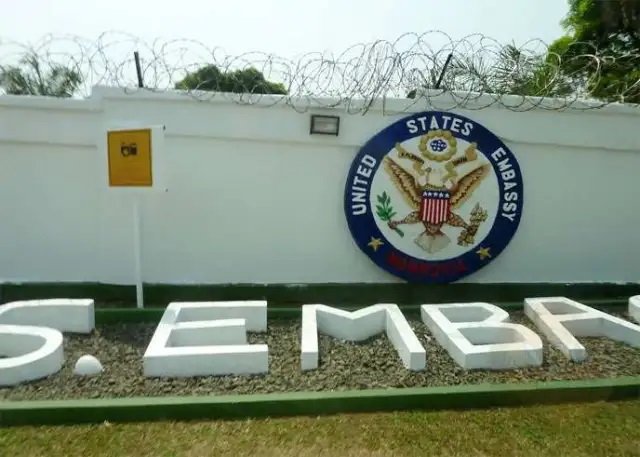
MONROVIA – The recent statement by the United States Embassy in Monrovia has raised serious concerns over the fairness and transparency of U.S. visa practices. On Friday, January 23, 2026, the Embassy released a notice titled “KNOW BEFORE YOU GO,” emphasizing that holding a U.S. visa does not automatically guarantee entry into the United States.
The notice clearly states: “A visa allows you to travel to the United States, not to enter the U.S.” For many Liberians, this revelation raises a pressing question: why should travelers pay substantial fees for visas that may ultimately provide no access?
According to the Embassy, Customs and Border Protection officers at ports of entry have the sole authority to decide whether a traveler can enter the country and for how long. Even a legally obtained visa can be rendered meaningless if entry is denied.
This practice leaves applicants grappling with a troubling reality. A visa, typically seen as proof of preliminary approval, offers no guarantee of access. Why, then, does the U.S. Embassy collect hundreds of dollars in fees from applicants, knowing that entry remains conditional?
Liberians seeking visas often invest significant financial and personal resources. Application fees for a standard nonimmigrant visa can run into hundreds of dollars, excluding travel, photographs, and other administrative expenses. Yet, the Embassy’s statement does not address the consequences of denied entry.
The policy raises serious questions about equity. How can foreign nationals trust a system that may arbitrarily block them at the border, even after fulfilling all requirements and paying hefty fees?
Travelers often plan months in advance, arranging flights, accommodation, and even work schedules around U.S. travel. Being refused entry despite holding a valid visa is not only financially damaging but also humiliating and disruptive.
Critics argue that this practice undermines the credibility of U.S. diplomatic missions abroad. A visa that does not guarantee entry effectively transforms the process into a transactional exercise rather than a genuine facilitation of international travel.
Accountability is another major concern. If a traveler is denied entry, who bears responsibility? Are there avenues for appeal, or is the decision of U.S. Customs officers absolute and final?
Such practices can have broader implications for international relations. Developing countries like Liberia rely on access to U.S. visas for students, professionals, and investors. Policies that make entry uncertain risk discouraging legitimate travel and undermining educational and business exchanges.
The timing of the Embassy’s notice is also questionable. Many travelers receive visas months before their planned trips, yet only learn upon arrival that entry is not guaranteed. Should there be clearer warnings upfront to prevent financial and emotional losses?
The statement implicitly highlights a troubling revenue dynamic: visas are issued as a source of income, yet entry is conditional. This raises ethical concerns about charging citizens of other nations for a service that may ultimately be denied.
Experiences of Liberians denied entry despite holding valid visas have been described as humiliating and disorienting. Beyond individual impact, these incidents raise broader questions about how the U.S. treats foreign nationals seeking entry.
The policy challenges the image the U.S. has long promoted internationally: a country governed by fairness, law, and due process. When visas become tools of uncertainty, the perception of U.S. fairness suffers.
Ultimately, the Embassy’s statement forces a critical question on the global stage: is it justifiable to collect fees for a service that can be rendered meaningless at the border? How many travelers will continue to risk financial, emotional, and professional losses in this system?
Liberians and other nationals are questioning the U.S., which now faces an urgent need to reconcile its visa policies with transparency, fairness, and respect for travelers. For many, this is no longer a question about visas; it is a question of dignity, predictability, and international accountability.