The United States Government’s decision to extend the validity of Liberian nonimmigrant visas from one year to three years has landed as one of the most encouraging diplomatic developments in recent years. On the surface, it is an administrative adjustment. In truth, it is an unmistakable vote of confidence in Liberia’s renewed credibility on the international stage.
For decades, Liberia and the United States have shared a unique relationship, one rooted in history, culture, and democratic ideals. Yet that bond has not always been steady. Political instability, corruption, and governance failures have, at times, tested Washington’s patience and strained the goodwill once taken for granted. This new visa policy signals that trust is being restored.
The revised arrangement allows Liberian travelers, businesspeople, tourists, and students alike, to obtain three-year multiple-entry B1 and B2 visas, eliminating the previous 12-month restriction and associated reciprocity fees. For a country whose global engagement was long overshadowed by weak systems and diplomatic missteps, the timing could not be better.
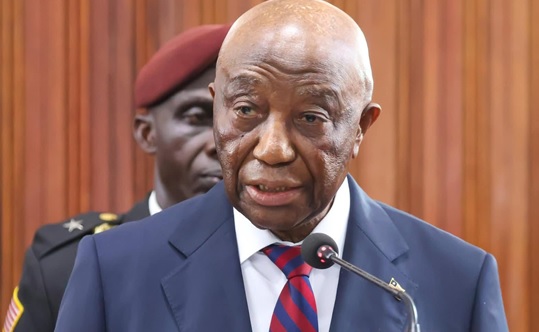
President Joseph Nyuma Boakai has described the move as a testament to “shared democratic values and mutual respect.” He is right. But it is also a reflection of how Liberia is now perceived: not merely as a post-conflict nation struggling to find its footing, but as a country making measured progress toward transparency, accountability, and international cooperation.
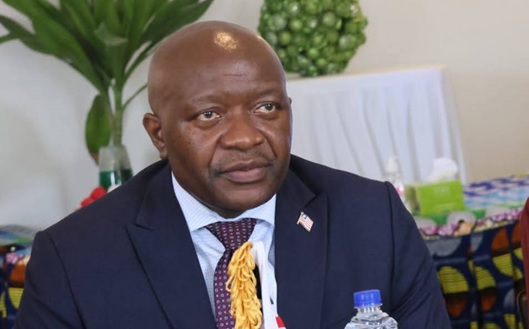
The decision from Washington did not occur in a vacuum. It followed months of quiet diplomatic engagement and renewed coordination between Monrovia and the U.S. Embassy. Foreign Minister Sara Beysolow Nyanti, who has made diplomatic re-engagement a central pillar of her foreign policy agenda, has emphasized the importance of building credibility through action rather than rhetoric.
If the United States has chosen to extend its hand, Liberia must now prove itself worthy of the gesture. This moment calls for responsibility and foresight. Greater freedom to travel brings with it the obligation to maintain the nation’s image abroad, comply with international norms, and ensure that Liberians use these opportunities to contribute positively to both countries.
The economic implications are substantial. Business leaders can plan long-term ventures, educators can forge new institutional partnerships, and students can pursue extended academic programs without the financial and logistical barriers that once deterred them. In the broader sense, this policy creates pathways for innovation, trade, and cultural diplomacy, tools Liberia urgently needs to drive its recovery.
But beyond convenience, the new visa structure is symbolic of something larger: the reawakening of trust between two nations whose destinies have been intertwined for more than a century. The United States, which has often played the role of both ally and critic, appears to recognize in the Boakai administration a chance to reset relations on the basis of mutual accountability.
In recent years, U.S. policymakers have increasingly linked visa reciprocity and foreign assistance to governance performance. Liberia’s inclusion in this new arrangement suggests a growing confidence in its political and institutional stability. That confidence, however, is fragile. It must be guarded with consistent leadership, transparency, and a genuine fight against corruption, values that remain under constant scrutiny at home.
President Boakai’s government must also seize this as an opportunity to deepen Liberia’s engagement with the diaspora. Thousands of Liberians living in the United States remain a vital economic and intellectual resource. Easier mobility can help reconnect them to national development efforts, from investment in education and healthcare to technology and entrepreneurship.
Diplomatic observers see this policy shift as one of the clearest signs yet that Liberia is reentering the circle of nations viewed as credible global partners. It mirrors similar gestures the U.S. has extended to countries that have demonstrated political maturity and institutional stability. Liberia must not squander this goodwill with complacency or poor governance.
In truth, Liberia’s reputation abroad has been a casualty of its domestic shortcomings. Corruption scandals, weak accountability mechanisms, and erratic policy decisions have often overshadowed genuine progress. The Boakai administration now has a rare chance to reverse that narrative. Sustaining Washington’s confidence will depend not on speeches, but on real reforms that strengthen the rule of law and protect public integrity.
The government should also view this diplomatic win as a foundation for broader negotiations, including trade incentives, educational partnerships, and development cooperation. The new visa policy opens doors not only for travelers but for state-to-state collaboration in areas such as infrastructure, renewable energy, and security cooperation.
This development must also be understood within the larger context of global migration and diplomacy. In a world increasingly defined by border restrictions and security screening, a three-year visa privilege for Liberians is no small gesture. It signals that the U.S. sees Liberia not as a risk, but as a partner in stability and regional growth.
Still, Liberians must temper celebration with responsibility. The misuse of travel privileges, including overstays or violations, could quickly reverse these gains. Each citizen who travels abroad under this new arrangement becomes an informal ambassador of the nation’s character. That is a responsibility that should not be taken lightly.
The road ahead will demand sustained diplomatic engagement and credible governance. Liberia must prove that it is not merely a beneficiary of goodwill but a reliable partner capable of upholding the values it shares with the United States. The Ministry of Foreign Affairs, for its part, must ensure that Liberian missions abroad are well-equipped to serve citizens, manage documentation efficiently, and provide transparent information about visa processes.
The extended visa validity is not a favor; it is a reflection of Liberia’s potential. Whether that potential is fulfilled or squandered will depend entirely on how this administration governs and how its citizens conduct themselves abroad. The Boakai government must turn symbolic gains into structural change by reforming institutions, stabilizing the economy, and restoring public trust.
The U.S. decision is, in essence, an invitation, a reminder that Liberia’s story is still being written. It is a moment to reclaim dignity, to build new bridges, and to prove that partnership with the United States can yield mutual benefit built on respect, not dependency.