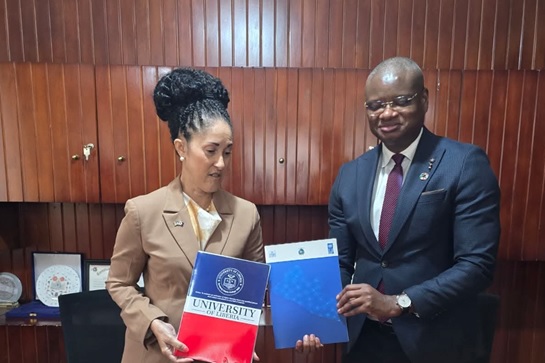
MONROVIA – The United Nations Development Programme (UNDP) and the University of Liberia (UL) have signed a Standard Letter of Agreement (SLA) establishing a transformative partnership aimed at advancing innovation, technology, and strategic development in Liberia. The collaboration will introduce a Master’s degree program in Artificial Intelligence (AI) and establish an Innovation Center at UL’s Fendall Campus, expanding on the successful UNIPOD initiative.
The partnership also includes the launch of the 2025 Holiday Tech Camp, designed to inspire and empower the next generation of tech leaders, with additional camps planned to sustain momentum. A five-year Strategic Plan and a comprehensive capacity enhancement needs assessment will strengthen the university’s faculty and students in research, policy analysis, and innovation.
Speaking at the signing ceremony, UL President Dr. Layli Maparyan expressed gratitude to UNDP. “This collaboration opens a new chapter for innovation and engagement at the University of Liberia. I want to thank UNDP for its commitment and for seeing this vision through,” she said. UNDP Resident Representative Aliou Mamadou Dia emphasized the broader impact of the initiative, stating, “We are confident this initiative will make a significant impact—not only for the University of Liberia but for the country as a whole.” UL Vice President for Institutional Development, Mrs. Weade Kobah Boley, reaffirmed the university’s dedication to the partnership. “We will make this dream a reality,” she said.
The initiative reflects a shared commitment to advancing education and innovation in Liberia, aiming to foster talent, enhance research capacity, and position Liberia competitively in the global technology arena. The signing ceremony was attended by UNDP Team Leader for Inclusive Governance and Public Institutions, Mr. Stanley Kamara.
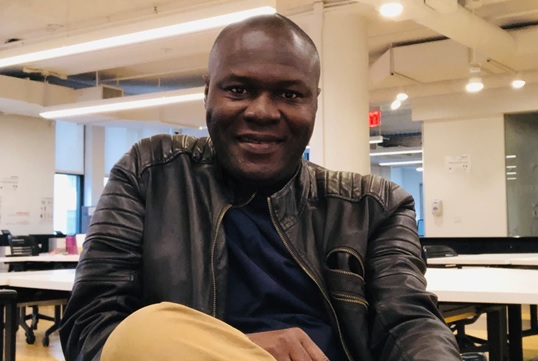
However, the launch has attracted criticism from Liberian political commentator and 2029 Presidential Aspirant Matthew Nyanplu. In a statement on Saturday, August 30, 2025, Nyanplu cautioned against AI adoption at Liberia’s current stage of development, arguing that it risks undermining the country’s human capital.
“AI will hollow out the human capital investment we have to make in our people, to properly educate them and make Liberians competent and productive citizens,” Nyanplu said. He pointed to challenges in the national education system, including poorly trained teachers and a school system focused more on enrollment numbers than on ensuring students learn essential skills.
Nyanplu argued that Liberia must first address fundamental infrastructure needs, expand industries, and cultivate knowledgeable, competent citizens before embracing AI. “To advocate for AI adoption in Liberia at this stage, with dilapidated and dysfunctional basic infrastructure, is to force a three-month-old infant to walk, rather than sit or crawl,” he said. He urged a measured approach, insisting that AI should enhance human capability rather than mask inadequacies or accelerate economic gains for foreign investors.
The UNDP-UL partnership seeks to position Liberia for a future in technology and innovation, while Nyanplu’s critique raises concerns about the readiness of the country to integrate advanced AI programs amidst existing development challenges. The debate underscores a broader discussion on balancing technological advancement with sustainable human capital development in Liberia.