By Danicius Kaihenneh Sengbeh
I read Mr. Wilmot F. Smith article, “When the Guardian Fails: Press Freedom, Responsibility, and the Decline of the Press Union of Liberia,” with deep concern and a strong sense of professional responsibility, as a former official of the Press Union of Liberia (PUL), a media educator, and a long-standing advocate of press freedom.
Published on his Facebook page on January 20, Mr. Smith’s article raises two intertwined concerns:
- The growing unprofessionalism within segments of Liberia’s media landscape
- What he perceives as the PUL’s diminishing effectiveness in addressing confirmed ethical violations.
In essence, he portrays a Union that appears vigorous in defending journalists, yet hesitant (or unwilling) to enforce discipline when wrongdoing is established. In summarizing the article, one would describe the Union’s posture as that of a toothless bulldog: visible, vocal, but unable or unwilling to bite.
On substance, Mr. Smith is fundamentally correct. Press freedom, as guaranteed under Article 15 of the Liberian Constitution, is inseparable from responsibility.
I argue that any interpretation of press freedom that excludes accountability is not only professionally flawed but democratically dangerous. A media environment without discipline ultimately harms journalists themselves, erodes public trust, and weakens the democratic system journalism claims to defend.
Beyond his general critique, Mr. Smith makes a specific and troubling claim. He alleges (both in the article and on phone with me) that his character and reputation have been repeatedly damaged through defamatory and unethical media practices – even compelling him to go to court.
According to him, formal complaints were lodged with the PUL; investigations were conducted; and journalists and media institutions were found culpable. Yet, despite these findings, the offending parties reportedly refused to publish apologies, corrections, or retractions, and the Union failed to enforce its own decisions.
Consequently, he claims, he was left to suffer reputational and personal injury alone. Each time when situations like these happen and citizens decide on going to court for legal redress, Mr. Smith argues the PUL stand by these very journalists and media institutions, issuing strong-worded statements that the media is under attack.
While I cannot independently confirm or dismiss these allegations, I insist that if such claims are accurate, they strike at the very heart of institutional responsibility. No professional body like the PUL should investigate misconduct, establish wrongdoing, and then retreat into silence. When it does, it forfeits not only credibility but moral authority. The Liberia National Bar Association and the Medical and Dental Board of Liberia are not on record for these. The PUL should not be.
I recall our days at the PUL, when I served as Secretary General with K. Abdulai Kamara as President (RIP, my dear President). The Union was not perfect—it never was, and it never can be—but we understood that advocacy alone was insufficient. The PUL’s mandate extended beyond defending journalists; it included regulation, discipline, and moral leadership. We did not hesitate.
When ethical standards were violated through defamation, misinformation, sensationalism, or abuse of professional platforms, we named misconduct, applied sanctions, compelled apologies, and, where necessary, suspended members, including at one point a member of the PUL leadership itself.
These actions were corrective, not punitive. They were aimed at protecting the integrity of the profession and preserving public confidence. The records exist, and many of those disciplined remain active in the media today.
I reject the argument that naming and sanctioning unethical journalists puts them in harm’s way. What is far more dangerous is “silence” – if we don’t talk about it. Let me tell you this. Silence normalizes misconduct, rewards indiscipline, and signals to young journalists (including my students) that ethics carry no consequences.
I insist that corrective discipline, applied openly, fairly, and consistently, strengthens press freedom rather than undermining it.
The PUL cannot credibly claim to speak for all journalists while selectively enforcing standards or shielding confirmed ethical violations under the banner of press freedom.
When a Union investigates, establishes wrongdoing, and then fails to act, as Mr. Smith claims in his case, it abandons its core responsibility. When it becomes vocal only after courts are invoked, yet remains silent while citizens suffer reputational injury, it undermines its relevance.
The misuse of personal images, reckless attribution, defamatory reporting, and refusal to publish rebuttals are not minor ethical lapses. They are fundamental breaches of journalistic practice.
I argue that people’s character and reputation are priceless commodities. They cannot and must not be dragged into the mud of public disrepute under the guise of journalism. When such violations are confirmed, naming and shaming is not cruelty; it is accountability. And that is the path we must always take as responsible umbrella body.
I commend the current leadership of the PUL for its recent, strongly worded intervention questioning the conduct and ethical standards surrounding a media awards ceremony. That statement was an important signal that the Union is prepared to stamp its authority. However, I insist that this resolve must be applied consistently and without fear or favor—especially in cases involving reputational harm such as the one narrated by Mr. Smith.
The PUL has that power. Oh, yes, it has.
I conclude that Liberia does not need a Press Union that confuses protection with indulgence. It needs a strong institution that enforces ethics fairly, disciplines misconduct decisively, and understands that accountability is the foundation of press freedom.
I know President Julius K. Kanuba knows this too well. He understands that freedom must be defended, but integrity must be enforced. A press without discipline is not free, a union without courage is not credible, and journalism without accountability is a danger to the democracy it claims to serve. When Press Freedom Loses Its Spine Democracy is in trouble. I rest my weeping pen.
—
The Author
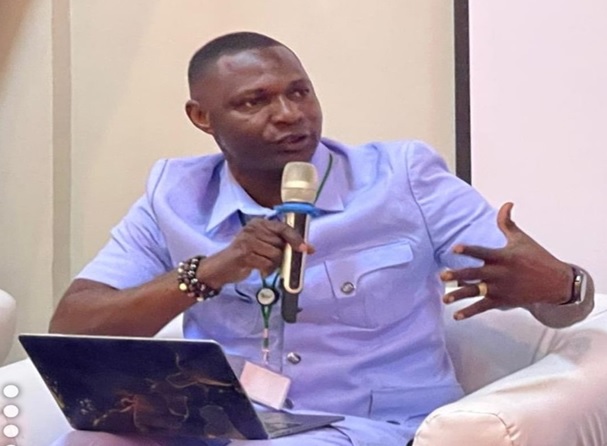
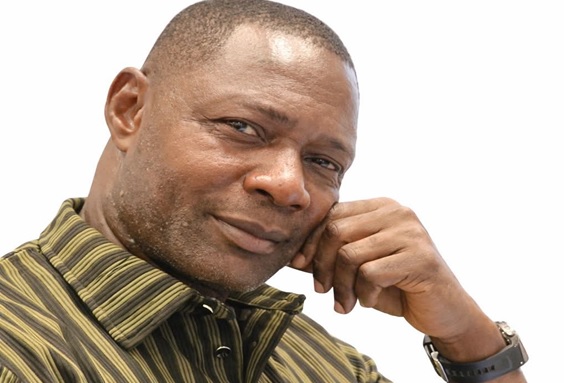
Danicius Kaihenneh Sengbeh is a communication expert, media educator, and former Secretary General of the Press Union of Liberia. He lectures journalism and mass communication at the University of Liberia and has professional experience spanning reporting, editing, media leadership, and press advocacy. He has studied journalism in Liberia and mass communication internationally, and remains an active commentator on media ethics, press freedom, and democratic governance.