MONROVIA – Foreign Minister Sara Beysolow-Nyanti’s recent remarks have thrown into sharp focus a troubling contradiction at the heart of Liberia’s global posture, a nation seeking greater international influence while struggling to rein in behaviors that undermine its credibility abroad.
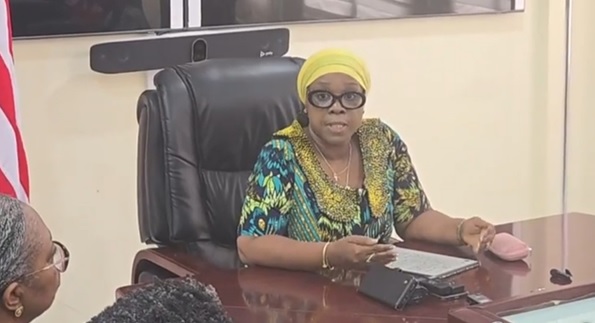
At a press briefing on Monday, October 20, 2025, Beysolow-Nyanti issued a candid warning about migration-related abuses committed by Liberians, particularly in the United States. Her message, while diplomatic in tone, underscored a national crisis of reputation. “This is hurting our nation,” she declared. “These actions damage our credibility. They limit opportunities for the very people we’re trying to create pathways for.”
Her statement, layered with both moral conviction and diplomatic urgency, highlighted a glaring paradox. On one hand, Liberia is celebrating its historic election to the United Nations Security Council and the revival of economic diplomacy under President Joseph Boakai’s administration. On the other, its citizens’ unlawful conduct abroad, visa violations, overstays, and immigration fraud, threatens to unravel the progress made in building international trust.
Beysolow-Nyanti’s remarks come at a time when Liberia is positioning itself as a responsible global player, pursuing major partnerships with the United States and other allies. Yet, these ambitions appear undermined by a lack of collective discipline at home and abroad. “Trust between nations, like trust between individuals, is sacred,” the Minister said. “When people misuse the freedom granted through international cooperation, it undermines the common good.”
The Foreign Minister’s statement could be interpreted as more than a moral appeal, it is an implicit critique of the government’s slow response to the reputational risks Liberia faces. Despite strong rhetoric on reform, Liberia continues to grapple with structural weaknesses: poor enforcement of migration laws, lack of public awareness, and minimal accountability mechanisms for citizens abroad.
In response, Beysolow-Nyanti announced a national education campaign designed to help citizens understand the long-term consequences of migration abuses. The initiative, she said, will not be punitive but corrective, a bid to reorient Liberians toward lawful conduct and respect for international agreements. “Our approach is not to condemn,” she explained, “but to inform and empower Liberians to make choices that uplift our collective reputation.”
But beneath the optimism lies a deeper question. Can Liberia’s foreign policy ambitions thrive without corresponding internal discipline? Analysts say that unless the government confronts the cultural and systemic roots of indiscipline, from the casual misuse of travel opportunities to the disregard for the rule of law, the country risks being seen as diplomatically inconsistent.
Beysolow-Nyanti’s broader vision for Liberia’s diplomacy remains ambitious. She highlighted a proposal for a U.S.-backed geological survey to uncover and responsibly develop Liberia’s mineral resources, including lithium and cobalt. “We’re not just seeking extraction,” she stated. “We’re seeking value addition that creates jobs and builds our economy.” Yet, such partnerships require not only political stability but also national credibility, something now tested by citizens’ conduct abroad.
As Liberia prepares to assume its seat on the United Nations Security Council in January 2026, Beysolow-Nyanti said the country would champion themes such as conflict prevention, youth inclusion, and advocacy for Africa’s voice in global governance. But for Liberia to be taken seriously, her message implied, its leadership must ensure that the nation’s moral and legal standards reflect its diplomatic aspirations.
The Foreign Minister’s remarks, therefore, go beyond migration. They speak to the soul of Liberia’s governance, a reminder that foreign policy strength begins with domestic integrity. As she put it plainly, “Our credibility is built not only by our government’s actions but by the conduct of every Liberian, wherever they are.”
In that sense, Beysolow-Nyanti’s warning was both a reflection and a rebuke, a call for Liberia to align its global ambitions with the discipline, responsibility, and moral authority required to sustain them.