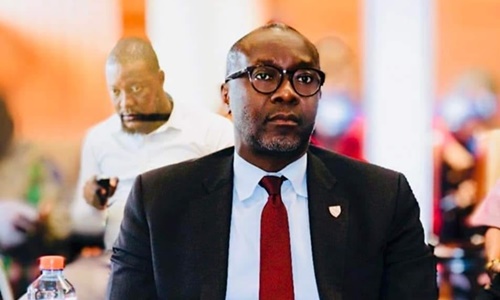
MONROVIA — In a statement released on Monday, October 3, 2025, Senator Amara Konneh outlined what he described as the critical path for President Joseph Boakai’s economic agenda, emphasizing job creation and structural reforms as central to national prosperity. The commentary, titled “Jobs-Rich Growth As the Key to President Boakai’s Success,” comes amid mounting public concerns over unemployment, poverty, and stagnant private-sector activity.
“Last week, the Boakai Administration made significant progress on U.S. visa reciprocity, signaling a renewed commitment to fair treatment among longtime allies,” Konneh wrote. “This significant diplomatic win marked a vital step toward potentially boosting Liberia’s foreign direct investment and economic growth. We congratulated the President and his team on this achievement.”
While recognizing this diplomatic success, Konneh urged the government to remain focused on pressing domestic economic challenges. He cited the World Bank’s Liberia Economic Update 2025, released on October 29, which painted a sobering picture of Liberia’s economic landscape. “The report highlights a high poverty rate, persistently high unemployment caused by a stagnant private sector, a rapidly growing labor force, and a lack of structural reforms,” he noted.
Konneh pointed to dramatic declines in Liberia’s key industries, including mining, which fell from 11.9 percent to 1.8 percent, and manufacturing, which dropped from 32.4 percent to 7.1 percent. “These numbers reflect the daily challenges faced by our people and demand urgent attention,” he said, underlining that the report focuses on human realities rather than abstract macroeconomic figures.
The Senator highlighted broader indicators of hardship, including a life expectancy of just 61 years, low school enrollment, and 1.6 million Liberians living on less than $3 a day. “If that doesn’t grab our attention, I don’t know what will,” Konneh said, stressing that the administration’s response to these issues would define President Boakai’s legacy and the Unity Party’s chances in the next election.
Reviewing the economic record of the previous administration, Konneh acknowledged moderate GDP growth under President George Weah but criticized the lack of job creation and high inflation. “High inflation rates of 7.6 percent in FY22 and 10.1 percent in FY23, along with a fiscal deficit of 7.1 percent in FY23, offset that growth,” he said. Konneh noted that President Boakai’s government has lowered the fiscal deficit to 2 percent in 2024 but warned that growth remains slow at 4 percent and inflation persists at 8.3 percent.
Despite these challenges, Konneh commended sectors that have shown promise, including services and agriculture, which grew by 5 percent and 3.4 percent, respectively. “This is thanks to improved electricity supply and increased rubber and rice outputs,” he said, acknowledging the work of Liberia Electricity Corporation and the Ministry of Agriculture.
Konneh stressed that while stabilization is a step in the right direction, structural weaknesses remain a serious concern. He quoted the World Bank, noting that “structural weaknesses continue to limit job creation and private-sector development,” and urged the government to pursue “job-rich growth” as the path to inclusive progress. “GDP isn’t the only measure of a nation’s well-being,” he emphasized.
He also addressed the need for strong institutions to restore Liberia’s credibility with investors. “Hostility toward investors and reports of extortion hurt our reputation,” Konneh said, citing the U.S. Department of State’s 2025 Investment Climate report, which described foreign investors in Liberia as often seen “as opportunities for short-term graft rather than long-term partners in growth.”
Highlighting the importance of domestic enterprise, Konneh called for the full implementation of the Liberia Small Business Empowerment Act. “We must ensure that at least 25 percent of public procurement supports Liberian-owned businesses, with 5 percent reserved for women entrepreneurs,” he said, arguing that this represents genuine empowerment.
Konneh also underscored the Legislature’s critical role in supporting the Boakai Administration. “We must carefully review and swiftly act on the President’s investment proposals, learning from past mistakes,” he said. He advocated aligning the FY 2026 budget with the ARREST Agenda, focusing on agriculture, health, infrastructure, and education, while emphasizing the need for oversight to ensure real results.
Concluding his commentary, Konneh offered a call to action: “Achieving double-digit growth is possible, but it won’t mean much for the average Liberian unless we emphasize resilience and fairness. Reaching these goals will require discipline, bold reforms, and persistent execution of tough structural changes to make Liberia an attractive hub for inclusive investments benefiting all Liberians.”
“I believe we can do it,” he said. “Let’s rise to the occasion. Our people are watching; their future depends on what we do in the next 12 months.”