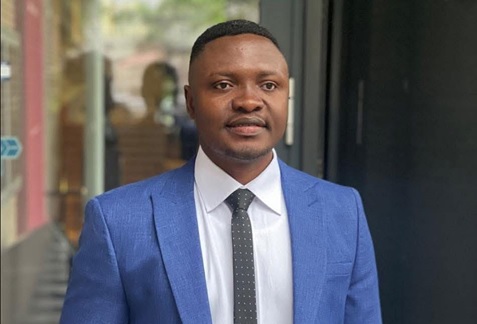
MONROVIA – Veteran civil‑society figure and 2029 Legislature hopeful Martin K.N. Kollie on Sunday, November 9, 2025, issued a critique of the recently submitted US$1.2 billion draft national budget for Fiscal Year 2026. The budget, handed over to Richard Nagbe Koon, Speaker of the House of Representatives, on Friday, November 7 via Finance Minister Augustine Kpehe Ngafuan, became the focus of Kollie’s scathing remarks regarding fiscal priorities and corruption. Kollie highlighted the sharp increase in legislative expenditure, from US$41.3 million in 2025 to US$51.7 million projected for 2026, and denounced the broader budget as a “celebration” of spending that will benefit “a few greedy and corrupt politicians.”
Kollie argued that while the headline figure of US$1.2 billion might suggest ambition, the substance of the budget betrays serious governance and accountability concerns. He insisted that Liberians should not be held in awe by the mere size of the budget but instead ask who will truly benefit and whether the proposed allocations will reach ordinary citizens. According to Kollie, the magnitude of the figure masks structural flaws inherent in how the nation’s resources are marshalled and spent.
In tapping into his years of advocacy, Kollie pointed to his long history of citizen‑led scrutiny of public finance in Liberia. His foundation, the MKNK Foundation, awarded L$1 million in scholarships to 17 students in Montserrado County in late 2024, illustrating his commitment to education and youth empowerment even while critiquing public institutions. Earlier in his career, Kollie opposed cronyism and championed transparency while serving as a student leader at the Student Unification Party (SUP) at the University of Liberia.
Speaking via a statement posted online, Kollie questioned the integrity of recent budgetary increases and flagged the legislature as a glaring example of fiscal excess. “You have increased legislative spending to US$51.7 million and yet you ask us to celebrate that the budget has reached US$1.2 billion,” he said. “Almost all the money will be consumed again by a few greedy and corrupt politicians. We won’t.” His words reflected sharp frustration with what he views as entrenched patronage rather than transformational spending.
Kollie’s rebuke comes at a time when public trust in government fiscal management is fragile. He referenced previous advocacy efforts where he demanded full disclosure of financial records for a Senate retreat in Buchanan, Grand Bassa County, under the Freedom of Information law. His campaign similarly pressed for transparency in state institutions and held the ruling party’s allies to account even while once aligning with them. That history endows his words with added weight, even as some political observers question his motives.
Indeed, Kollie’s own trajectory has been marked by complexity. While once a staunch supporter of the current administration, he resigned from the government’s Assets Recovery and Property Retrieval Taskforce (AREPT) in June 2024, citing what he described as poor leadership and lack of accountability. That decision deepened his reputation as an independent watchdog, but also opened him to criticism for inconsistency.
In his 2025 commentary, Kollie challenged the government not merely to publish numbers but to indicate the mechanisms for accountability: “Show us how these resources will be monitored, audited, and reported. “We want outcomes, not propaganda.” Through this lens, he interpreted the proposed legislative budget increase as emblematic of broader systemic governance flaws.
The budget’s timing mirrors Liberia’s pressing needs: infrastructure deficits, youthful unemployment, and fragile public finances. Kollie expressed concern that rather than channel funds toward these urgent areas, the budget seems skewed toward sustained administrative and political elite consumption. He warned that if unchecked, this pattern will further erode public trust and jeopardize social cohesion.
For the electorate and budget watchers, Kollie’s statement underscores the wider civic alarm over fiscal transparency. As Liberia prepares for the 2029 elections and debates over public spending intensify, voices like Kollie’s may shape public discourse. Whether policymakers heed his warnings and restructure budgetary frameworks remains to be seen, but the window for reform may be narrowing.
In a final appeal, Kollie urged citizens to remain vigilant and demand more than rhetorical numbers. He said the celebration of passing a large budget should be replaced by scrutiny of what the budget delivers. “A budget isn’t a victory lap, it’s a promise to the people,” he declared. With his eyes set on the 2029 Legislature race, the challenge now is whether his advocacy will translate into measurable reforms or become another critique in the long chorus of unfulfilled fiscal accountability in Liberia.