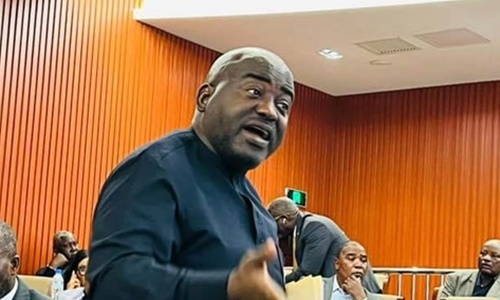

CAPITOL HILL, MONROVIA – Montserrado County District #3 Representative Sumo Mulbah has called on the Liberian Senate to immediately commence its portion of the 2026 national budget hearings, warning that further delays could derail the entire budget calendar and create unnecessary friction between the two chambers of the Legislature. His appeal follows mounting tension over which chamber should host revenue discussions first, a disagreement that has intensified in recent days as ministries and agencies appeared before the Senate rather than the House of Representatives.
The disagreement has been described by House members as an act of “gross disrespect,” with lawmakers insisting that the Liberian Constitution gives the House exclusive authority to initiate all revenue and financial bills. Their argument rests on Article 34(d)(i), which mandates that such bills must originate in the House, with the Senate functioning only to amend, concur, or reject proposals once they arrive from the lower chamber. The House maintains that this process must be followed procedurally in order to preserve constitutional order.
Rep. Mulbah, however, believes the House’s interpretation is unnecessarily rigid and risks undermining the efficiency of the national budget process. He argues that the Constitution does not prohibit the Senate from conducting its own preliminary scrutiny while the House undertakes its work. According to him, the Senate’s involvement early in the process does not violate Article 34 but rather strengthens coordination, reduces bureaucratic delays, and promotes a more efficient review of the budget before final passage.
The Montserrado lawmaker explained that Liberia’s bicameral Legislature has historically operated in a way that allows both chambers to move in parallel during budget season, and any attempt to restrict one chamber while elevating the other amounts to political posturing rather than a genuine attempt to improve governance. He cautioned that waiting for the House to conclude all hearings before the Senate begins would compress the timeline, making it more difficult to reconcile competing positions and increasing the risk of operating under temporary financial measures.
Rep. Mulbah further argued that the ongoing dispute has been fueled by what he termed unnecessary “showmanship” from colleagues seeking political attention rather than procedural clarity. He said the public debate around lawmakers’ salaries, in particular, has been clouded by misinformation, with figures being circulated online that do not reflect the reality of legislative compensation. He urged members of the public and political commentators to distinguish between gross salary and actual take-home pay.
According to him, the average Representative receives a net salary of US$4,465, consisting of a 70% U.S.-dollar component and an additional 30% in Liberian dollars, roughly equivalent to US$1,500. Mulbah disclosed that nearly US$2,000 is withheld monthly for taxes and NasCorp contributions, although he expressed concern that these deductions are not accompanied by proper receipts. He insisted that anyone claiming lawmakers take home US$8,000 monthly is deliberately misrepresenting the facts.
He expanded this point by explaining that if lawmakers were indeed being paid US$8,000 monthly in gross earnings, the House would be generating more than US$1.8 million in annual tax contributions, an amount he says does not appear anywhere in national revenue reports. Mulbah maintained that transparency in legislative payrolls is essential to separating truth from political propaganda and restoring public trust in the Legislature.
The representative also warned that cutting lawmakers’ compensation without considering the realities of their responsibilities would undermine “people-centered legislators,” particularly those who rely solely on their official earnings. He stated that many Representatives fund scholarships, operate district offices, and support local initiatives directly from their salaries. According to him, this level of accessibility is not matched by all officials, especially those he described as political elites who use national office to advance personal interests rather than community development.
Rep. Mulbah contrasted the social obligations of Representatives with those of many Senators, arguing that Senators rarely visit all of the districts within their respective counties. He emphasized that not all lawmakers have private businesses or external income streams, and some, including himself, avoid concessions and corporate engagements that do not align with the interests of the people they represent. He said these realities must shape conversations around legislative pay.
As the budget negotiations intensify, Rep. Mulbah urged his colleagues to abandon political theatrics and focus on ensuring a timely, transparent, and people-driven budget process. He emphasized that effective lawmakers must remain on the ground, stay in touch with constituents, and resist distractions that undermine national priorities. He concluded that for legislators committed to supporting President Joseph Boakai’s agenda, “there is no business as usual,” and the ultimate goal must remain service to the Liberian people.