
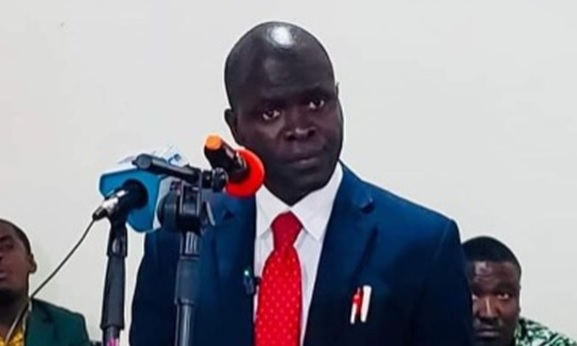
MONROVIA – The Executive Director of the Environmental Protection Agency (EPA), Dr. Emmanuel Urey Yarkpawolo, has warned that climate change is no longer a distant threat but a present and worsening danger to Liberia’s environment, economy, and public safety. He said the country is already experiencing the consequences of climate change, with impacts that are intensifying each year.
Speaking at a press briefing on Thursday in Monrovia, Dr. Yarkpawolo explained that Liberia is facing severe environmental challenges driven by climate change, including heavy rainfall, recurrent flooding, rising sea levels, and unpredictable weather patterns. He noted that these changes are disrupting livelihoods, damaging infrastructure, and slowing national development.
“Climate change is happening now,” Dr. Yarkpawolo said, stressing that rising temperatures, warming oceans, increased atmospheric moisture, and altered rainfall patterns are contributing to stronger and more frequent flooding across the country.
He revealed that between 2019 and early 2026, Liberia, particularly Monrovia and its surrounding communities, has recorded a sharp increase in flooding incidents. According to him, many of these floods occur late at night or in the early morning, catching residents off guard and leaving families displaced.
Dr. Yarkpawolo said the floods have destroyed homes, washed away household property, and damaged roads, drainage systems, and other public infrastructure. He added that repeated flooding continues to place pressure on government resources and emergency response systems.
The EPA Executive Director also raised concerns about rising sea levels, warning that Liberia’s coastal communities face serious risks. He said scientific projections show that sea levels could rise between 0.6 meters and one meter, a development that could threaten thousands of residents living along the coast.
He emphasized that a large portion of Liberia’s population resides in coastal areas, including zones close to hospitals, major roads, and economic centers. Without timely intervention, he said, these communities could face severe displacement and economic disruption.
Dr. Yarkpawolo further highlighted the impact of climate change on agriculture, noting that irregular rainfall patterns are affecting the cultivation of staple crops such as rice and cassava. He said reduced agricultural output has contributed to rising food prices and increased food insecurity nationwide.
He identified human activities as major contributors to Liberia’s climate challenges, including deforestation, illegal logging, mining operations, industrial emissions, pollution, and unsustainable farming practices. According to him, these activities are accelerating environmental degradation and worsening climate impacts.
In response, Dr. Yarkpawolo said the government, through the EPA and its partners, is strengthening environmental regulations, improving monitoring of mining and industrial activities, protecting forests and wetlands, and enforcing pollution control measures. He added that efforts are also underway to invest in climate-resilient development and early warning systems for extreme weather events.
Dr. Yarkpawolo concluded by calling on all Liberians to take responsibility for protecting the environment. He urged citizens to safeguard forests, stop blocking drainage systems, reduce pollution, practice sustainable farming, and support environmental protection initiatives, warning that the future of Liberia depends on actions taken today.