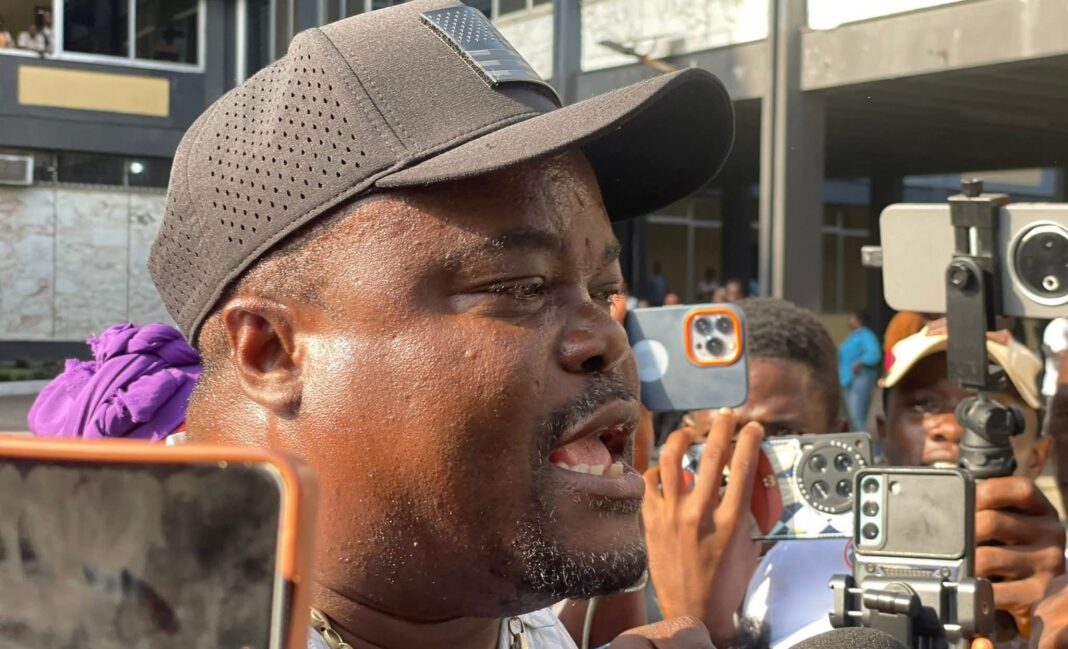
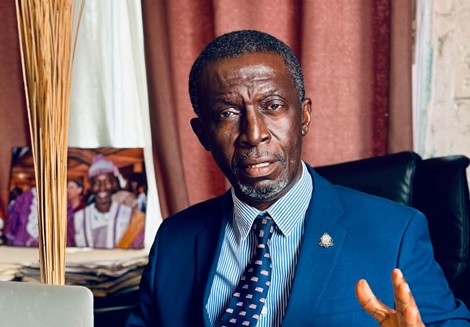
MONROVIA – Renowned Liberian human rights lawyer Taiwan Saye Gongloe has weighed in on the controversial six-month jail sentence handed down to Justin Oldpa Yeazehn, widely known as Prophet Key, describing the Supreme Court’s action as firmly grounded in law and necessary for the protection of Liberia’s constitutional order. His statement followed Friday’s dramatic proceedings at the Supreme Court of Liberia, where the Full Bench convened to address a high-profile contempt case that has gripped national attention.
The case centered on allegations of abusive conduct and public insults directed at the judiciary, particularly Chief Justice Yamie Quiqui Gbeisay and other members of the Bench. The matter, which unfolded in Monrovia on February 13, 2026, brought intense public scrutiny and reignited debate over the boundaries between free expression and respect for judicial authority.
Gongloe, a drafter of Liberia’s landmark free speech legislation known as the Kamara A. Kamara Law, clarified that his position is guided strictly by the rule of law. As an ardent defender of constitutional freedoms, he emphasized that supporting civil liberties does not equate to condoning speech that undermines public order or attacks the integrity of the courts.
Referencing Section 17.3 of Liberia’s Penal Code, Gongloe explained that the law addresses criminal malevolence and conduct that threatens the administration of justice. According to him, vulgar remarks directed at the nation’s highest judicial officers fall within the scope of behavior that the law seeks to deter and punish.
“Respect for the judiciary is not optional,” Gongloe stressed, noting that constitutional governance rests on the stability and credibility of judicial institutions. He argued that when courts are publicly degraded in ways that threaten their authority, the very foundation of the rule of law is placed at risk.
The sentencing of Prophet Key has divided public opinion, with some critics arguing that the decision may chill free speech. However, Gongloe countered that freedom of expression, though robustly protected under Liberia’s Constitution, is not absolute. He maintained that it does not extend to speech that threatens, degrades, or unlawfully impugns the integrity of the courts.