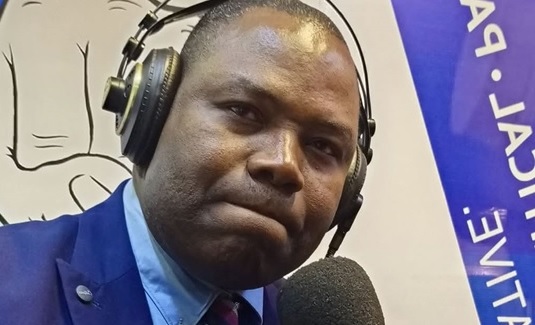
MONROVIA – The Chairman of the ruling Unity Party, Rev. Dr. Luther Tarpeh, has defended his comments on Punch FM on Friday, February 13, 2026, dismissing opposition criticism as a deliberate misinterpretation of his position on political collaboration and reward.
Tarpeh said his remarks were clear and emphatic, arguing that those who collaborate with the Unity Party enjoy what he described as “profound political dividends.” According to him, rewarding political allies is neither controversial nor improper, but rather a normal feature of democratic politics.
“I want to use this platform to clarify the unseeming misinterpretation of my comments,” Tarpeh wrote, pushing back against what he called an orchestrated reaction from the opposition bloc. He maintained that the Unity Party does not deceive its political partners, contrasting his party’s approach with that of the opposition Congress for Democratic Change during its time in government.
“We do not deceive our political partners as CDC did during their regime,” Tarpeh asserted, insisting that records exist to demonstrate the Unity Party’s magnanimity toward its allies. He pointed to partnerships with parties such as the Liberty Party and the Movement for Democracy and Reconstruction, which he said continue to enjoy the ruling party’s confidence and respect.
Tarpeh framed the issue as one of political maturity, arguing that alliances are built on mutual trust and shared interests. He rejected the suggestion that offering political dividends amounts to patronage, contending instead that it reflects loyalty and strategic cooperation within a competitive democratic system.
But his response did not stop at clarification. The Unity Party Chairman launched a sharp attack on the CDC, describing it as a “failed” political institution now attempting to rebrand itself as a messiah ahead of the 2029 elections.
“Well, I am not surprised that the failed CDC is parading herself as the political messiah in 2029,” Tarpeh declared. He questioned the motives of the opposition, suggesting that their desire to regain state power is driven less by public service and more by personal ambition.
“Are you insinuating that you want state power because you love the Liberian people? Of course not,” he wrote. “You want to come back to deplete our national resources for your lavished lifestyles.” Tarpeh argued that Liberians are politically aware and will not be misled by what he described as recycled promises.
The Chairman further defended the principle of rewarding political allies, posing a rhetorical question to critics. “Are you insinuating that when others help you in your political struggles, you should not reward them?” he asked, underscoring his belief that political support naturally warrants recognition and partnership.
Concluding his statement, Tarpeh reiterated that the CDC faces what he called a slim chance of political resurgence due to what he characterized as failed leadership in the past. He invited opposition figures to join the Unity Party instead, promising they would be treated as “real political allies.”