The Day Untouchable Names Were Touched – the Picture Liberia Can No Longer Ignore in a Moment Frozen Between Quasi – Justice and Unprecedented – Judgment, the Discovery of Allegations with Blanket of Contradictions.
A Humiliating and Crushing Introspection: On the Draconian Leadership of the Congress for Democratic Change – The Brutal Era under George Manneh Weah and the Painful Setback and Stigmatization of Principled Individuals.
This review examines the draconian style of leadership that characterized the Congress for Democratic Change under the stewardship of ex-President George Manneh Weah and the lasting impressions it left on many fine personalities. What began as a movement rooted in hope and popular aspiration gradually evolved into a governance approach marked by intolerance, rigid control, and the marginalization of dissenting voices. In the process, several capable and principled individuals saw their hard-earned reputations unwarrantedly damage, unfairly pierced and impaired/degraded through a process devoid of precedent or justice, their contributions substantially weakened, and their integrity improperly questioned – not necessarily by their own actions, but by their association with a leadership style that often conflicted with democratic ideals.
The legacy of this period serves as a sobering reminder that leadership is not only judged by power attained, but by how that power is exercised and the impact it has on people of character within its orbit. It calls for honest thoughtfulness, accountability, and a sustained obligation to governance that uplifts integrity, respects diversity of thought, and preserves the dignity of those who serve.
Unfortunately, on the evening of the arrest, Milton A. Weeks, Charles Emmanuel Sirleaf, along with co accused officials, (Dorbor M. Hagba, Richard H. Walker and Joseph Dennis); were incarcerated on different days over the course of a single week (between February 28 and March 4, 2019, inclusive) and taken into custody at differentiated roles and responsibilities under tight security. As brooding and ink-dark night settled over Monrovia, Liberia in its entirety, amidst unreliable and fragile power shortages, a city with a tense landscape of contrasts—quiet yet charged, peaceful yet uneasy, calm in appearance, weighted with feeling, restrained but resonant. The crowded streets gradually emptied as residents retreated indoors, drifting into Slumberland; leaving behind a subdued silence broken only by a few active corners where kiosks glowed, generators hummed, and quiet conversations lingered into the early night hours. In the shadows, predators of petty criminals moved with calculated patience and anticipated probability, alert and waiting for opportunity, blending seamlessly into the darkness. Awaiting the returned of dawn with its familiar noise and movement.
The operation unfolded with deliberate precision: allegations were formally read aloud, personal effects logged, and the accused escorted through the city’s unusually quiet streets to awaiting vehicles, before being driven to the Monrovia’s South Beach Prison. There, beneath harsh lights and strict administrative formality, names were recorded and doors closed with institutional finality, marking the formal commencement of what authorities describe as an investigation into alleged misappropriation of public funds. The scene carried deep symbolism: not a judgment rendered, but a signal that the state had chosen to act. It also bore profound emotional weight, particularly for former President Ellen Johnson Sirleaf, for whom witnessing her son’s public arrest triggered a personal and public crisis, casting a shadow over her legacy and underscoring the human toll behind the headlines. Observers described the moment as both sober and instructive, a reminder that the reach of justice touches personal and political lives alike.
The arrest of Milton A. Weeks, Charles E. Sirleaf and their co-accused stirred a climate of guarded tension across workplaces and professional spaces, where the news was discussed only in cautious and quantitatively converted into a diminished and measured whispers. In offices, shops, ministries, and autonomous agencies, bystanders exchanged fragmented opinions with watchful vigilance, lowering voices and choosing words carefully, driven by fear of being noticed or branded as opposition; especially those from leading opposition block then, (Unity Party). Many believed that partisan loyalists of the then ruling Coalition for Democratic Change had planted individuals within line ministries and autonomous agencies to monitor who was for or against the government, as a means of exercising political loyalty; a perception that deepened anxiety and enforced silence. As a result, conversations about the alleged incrimination of the defendants were restrained and discreet, shaped by the real concern that a careless remark could lead to being “burnt” politically and ultimately cost someone their livelihood.
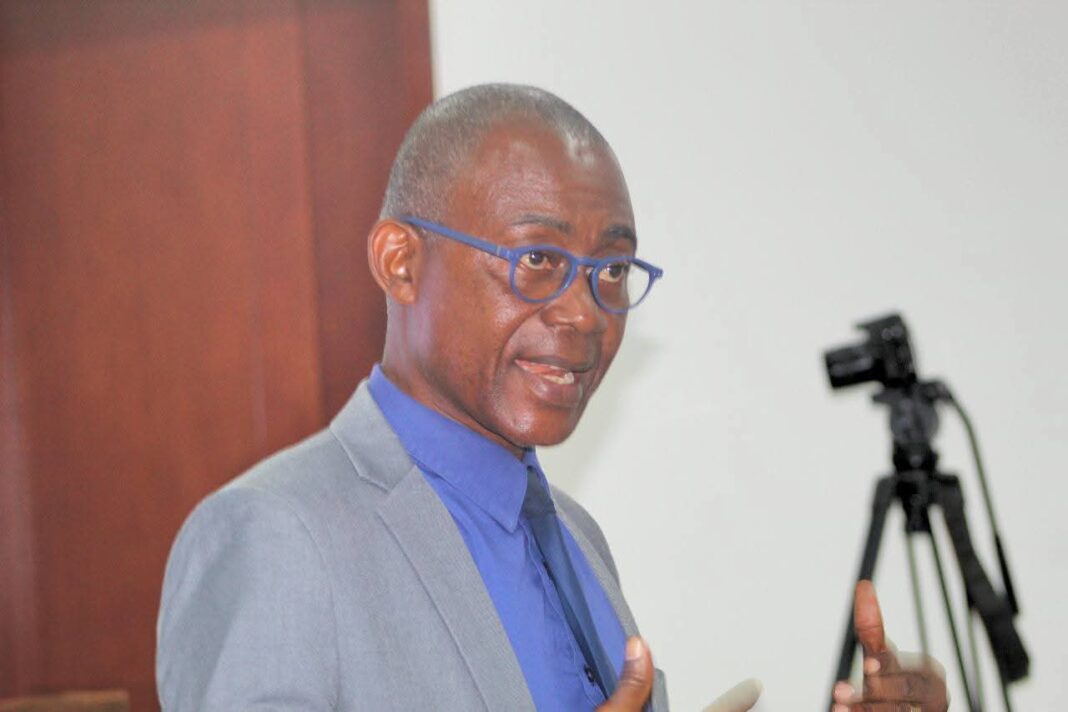
It was a turbulent and deeply defining chapter of my life. I, (D. Zawu Kota) had only recently returned from abroad to Liberia’s western region, carrying with me the hard-earned pride of an accomplished British – classified – and – appraised Master of Science degree in Supply Chain Management, with emphasis directed at Global Logistics and Materials Handling; from Coventry University, Coventry City, West Midlands, the United Kingdom; an academic victory attained during the waning days of Her Excellence/ex – President, Madam Ellen Johnson Sirleaf second and final administration and carried into the uncertain dawn of President George M. Weah’s transition then. I returned hopeful, resolved, and eager to serve my country with renewed purpose.
Those hopes, however, were short lived. I soon found myself silently nursing profound professional and emotional wounds after an abrupt, unjust, and deeply arbitrary dismissal from service – the Ministry of State for Presidential Affairs. My only offense was an act of conscience, publicly congratulating an opposition candidate during the July 2019 senatorial by election. That election itself was born of tragedy, the painful vacancy left by the untimely death of Senator Jeraldine Doe-Sheriff, and it ultimately ushered Abraham Darius Dillon into the Legislature.
The punishment was swift and unforgiving, serving as a harsh reminder of how fragile dissent and personal conviction had become. My dismissal unfolded amid a broader climate of institutional decay and political unease, as the senior executives of the Central Bank of Liberia met their own unfortunate and shameful fate. Together, these events formed a sober mosaic of betrayal, uncertainty, and disillusionment, one that left me bruised, reflective, and acutely aware of the personal cost of integrity in a volatile political landscape.
The images of Milton A. Weeks and Charles E. Sirleaf, son of former President Ellen Johnson Sirleaf, former senior officials of the Central Bank, alongside others accused; standing in handcuffs is more than a moment of personal disgrace. It is a photograph sufficiently weighty with history, irony, and long delayed reckoning. For a nation weary of corruption scandals that rarely end in accountability, the image lands like a jolt to the conscience, ‘a quiet reminder that time has a way of closing unfinished accounts’ – metaphor.
Liberia has for decades watched public resources disappear into private hands under the protection of powerful names, political connections, and elite family lineages. Allegations of the theft of millions of dollars during the administration of former President George M. Weah are not merely about figures on a balance sheet; they represent schools not built, hospitals underfunded, and opportunities denied to ordinary citizens. Against this backdrop, the handcuffing of a figure so closely linked to past and present centres of power is symbolically seismic.
This is not simply about Milton A. Weeks, Charles E. Sirleaf and the other accused individuals. It is about a political culture that has normalized impunity, where proximity to the presidency, past or present has too often meant immunity from consequence. The image punctures the myth that certain surnames are untouchable, that elite bloodlines are shielded from the reach of the law.
Yet the moment also demands seriousness, not celebration. Handcuffs are not justice; they are a process. Allegations, no matter how compelling or politically convenient, must be tested in open court, not tried in public opinion. Liberia cannot replace one injustice with another by turning accountability into spectacle or revenge.
Still, criticism is warranted, sharp and unsparing. For too long, corruption cases have been selectively pursued, quietly dropped, or buried beneath political negotiations. If this moment is allowed to fade into another unresolved scandal, it will confirm the public’s deepest cynicism: that arrests are performative, not transformative.
If, however, the investigation proceeds transparently and lawfully, without fear, favour, or political shielding, this image could mark a turning point. It could signal that Liberia is finally prepared to confront the uncomfortable truth that corruption is not an abstract problem, but one rooted in identifiable decisions, institutions, and individuals.
The photograph challenges the nation (Liberia) to decide what it wants justice to mean (a rhetorical/symbolic personification provoking moral reflection/a paragraph, an inanimate object is given the human ability to challenge/Liberia, an abstract entity, a nation is treated as if it can decide and want, which are human mental actions). Is it a tool wielded against the weak while the powerful escape? Or is it a principle applied evenly, even when it implicates the sons of former presidents and the architects of national policy?
For men such as Milton A. Weeks, Charles E. Sirleaf, and their co accused, whose lives were built on long years of discipline, public service, and carefully earned reputations, the moment of accusation would likely have felt surreal and deeply disorienting. In their minds, there may have been disbelief that decades of professional restraint and institutional loyalty could narrow, in the public eye, to the image of handcuffs and courtrooms.
What once defined them, titles held, systems built, students mentored, policies shaped, might suddenly feel overshadowed by a single chapter they never imagined would come in the twilight of their lives. There would likely be an inward reckoning, how history can be unforgiving, how public memory often condenses complex lives into simplified narratives, and how honour painstakingly built over years can be questioned in a matter of days.
Perhaps the heaviest thought would not be fear of judgment alone, but the awareness that history does not always wait for verdicts, that allegations themselves can leave a stain that time records alongside service, regardless of outcome. In that realization lies a quiet tragedy, the clash between how one has known oneself for a lifetime and how one may now be remembered by generations yet unborn.
History will judge this moment not by the handcuffs themselves, but by what follows. Liberia does not need more dramatic images. It needs consequences grounded in law, truth, and courage.
In the end, the photograph should not be remembered for the individual it captures, but for the principle it tested wrongly – whether Liberia is prepared to let justice speak calmly, clearly, and without bias. History has shown that justice distorted for spectacle or political convenience has a way of returning to indict its own architects, leaving lasting damage not only on the accused, but on the credibility of those who stage manage disgrace in place of truth.
Ultimately, for Charles E. Sirleaf though deceased and the other accused, this chapter marks a profound rupture in public life – one in which years of service, earned respect, and personal standing have been eclipsed by the spectacle of accusation and arrest. Regardless of how the courts had ruled, the damage to reputation is immediate and enduring, altering how their names are spoken and remembered. History is often unforgiving in this way: it records not only verdicts, but images, moments, and symbols. Left unresolved or unredeemed, such moments will linger beyond the individuals themselves, casting long shadows over families, descendants, and generations yet unborn – not as inherited guilt, but as inherited questions. This is the quiet, enduring cost of public disgraced in a nation still struggling to reconcile power, accountability, and justice.
In a troubling parallel to the prolonged legal limbo that engulfed the former Managing Director of the National Port Authority, Madam Matilda Parker’s economic sabotage case, indicted almost a decade ago and only recently cleared after years of procedural struggle, the episode underscores how charges of corruption at the heart of governance can drift without clear resolution or public closure; alongside these protracted financial cases sit equally haunting unanswered questions over deaths such as those of whistleblowers Harry Greaves and Michael Allison, the son of “Gray D.” Allison, legally known. He also carried different names and passports, including Maurice Denzel Bryce, Jr. (his birth name), Nkrumah Moziah Nadir Mulmi (U.S. passport identity), and Nkrumah Moziah Mulmi-Allison (Liberian passport identity); whose bodies were found under circumstances that fuelled speculation and weak official inquiry – all woven into a tapestry of unsolved allegations, contested narratives and limited justice, demonstrating how in Liberia both allegations of financial malfeasance and unresolved deaths shape public perceptions of justice, the rule of law, and the broader political order.
Even though the offenses stand in stark contrast—financial misappropriation and murder. In Liberia’s memory, certain names linger long after the headlines faded/dwindled: Obi – a Nigerian, Jekins Scott, Gray D. Allison, Jimmy Raincoat, Esther Parker, Flazamington, and others that remain unresolved include Harry Greaves and Micheal Allison. They are more than individuals; they are symbols of unresolved crisis, fear, and fragile justice. Their stories, part truth and part legend, mark moments when power eclipsed principle, institutions faltered, and ordinary Liberians navigated a landscape of rumour, intimidation, and suspicion. Some vanished, some were arrested, some were rumoured guilty, and some endured public disgrace – but in every case, outcomes were never fully reconciled, leaving questions unanswered and reputations scarred.
These figures are remembered not just for deeds or alleged deeds, but for what their stories reveal about enduring failures of governance, the normalization of impunity, and the cost of unchecked authority. They are cautionary tales etched into the nation’s conscience, reminders that history does not easily forget. In nightclubs, marketplaces, and quiet homes, Liberians still whisper their names, recalling a past where law bowed to power and truth was contested. Like shadows, these stories stretch across generations, shaping how children and grandchildren perceive justice, morality, and the limits of authority.
Even as nightclubs roar and the city drowns itself in noise, or how quickly public attention is distracted, history listens in silence, unmoved by noise. with stubborn memory – unresolved, unreconciled, yet impossible to ignore. They testify to the unfinished work of building a nation where accountability, transparency, and humanity guide power, not fear, rumour, or spectacle.
At my final point, the enduring question raised by this moment is not one of individual fate, but of institutional resolve. Liberia’s democratic project will be measured by its ability to move beyond symbolic enforcement toward systems that apply the law consistently, protect due process, and deliver timely, credible outcomes. Anti-corruption efforts that rely on spectacle rather than structure will fail, just as justice delayed will continue to corrode public trust. What is required is a deliberate strengthening of investigative independence, judicial efficiency, and accountability mechanisms insulated from political pressure. Only through such reforms can Liberia transform recurring cycles of accusation and unresolved crises into a governance culture rooted in transparency, fairness, and institutional credibility. This is the work that remains if the state is to restore confidence and secure a more stable and lawful future.
Pending that moment, with this serious, reflective, and historically conscious piece, the story of Milton A. Weeks, Charles E. Sirleaf (deceased), and his co-accused will remain, recalled as enduringly as – Esther Parker and Other Mysterious Deaths, Jimmy ‘Raincoat’, Allen Yancy, Obi – a Nigerian, Flazamington (50 Calaba), Jekins Scott, Gray D. Allison, Harry Greaves, Micheal Allison and Liberia’s other unresolved reckonings.
Sincerely spoken.