By Our Reporter | Smart News Liberia
MONROVIA – The Liberia Drug Enforcement Agency (LDEA) says it has intensified its war against illicit drugs, leading to the arrest of 233 suspected drug offenders and the seizure of hundreds of kilograms of narcotics valued at more than US$433,950 during the first quarter of 2026.
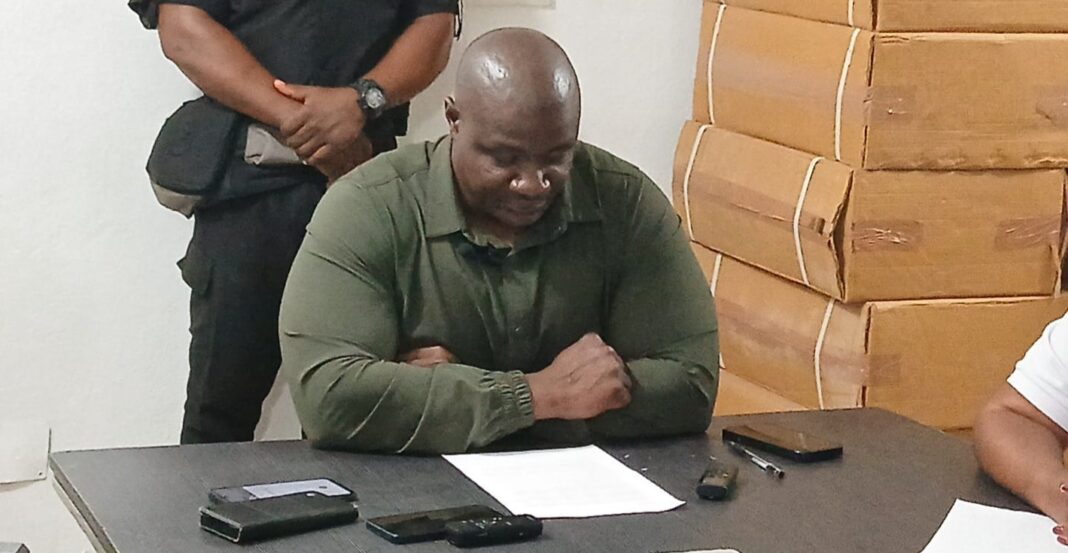
Presenting the agency’s first-quarter performance report on Tuesday, June 2, Officer-In-Charge DCP Fitzgerald T.M. Biago described the results as evidence of a renewed and aggressive campaign against drug trafficking and abuse across Liberia.
According to Biago, the operations were conducted under the framework of President Joseph Nyuma Boakai’s declaration of drug abuse as a national security and public health emergency, a move that has prompted increased enforcement efforts nationwide.
“The results achieved during this reporting period demonstrate our commitment to dismantling drug trafficking networks and protecting Liberian communities from the devastating effects of illicit substances,” Biago said.
The report revealed that 233 individuals were arrested in connection with drug-related offenses between January and March 2026. Of that number, 193 were men and 40 were women. The suspects included 195 Liberians, 17 Nigerians, 12 Sierra Leoneans, and nine Guineans. The agency confirmed that all suspects were investigated and forwarded to court for prosecution.
The LDEA also confiscated a significant quantity of narcotics, including Kush, marijuana, cocaine, and Tramadol. Authorities estimated the total street value of the drugs at more than US$433,950 and over LD$103 million.
One of the agency’s most notable successes came at the Bo-Waterside border crossing in Grand Cape Mount County, where officers intercepted and seized approximately US$1.337 million believed to be connected to a transnational drug trafficking operation.
Biago described the operation as a major breakthrough in disrupting organized criminal networks operating across West African borders.
“The seizure at Bo-Waterside sends a strong message that Liberia will not be used as a safe corridor for international drug trafficking activities,” he said. “We remain committed to targeting the financial infrastructure that supports these criminal enterprises.”
Beyond arrests and seizures, the agency reported progress in strengthening internal accountability and professional standards. The LDEA disclosed that officers linked to allegations of misconduct and evidence tampering remain under active investigation as part of its zero-tolerance approach to corruption.
“We are equally focused on cleaning our own house,” Biago emphasized. “Any officer found compromising the integrity of the institution will be held accountable under the law.”
The report further highlighted institutional reforms aimed at improving operational effectiveness. More than 100 Action Agents have been enrolled for professional training at the Liberia National Police Academy, while senior personnel are undergoing leadership and management development programs.
At the same time, the agency expanded its public awareness campaign, reaching more than 2,500 citizens through outreach activities conducted in schools, churches, mosques, youth organizations, and local communities.
Despite these achievements, the LDEA acknowledged that significant challenges remain. Limited logistical resources, inadequate surveillance technology, and increasingly sophisticated trafficking networks continue to hinder enforcement efforts.
While drug seizures declined sharply compared to the previous quarter, Biago said the reduction should not be interpreted as a weakening of enforcement. Instead, he suggested it reflects mounting pressure on traffickers and possible changes in trafficking routes and methods.
“The fight against drugs is not the responsibility of the LDEA alone,” Biago stressed. “Government institutions, international partners, civil society organizations, communities, and individual citizens all have a role to play in protecting Liberia from the threat posed by narcotics.”