Liberia’s intensifying war against cocaine trafficking has reached a critical point where allegations involving the country’s own drug enforcement leadership can no longer be treated as ordinary political noise.
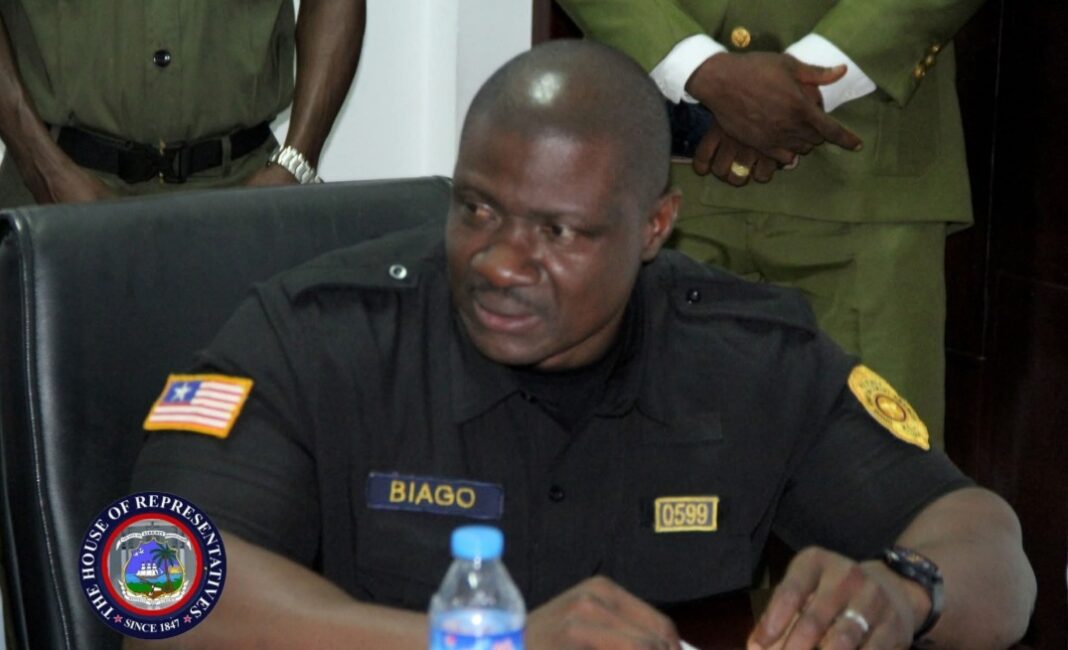
A fresh set of serious allegations published by Liberian activist Martin K. N. Kollie has placed Liberia Drug Enforcement Agency (LDEA) Officer-in-Charge Deputy Police Commissioner Fitzgerald T. M. Biago under renewed public scrutiny, with claims that a suspected drug trafficking network may have developed links within the national security apparatus.
The allegations are grave. They suggest that individuals entrusted with protecting Liberia from the destructive trade in narcotics may themselves have been compromised by people accused of participating in the very criminal enterprise they are expected to dismantle.
But allegations, however serious, are not convictions. They must be independently investigated, tested against documentary evidence and subjected to due process before conclusions are reached.
That distinction is particularly important because the accusations strike at the heart of Liberia’s current national conversation about cocaine trafficking, corruption and the integrity of state security institutions.
Kollie specifically alleges that a grey Toyota Hilux pickup being used by Biago is registered to George Wha Harris, also known publicly as “Leroy Harris,” a businessman who has reportedly been charged in connection with the massive US$317.68 million cocaine seizure in Duazon, Margibi County.
According to the information presented by Kollie, the vehicle carries license plate A532084 and was allegedly registered in Harris’ name.
Kollie further claims that the registration records identify Harris as the owner of the vehicle and that the telephone number attached to the registration is associated with him.
If independently verified, such information would raise serious questions that the government cannot simply dismiss.
Why is a vehicle allegedly registered to a person facing drug-related charges being used by a senior official of the country’s principal drug enforcement agency?
Under what circumstances did the vehicle come into the possession or use of the LDEA official?
Was it formally authorized by the government?
Was its ownership transferred?
Was it borrowed, leased, assigned or otherwise provided?
And, most importantly, was Biago aware of the vehicle’s registered ownership?
These are not questions that can be answered through political statements or social media arguments. They require a documented investigation.
Kollie has also alleged that a vehicle was purchased for Biago’s wife and claims that the purchase was connected to Harris. That allegation is equally serious and requires independent verification before it can be treated as established fact.
If the allegations are false, the appropriate response should be straightforward. Investigators should establish the facts, publish or present the relevant evidence where legally permissible, and clear the names of those wrongly accused.
But if any part of the allegations is substantiated, the implications would be far more consequential than the conduct of one official.
It would raise the possibility of a deeper institutional vulnerability within the very agencies responsible for protecting Liberia from transnational drug trafficking.
That is the real danger.
Liberia cannot win a war against cocaine if the institutions fighting the war are themselves vulnerable to infiltration, influence or compromise.
The country has recently witnessed unprecedented quantities of cocaine seized by its security agencies. Those seizures have demonstrated that Liberia is capable of intercepting major shipments. But successful seizures are only one part of the battle.
The more difficult question is whether the country can ensure that the people responsible for investigating, intercepting and prosecuting drug trafficking remain beyond the influence of traffickers.
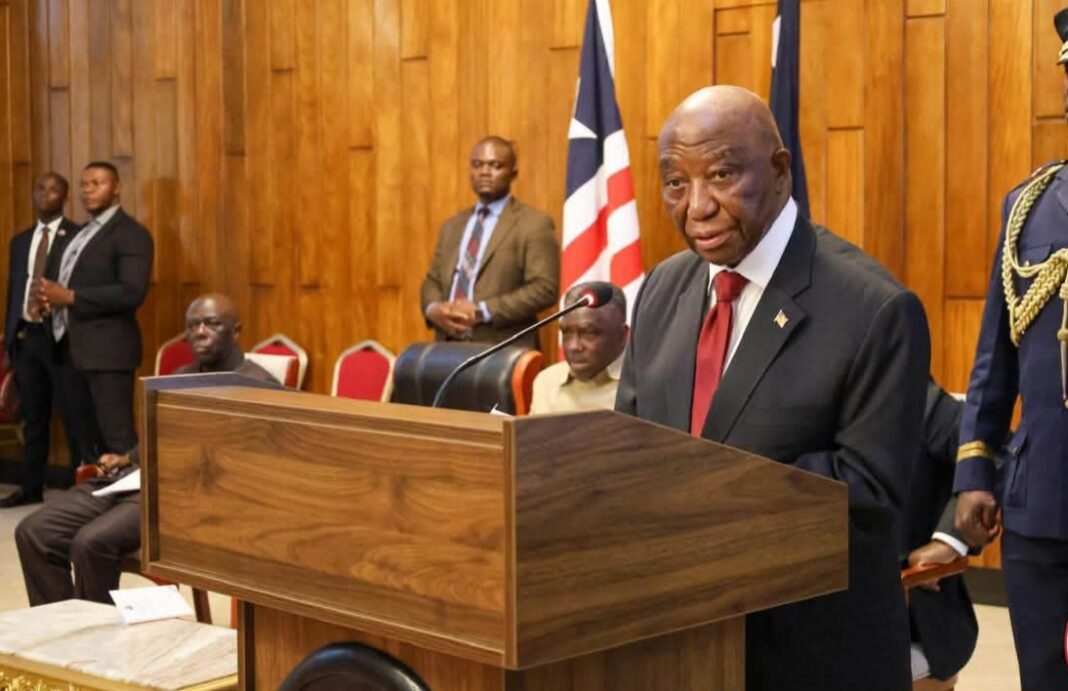
President Joseph Nyuma Boakai has repeatedly declared that there will be “no sacred cows” in the fight against narcotics and organized crime.
That declaration now carries an important test.
A credible anti-drug campaign cannot selectively investigate allegations based on who is involved. The same standard must apply to everyone, including senior security officials.
If an ordinary citizen is accused of receiving benefits from a drug trafficker, investigators would be expected to examine the allegation. A senior official of the LDEA should not receive a lower standard of scrutiny simply because of his position.
At the same time, the principle of equal treatment also means that accusations against public officials must be subjected to the same evidentiary standards that apply to everyone else.
The government therefore has an opportunity to demonstrate that its “no sacred cows” policy is more than a slogan.
The allegations surrounding Biago should be independently examined. Investigators should establish ownership records, vehicle acquisition records, financial transactions, communications where legally obtained, official assignments and any other evidence capable of determining whether there was an improper relationship between the LDEA official and persons accused of drug trafficking.
Such an investigation should not be viewed as an attack on the LDEA. Quite the opposite.
A transparent inquiry could strengthen the agency by removing doubt, clearing officials who are wrongly accused and exposing anyone who may have compromised the institution.
The stakes are too high for silence.
Liberia is fighting not merely a criminal market but a threat that can corrupt institutions, destroy young lives, distort legitimate businesses and undermine national security.
That is why the country must be particularly vigilant about the possibility of institutional capture.
The allegations raised by Kollie should therefore be treated neither as proven guilt nor as something to be casually dismissed.
They are allegations demanding answers.
And those answers should come from evidence.
The public deserves to know whether the vehicle allegedly registered to Harris was in fact used by Biago, how it came into his possession, whether any official authorization existed and whether there were financial or other relationships between the parties.
If the evidence establishes no wrongdoing, the matter should be put to rest.
If the evidence establishes misconduct, then the law should take its course without regard to rank, connections or political influence.
That is precisely what the rule of law demands.
President Boakai has repeatedly promised that Liberia will no longer provide shelter for powerful individuals who believe their positions place them above accountability.
The cocaine crisis provides perhaps the clearest test yet of that promise.
The government has already demonstrated its willingness to seize drugs and arrest suspects. The next test is whether it can demonstrate equal determination when allegations reach the doors of the institutions responsible for fighting the drug trade.
Liberia does not need another war fought through accusations and counter-accusations.
It needs evidence, independent investigations, credible prosecutions and transparent institutions.
The truth about these allegations must therefore be established through a process that neither protects the powerful nor condemns the accused without proof.
Anything less risks weakening public confidence at precisely the moment Liberia needs its national security institutions to be strongest.
The fight against cocaine must ultimately be a fight for the integrity of Liberia itself.
And integrity begins with accountability at every level.