
Seven Defendants Reportedly Convicted as Jury Delivers Verdicts in Humanitarian Rice Case; Questions Mount Over 25,000 Unaccounted Bags
MONROVIA, LIBERIA — Liberia’s anti-corruption campaign has recorded a major development following the reported conviction of two former cabinet ministers who served under ex-President George Manneh Weah, in a controversial case involving the alleged diversion and mismanagement of rice donated by Saudi Arabia for humanitarian purposes.
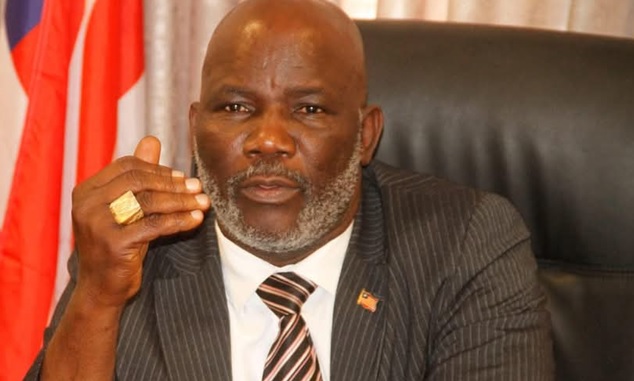
Former Foreign Affairs Minister Ambassador Dee-Maxwell Saah Kemayah and former Internal Affairs Minister Varney A. Sirleaf were reportedly found guilty on all five charges brought against them in Criminal Court ‘C’, presided over by Judge Ousman F. Feika.
The verdicts represent a significant test of accountability for former senior government officials and raise renewed questions about the handling of humanitarian assistance entrusted to public institutions.
The two former ministers were reportedly convicted of theft of property, economic sabotage, misapplication of entrusted property, abuse of office, and criminal conspiracy following a trial that lasted approximately 40 days.
If confirmed by the court’s official records, the verdicts would constitute a significant outcome in Liberia’s efforts to hold former public officials accountable through the judicial process.
A HUMANITARIAN DONATION THAT BECAME A NATIONAL SCANDAL
At the center of the case is a donation of 29,412 bags of 25-kilogram rice from the Kingdom of Saudi Arabia in April 2023 through the King Salman Humanitarian Aid and Relief Center.
The consignment was reportedly valued at US$425,918 and intended to assist disaster-affected communities in Liberia.
However, what was intended as humanitarian assistance became the subject of a criminal prosecution over allegations that the rice was improperly handled, distributed, and inadequately accounted for.
According to the indictment as summarized in reports about the case, Kemayah, then Foreign Affairs Minister, received the diplomatic consignment. Prosecutors alleged that the rice was not transferred promptly and appropriately to the National Disaster Management Agency (NDMA), the institution responsible for disaster-related coordination.
The prosecution further alleged that directives were issued concerning the rice’s distribution outside the appropriate administrative framework.
Former Internal Affairs Minister Sirleaf was accused of subsequently directing the distribution of thousands of bags to particular beneficiaries and communities without adequate documentation.
Reports on the proceedings indicate that approximately 25,054 bags of rice were not accounted for.
That figure raises a fundamental question: How could a donation intended to assist vulnerable Liberians pass through government institutions without a satisfactory accounting of such a substantial portion of the consignment?
The jury’s reported verdicts indicate that it accepted the prosecution’s case against the two former ministers on the charges presented. The formal judgment will be essential to understanding the specific findings underlying each conviction.
A MAJOR TEST FOR LIBERIA’S ANTI-CORRUPTION CAMPAIGN
The reported convictions are a significant development in the broader struggle against corruption in Liberia.
For years, corruption allegations involving public officials have raised concerns about whether political influence can shield individuals from accountability. Cases involving former ministers are particularly important because they test whether seniority, political connections, and previous access to state power can prevent the justice system from functioning independently.
The Saudi rice case now places those questions under renewed scrutiny.
The outcome should not be presented as the achievement of any single government institution without examining the respective roles of investigators, prosecutors, the jury, and the court. Anti-corruption cases depend on evidence gathering, lawful prosecution, judicial independence, and due process.
Nevertheless, the reported verdicts demonstrate the importance of pursuing allegations involving public resources through the courts, regardless of the positions previously held by the accused.
The next test will be whether the judicial process proceeds transparently through sentencing and any appeals permitted under Liberian law.
SEVEN REPORTED CONVICTIONS, ONE ACQUITTAL
Information circulating about the proceedings identifies seven defendants as having been convicted on various charges, while former Deputy Foreign Affairs Minister Thelma Duncan Sawyer was reportedly acquitted of all counts.
The other defendants reported convicted include former Deputy Internal Affairs Minister Momolu Johnson, former NDMA Executive Director Henry O. Williams, NDMA Director Augustine Kollie, NDMA Communications Director Archievego Menneah Doe, and former General Services Agency Deputy Director Edris Bility.
However, the precise verdicts against each defendant must be distinguished. The available reports indicate that some defendants were convicted on multiple counts, while others were found guilty of fewer offenses.
Sawyer’s reported acquittal is equally important. Criminal responsibility must be determined individually, based on the evidence against each accused person. Her acquittal should therefore be respected just as the reported convictions must be addressed through the legal process.
Verdicts for the remaining defendants were reportedly still pending at the time of the initial reports.
ACCOUNTABILITY MUST GO BEYOND THE COURTROOM
While the reported convictions represent a major development, they also expose the broader institutional questions that Liberia must confront.
How was the Saudi donation received and documented? Which officials had legal authority over the consignment at each stage? What distribution records existed? Why were so many bags reportedly unaccounted for? And what safeguards have since been introduced to prevent similar incidents?
These questions matter because the rice was not ordinary commercial merchandise. It was humanitarian assistance intended for people in need.
When donations intended for vulnerable communities are not properly accounted for, the consequences extend beyond financial losses. They can undermine public confidence, damage Liberia’s international credibility, and discourage future humanitarian support.
The government must therefore ensure that the case produces lessons for the administration of donated goods, including clear documentation, independent verification of deliveries, transparent distribution procedures, and effective oversight.
The prosecution of alleged wrongdoing is important, but preventing a recurrence is equally necessary.
THE POLITICAL DIMENSION: ACCOUNTABILITY MUST BE CONSISTENT
Because the accused include former officials of the Coalition for Democratic Change administration, the verdicts are likely to attract political attention.
However, the central issue should not be whether the defendants belonged to the CDC or any other political party. It should be whether the evidence establishes criminal wrongdoing and whether the law is applied consistently to officials from every administration.
Liberians have reason to demand that standard from both the government and the justice system.
A credible anti-corruption campaign cannot be measured solely by the number of indictments, arrests, or convictions involving former officials. It must also be judged by whether investigations are impartial, prosecutions are evidence-based, courts remain independent, and allegations involving serving officials receive appropriate scrutiny.
The Saudi rice case should therefore serve as a broader accountability test rather than merely a political victory for one side.
SENTENCING AND APPEALS REMAIN IMPORTANT
The reported guilty verdicts are not the final stage of the proceedings.
Sentencing will determine the penalties imposed under the applicable law, while any appeals could bring further judicial review of the convictions.
The formal court records must also establish the exact verdicts for each defendant and clarify the status of those whose cases remained unresolved when the reports emerged.
Until those details are confirmed, care is necessary in describing the outcome and its legal consequences.
THE REAL MEASURE WILL BE JUSTICE AND PREVENTION
The reported convictions of Kemayah and Sirleaf mark a significant moment in the Saudi-donated rice case. They send a powerful message about the importance of accounting for public resources and ensuring that humanitarian assistance reaches its intended beneficiaries.
But the ultimate measure of success will be broader than the convictions themselves.
Liberians will want to see a transparent conclusion to the proceedings, lawful sentencing, respect for the rights of all defendants, and reforms that prevent donated goods from disappearing into administrative gaps.
Above all, the same standards of accountability must apply regardless of political affiliation or public office.
For a country where many citizens continue to face economic hardship, humanitarian donations must serve the people for whom they are intended—not become the subject of allegations of diversion and criminal prosecution.Publication note: Before publishing, confirm the names and verdicts against the court’s official records. The reports supplied contain inconsistencies in the spelling of Varney A. Sirleaf’s name, the valuation of the rice, and the precise convictions of some defendants. Also, describe this as a major development in the anti-corruption effort rather than proof that the entire government’s anti-corruption programme has succeeded.