By Socrates Smythe Saywon | Smart News Liberia
The investigation into Liberia’s record breaking US$19.2 million cocaine seizure has entered a decisive stage, but so too has the public’s skepticism. As the Liberia National Police (LNP), the Liberia Drug Enforcement Agency (LDEA), and the broader Joint Security architecture assure the nation that “significant progress” has been made, many Liberians are asking a simple but important question: How long should the public wait before progress becomes accountability?
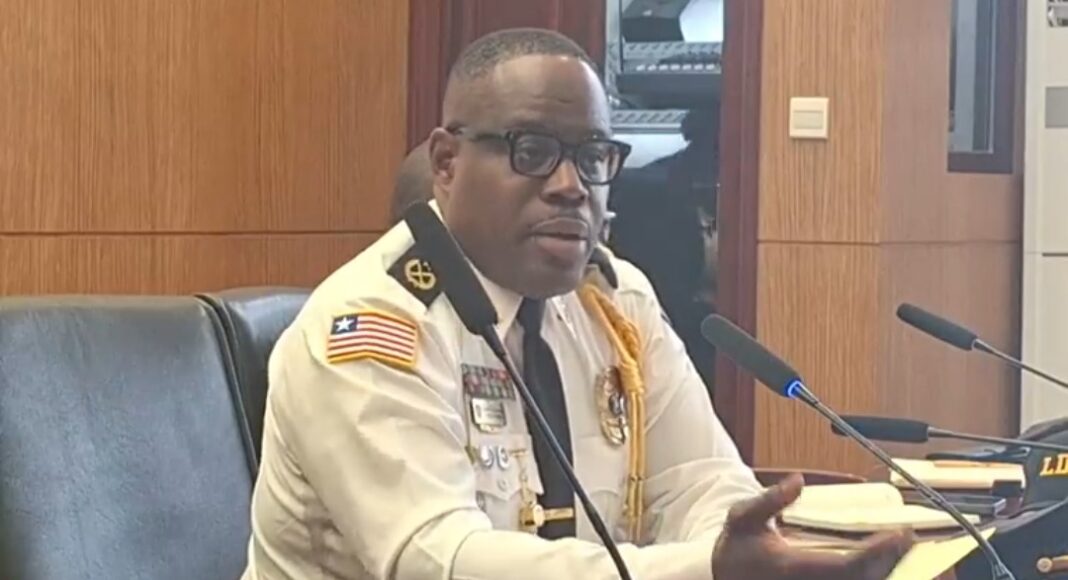
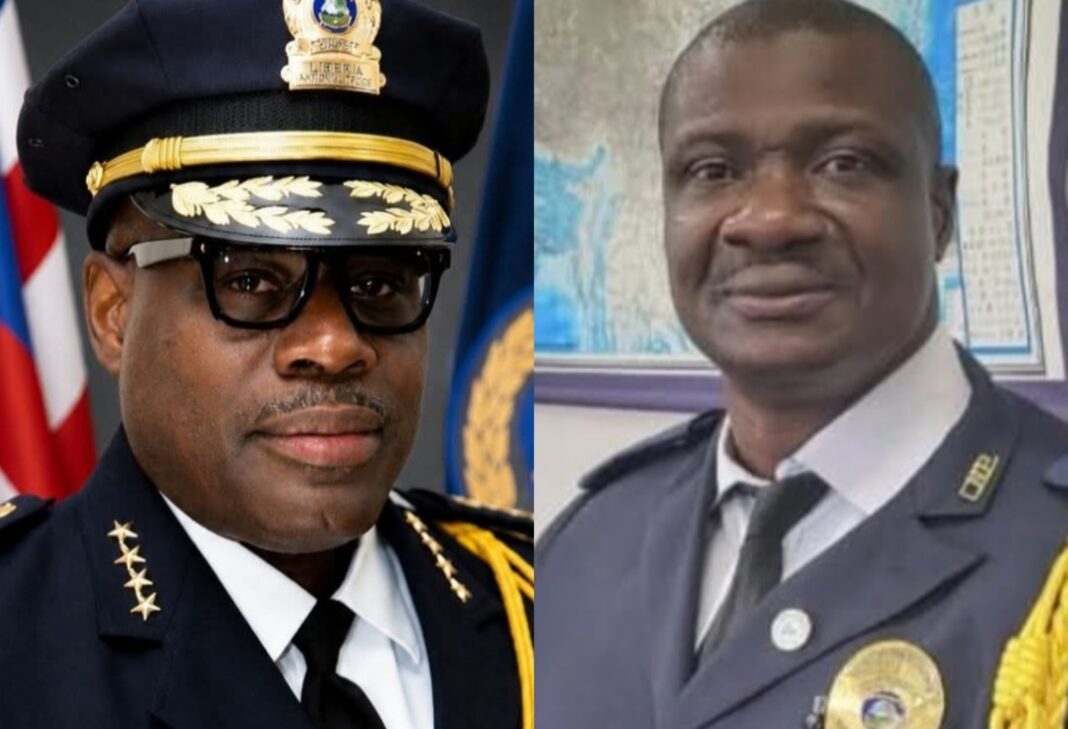
Inspector General Gregory Coleman, who appeared before the Liberian Senate on July 1 alongside LDEA Officer in Charge Fitzgerald Biago and other Joint Security officials, defended the pace of the investigation, arguing that revealing sensitive information would jeopardize ongoing operations. From a law enforcement perspective, that position is understandable. Complex narcotics investigations often involve forensic analysis, financial tracing, international cooperation, surveillance, and intelligence gathering that cannot always be conducted in full public view.
Yet this case is not an ordinary criminal investigation.
It involves one of the largest cocaine seizures in Liberia’s history, valued at US$19.2 million, intercepted at Roberts International Airport, Liberia’s principal international gateway. Such a massive shipment raises troubling questions that extend far beyond individual criminal responsibility. It raises concerns about institutional integrity, border security, official complicity, and the country’s capacity to combat sophisticated transnational drug trafficking networks.
It is equally important to recognize that the investigation extends beyond the Liberia National Police. The Liberia Drug Enforcement Agency, which intercepted the cocaine shipment at Roberts International Airport, remains central to the inquiry. As the country’s lead narcotics enforcement institution, the LDEA’s investigative findings, coordination with Joint Security, and collaboration with international partners will play a crucial role in determining whether the full trafficking network is dismantled and those responsible are successfully prosecuted.
Coleman insists investigators are now moving individuals from “persons of interest” to “potential suspects” and has promised that charges could be filed within days. He further disclosed that institutions themselves are under suspicion and acknowledged removing investigators who allegedly leaked confidential information.
These are significant revelations.
However, they also increase public expectations that the investigation must produce tangible results rather than another cycle of promises.
Liberia has witnessed numerous high profile investigations that began with assurances of transparency but ultimately faded into silence or concluded without convincing public accountability. It is precisely this history that explains why public confidence remains fragile.
The Inspector General repeatedly assured senators that “the chips will fall where they may.” That statement carries weight only if the investigation ultimately demonstrates that no office, institution, or politically connected individual enjoys protection.
This is where the Senate deserves credit.
Rather than allowing the issue to drift into bureaucratic obscurity, Senators Edwin M. Snowe and Amara M. Konneh initiated the process that compelled Joint Security to account publicly for the investigation’s progress. Their insistence on transparency reflects an important constitutional responsibility: oversight of matters affecting national security and public confidence.
Their concerns are legitimate.
The implications of this drug seizure extend beyond Liberia’s borders. International partners closely monitor how countries respond to major narcotics trafficking cases. Any perception that politically influential individuals are shielded from prosecution risks damaging Liberia’s credibility in regional and global efforts against organized crime.
The Senate hearing also exposed another uncomfortable reality.
Nimba County Senator Samuel Kogar openly called for the suspension of Inspector General Coleman, LDEA Officer in Charge Fitzgerald Biago, and officials of the National Security Agency, arguing that such action was necessary to preserve the credibility of the investigation.
Coleman responded sharply, asking whether the senator possessed evidence or was “talking loosely.”
The exchange quickly escalated until senators directed the Inspector General to apologize, which he eventually did.
Although the apology helped restore order, the confrontation reflected growing political tensions surrounding the investigation.
More importantly, it demonstrated how quickly confidence can erode when communication between oversight institutions and law enforcement becomes confrontational rather than cooperative.
Calls for suspensions should never become political reflexes. Public officials deserve due process, just as criminal suspects do.
At the same time, public confidence in sensitive investigations often depends not only on fairness but also on the appearance of independence. Where reasonable concerns about conflicts of interest exist, governments sometimes choose temporary administrative measures not as declarations of guilt, but as safeguards for the integrity of an investigation.
Whether such measures are warranted in this case is ultimately a matter for the appropriate authorities, based on evidence rather than political pressure.
Beyond personalities, the investigation should prompt a deeper national conversation.
How did narcotics worth more than US$19 million move through one of Liberia’s most sensitive security installations? Were airport screening systems bypassed? Did organized criminal networks receive internal assistance? Are financial institutions, customs systems, or security agencies vulnerable to infiltration?
These questions demand answers that extend beyond criminal prosecutions.
They require structural reforms.
The investigation should ultimately produce not only indictments where warranted but also recommendations to strengthen airport security, improve interagency intelligence sharing, modernize investigative capacity, tighten institutional oversight, and reduce opportunities for corruption.
Coleman acknowledged that Liberia lacks some of the technical capacity required for such sophisticated investigations and must rely on international partners. That admission deserves recognition rather than criticism. The same reality applies to the Liberia Drug Enforcement Agency, whose officers are working alongside the Liberia National Police and other members of the Joint Security architecture to analyze evidence and trace the criminal network behind the shipment. Transnational drug trafficking is rarely defeated by a single agency acting alone. It requires sustained coordination, intelligence sharing, and institutional cooperation across multiple security institutions.
Nevertheless, partnership cannot substitute for accountability.
If investigators truly possess evidence against institutions and individuals, as Coleman indicated, then the coming days will be critical. The credibility of the Liberia National Police, the Liberia Drug Enforcement Agency, the broader Joint Security architecture, and indeed the Boakai administration’s commitment to the rule of law may well depend on whether those responsible, regardless of status, political affiliation, or institutional position, are identified and prosecuted. The investigation will ultimately be judged not by the assurances offered before the Senate but by whether it delivers credible prosecutions and meaningful accountability.
Liberians have heard repeated assurances that justice is coming.
This time, justice must not only arrive; it must be visible.
The nation cannot afford another investigation remembered more for promises than prosecutions. In a case of this magnitude, accountability is not simply about enforcing the law. It is about restoring confidence in the institutions entrusted to protect the Republic.