By Our Reporter | Smart News Liberia
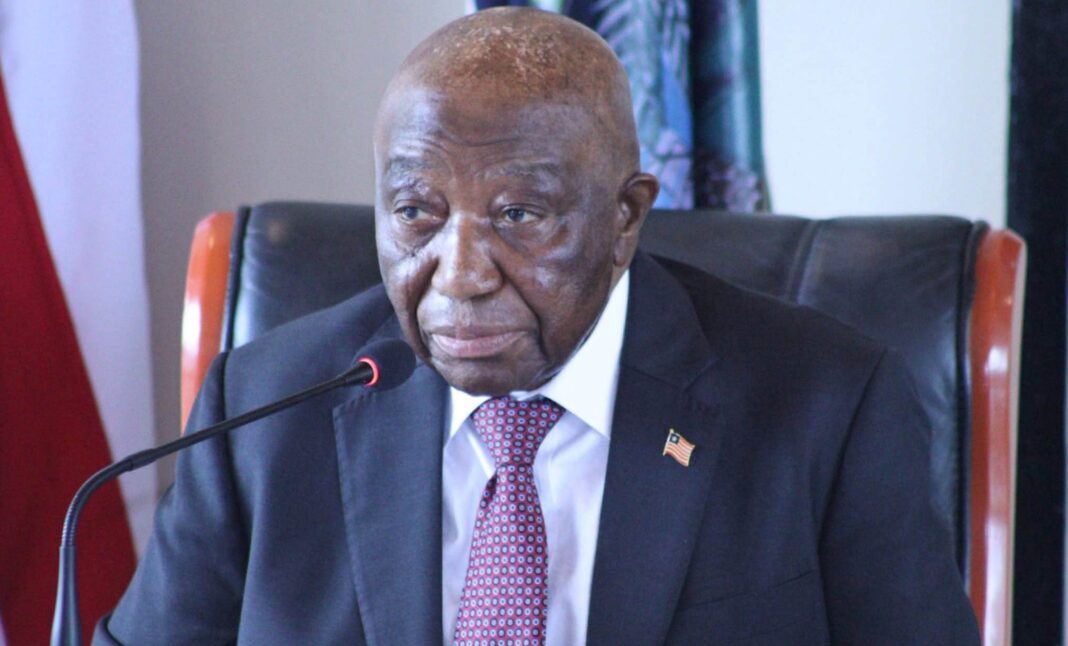
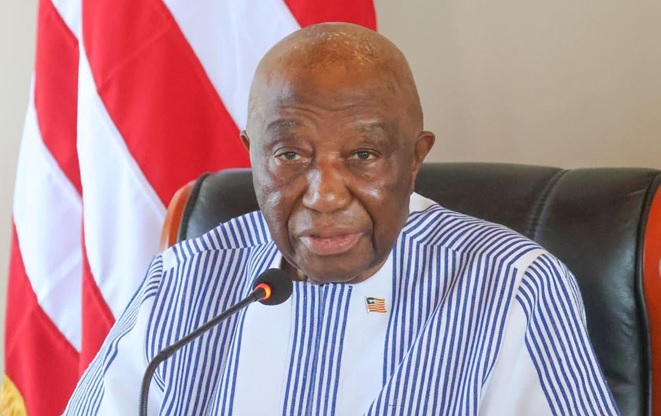
MONROVIA – President Joseph Nyuma Boakai has called on African youth to take the lead in strengthening democracy and driving technological innovation across the continent, warning that Africa’s future progress will depend largely on whether its young population is empowered to transform political and economic systems.
Speaking on Wednesday, July 1, 2026, at the opening of the Young Democracy Union of Africa (YDUA) Conference held at the Cape Hotel in Monrovia, President Boakai described Africa’s youthful population as the continent’s greatest asset, but one that must be deliberately awakened and harnessed to achieve sustainable development.
The high-level conference, organized by the Young Democracy Union of Africa in partnership with the Konrad-Adenauer Foundation and the Unity Party National Youth Congress, brought together youth leaders from across Africa, diplomats, development partners, civil society actors, and government officials under the theme “Waking the Giant: Youth-Led Democracy and Africa’s Tech Revolution.”
Boakai said the gathering comes at a defining moment for Africa, as rapid political, economic, and technological changes reshape governance systems and global competitiveness. He noted that young people across the continent are increasingly demanding greater participation in decision-making processes while new technologies are transforming how societies function.
“The future of Africa will be determined largely by its young people,” Boakai declared. “The giant referred to in this theme is Africa’s youth.”
The President emphasized that Africa possesses the world’s youngest population, with estimates showing that between 60 and 70 percent of Africans are under the age of 30, a demographic advantage he described as unprecedented in global history. However, he cautioned that this advantage will only translate into progress if young people are actively empowered.
Reflecting on Liberia’s post-conflict recovery, Boakai highlighted the country’s transition from years of civil war to sustained democratic governance, noting that Liberians made a conscious decision to reject violence and embrace constitutional democracy.
He pointed to successive peaceful elections and transfers of power since 2006 as evidence of national progress, describing Liberia’s democratic stability as an achievement worthy of pride, particularly among young people who have played a central role in civic engagement, voter participation, and leadership development.
“Our democratic credentials did not emerge by chance,” Boakai said. “They were built through the conscious participation of citizens who rejected violence and embraced democratic values.”
The President also underscored Liberia’s growing international profile, noting the country’s election as a non-permanent member of the United Nations Security Council as a sign of renewed global confidence in its democratic governance.
Turning to economic transformation, Boakai urged African youth to move beyond being consumers of global technology and instead become creators and innovators in fields such as artificial intelligence, digital finance, biotechnology, renewable energy, and data science.
He stressed that agriculture, which employs more than 60 percent of Liberians, presents vast opportunities for youth-driven innovation through agribusiness, food processing, and technology-enabled farming systems.
“Technology is transforming every aspect of modern life,” Boakai noted. “Africa cannot afford to remain a consumer. Our young people must become innovators and solution providers.”
The President further warned of the growing trend of irregular migration, highlighting the risks faced by young Africans who attempt dangerous journeys across deserts and seas in search of better opportunities abroad. He described the situation as a major policy concern that requires urgent attention from African leaders.
“Too many never arrive. Too many never return,” Boakai cautioned. “Africa is richly endowed, and there is no reason our brightest young people should feel compelled to risk their lives elsewhere.”
He called on African governments to create enabling environments that encourage youth to remain and invest their talents on the continent, stressing that hope and opportunity must be built at home.
Boakai urged participants at the conference to engage in bold discussions and develop practical solutions that strengthen democracy, promote innovation, and expand youth participation in governance and development processes across Africa.
“If we succeed in awakening the giant that is Africa’s youth, there will be no limit to what this continent can achieve,” he said.
The conference is expected to produce recommendations aimed at deepening youth engagement in democratic governance and accelerating Africa’s participation in the global technological revolution.