MONROVIA – Nearly 117,000 invalid votes recorded during Liberia’s 2023 elections have emerged as a major warning for election authorities and governance institutions as preparations begin for the 2029 electoral cycle.
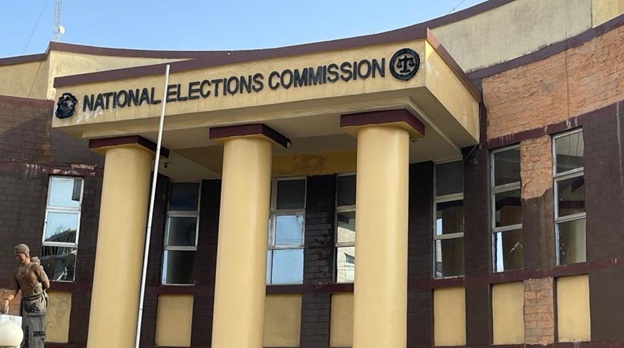
The figure was highlighted by National Elections Commission (NEC) Chairperson Jonathan K. Weedor during an acquaintance meeting with Chairperson-Designate of the Office of the Ombudsman, Hon. Etmonia Martin.
The meeting focused on strengthening cooperation between the two institutions, but Weedor used the engagement to underscore one of the most persistent challenges facing Liberia’s elections: ensuring that voters fully understand how to participate effectively in the electoral process.
According to Weedor, Liberia recorded approximately 117,000 invalid votes in the 2023 elections, underscoring the need for sustained voter education ahead of the next national elections.
For election authorities, invalid ballots are more than a statistical figure.
They can represent voters who went to polling places and attempted to participate in the democratic process but whose ballots ultimately could not be counted as valid.
The NEC Chairperson stressed that preventing such outcomes will require a coordinated and sustained public-awareness effort.
He identified the NEC, the Office of the Ombudsman and other relevant institutions as potential partners in strengthening voter education before 2029.
The discussion therefore places voter education alongside electoral reforms as an important component of Liberia’s preparations for the next elections.
The engagement between Weedor and Martin also explored the application of the Code of Conduct in relation to elections, political participation, election-related complaints and broader public education.
For the Office of the Ombudsman, such cooperation could provide an opportunity to promote awareness of ethical standards and responsibilities among political actors and citizens.
For the NEC, it could strengthen efforts to ensure that voters understand electoral procedures before they arrive at polling stations.
The need for early education is particularly important because election-related information can be complex.
Voters must understand registration requirements, ballot procedures, voting instructions and other rules governing participation.
Political candidates and parties must also understand their obligations under the applicable Code of Conduct and electoral regulations.
Weedor indicated that the NEC is prepared to share relevant electoral guidelines and regulations with the Office of the Ombudsman as those materials are finalized.
Such information-sharing could help ensure that public education campaigns carried out by different institutions are based on consistent and authoritative information.
The discussions also covered technological changes planned by the NEC.
Weedor highlighted the planned introduction of biometric voter verification on Election Day, the proposed use of Starlink technology to support election operations and measures intended to facilitate the timely transmission of election results.
But the technological reforms do not eliminate the need for voter education.
In fact, new electoral technologies could make public awareness even more important because voters and political stakeholders will need to understand how new systems work and what safeguards are in place.
The 117,000 invalid ballots from the 2023 elections therefore provide a powerful benchmark for the country’s voter-education strategy ahead of 2029.
The objective will not simply be to increase the number of people who turn out to vote, but also to ensure that those who participate can cast ballots correctly and understand the electoral process.
The NEC and Ombudsman’s Office could also face the challenge of reaching citizens across Liberia, including communities where access to reliable information may be limited.
That makes sustained public education particularly important.
Rather than waiting until the months immediately preceding the election, the institutions could use the period leading to 2029 to gradually build voter awareness and reinforce information through communities, civil society organizations and other public-interest institutions.
Both Weedor and Martin expressed support for continued engagement between their institutions.