AREPT Announces Indictments Involving Millions in Alleged Public Losses, but Questions Remain About Actual Recoveries, Operational Costs, and Tangible Benefits to Taxpayers
MONROVIA, LIBERIA – Liberia’s Asset Recovery and Property Retrieval Taskforce (AREPT) has intensified its investigations into alleged corruption, secured indictments against dozens of individuals, and called on citizens to report suspected stolen public assets. But as the government continues to finance the initiative, a fundamental question remains: How much money and property has the taskforce actually recovered for the Liberian people, and how much has its operation cost taxpayers?
Established by President Joseph Nyuma Boakai through Executive Order No. 126 on March 6, 2024, AREPT was created to identify, investigate, trace, and recover public assets allegedly misappropriated by current and former government officials and others. Its mandate includes pursuing assets within Liberia and abroad and initiating legal proceedings to secure their return. The executive order also directed the Ministry of Finance and Development Planning to provide funding for the exercise.
More than two years into the initiative, AREPT has publicized several major investigations and criminal indictments involving substantial sums of public money.
However, the value of resources allegedly misappropriated is not the same as the value of assets recovered. Likewise, an indictment is not a conviction, and a court victory on a procedural issue does not necessarily mean that money has been returned to the national treasury.
These distinctions lie at the heart of the accountability questions surrounding the taskforce.
MILLIONS IDENTIFIED, BUT HOW MUCH HAS BEEN RECOVERED?
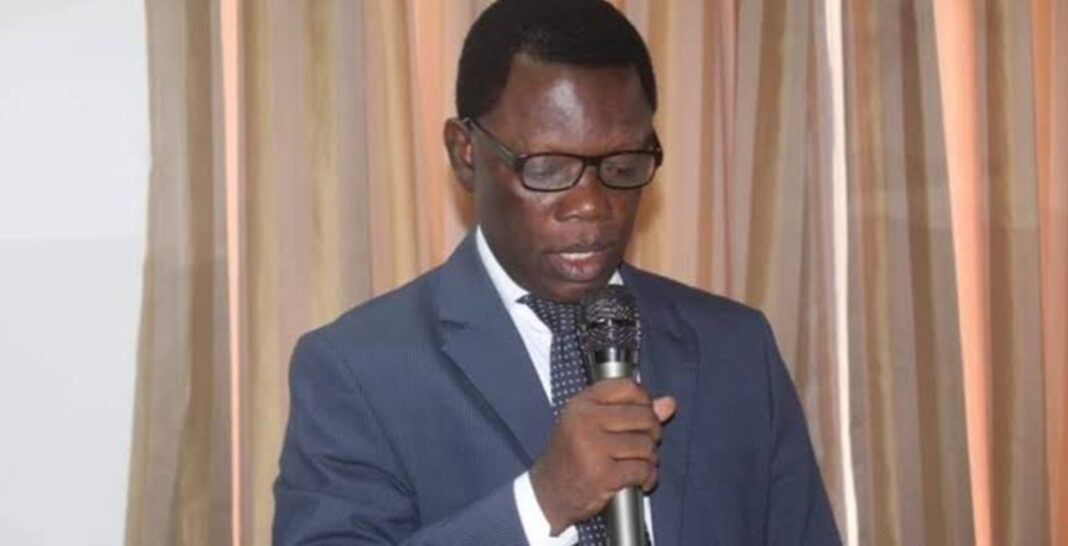
In an April 28, 2026, report published on its official website, AREPT Chairman Cllr. Edwin Kla Martin said four major cases involved more than US$10 million and approximately L$890 million in public resources allegedly misused.
Martin described the indictments as an important step toward accountability, explaining that the cases could enable authorities to pursue asset tracing, freezing of accounts, and eventual recovery through court orders. He also disclosed that AREPT had filed a matter before a British court concerning approximately US$10 million under investigation.
The chairman’s statements demonstrate the scale of the allegations being pursued. But they also raise a critical question: how much of the money involved has actually been recovered?
Have funds been deposited into government accounts? Have properties been legally transferred to the state? Have vehicles, buildings, land, or other assets been returned to public ownership?
Or do the figures being publicized primarily represent the estimated value of alleged losses that prosecutors are still attempting to establish in court?
These questions are not an argument against prosecuting corruption. They are necessary measures of whether the recovery process is delivering the financial results for which it was established.
Liberians deserve a clear distinction between money allegedly stolen, money identified during investigations, assets frozen by court order, restitution ordered by a court, and funds or property actually recovered.
Without that distinction, the public cannot independently assess the taskforce’s performance.
THE COST TO TAXPAYERS
AREPT’s work requires public financing, including expenditure on personnel, investigations, legal proceedings, administrative operations, and efforts to trace assets across national borders.
The question is whether the government is providing taxpayers with a sufficiently detailed account of these expenditures alongside evidence of actual recoveries.
A report published by The Stage Media Liberia on the taskforce’s financing cited figures indicating that AREPT received US$750,000 in budgetary allocation for 2024, of which US$520,000 was reportedly disbursed. The report also cited a taskforce communication official as saying that the institution received a US$500,000 allotment from the Ministry of Finance for 2025.
These figures require reconciliation with official budget documents, allotment records, disbursement schedules, and actual expenditure reports before a complete financial assessment can be made.
Nevertheless, they raise an important public-interest question: what measurable financial results has Liberia obtained from the money invested in the taskforce?
The issue is not whether AREPT should be funded. Asset tracing and cross-border recovery can be expensive, technically demanding, and time-consuming.
Rather, taxpayers need to know how the money is being spent, what results it is producing, and whether the institution is meeting its stated objectives.
A credible accountability report should disclose annual allocations, actual disbursements, expenditure by category, outstanding financial obligations, and the value of assets recovered during each reporting period.
It should also explain the costs associated with foreign legal firms and other specialists engaged to pursue assets outside Liberia.
CENTAL RAISES CONCERNS ABOUT TANGIBLE RESULTS
Concerns about the pace of recovery are not limited to questions raised by journalists or members of the public.
In a statement published by the Center for Transparency and Accountability in Liberia (CENTAL), the organization acknowledged AREPT’s efforts to hold individuals accountable but expressed concern about the slow pace of tangible results, including the adjudication of cases and the retrieval of public resources.
CENTAL also cited figures showing that AREPT received US$670,920 during the end-of-year 2024 budget period, while the Liberia Extractive Industries Transparency Initiative received US$625,383 over the same period.
The figures cited by CENTAL and those reported elsewhere should be reconciled against official financial records to establish the precise amounts allocated, released, and spent.
CENTAL’s concerns nevertheless reinforce the need for a transparent performance assessment that goes beyond the number of investigations opened or individuals indicted.
For an institution established specifically to retrieve public assets, the value of assets actually returned to the state is an essential measure of its performance.
INDICTMENTS ARE NOT THE SAME AS RECOVERY
In January 2026, AREPT outlined several of its major cases, including the Saudi rice matter, the investigations involving Anita Group of Companies and Gracious Ride, and the case concerning a US$1.95 million renovation contract awarded by the Ministry of Foreign Affairs to MDMC.
According to the taskforce’s account, the Anita Group and Gracious Ride case involved allegations that more than US$6.7 million and L$845 million in public funds were concealed or misappropriated.
In the MDMC matter, investigators alleged that US$851,136.13 had been misappropriated in connection with a renovation contract. AREPT also reported that the cases faced ongoing legal proceedings and procedural challenges. These remain allegations to be resolved through the courts, not findings of guilt against every person indicted.
The cases demonstrate the scale and complexity of the investigations.
But they also illustrate why the public needs a case-by-case accounting of results.
For each major case, AREPT should disclose the amount allegedly involved, the amount established through court proceedings, any assets frozen or seized under lawful authority, the final judicial outcome where available, and the amount or property actually returned to the state.
Where proceedings remain pending, the taskforce should clearly state that recovery has not yet been completed or that the amount recovered remains undetermined.
Such disclosure would help prevent the public from confusing the amount alleged in an indictment with money already available to finance public services.
THE INTERNATIONAL RECOVERY QUESTION
AREPT has also emphasized the need to pursue assets beyond Liberia’s borders.
In April 2026, Chairman Martin said the taskforce had filed a matter before a British court concerning approximately US$10 million under investigation. He said the action was intended to help authorities pursue individuals or assets that might be located outside Liberia.
International proceedings can be essential where suspected proceeds of corruption have been transferred abroad. However, they can also involve substantial legal costs, complex evidentiary requirements, and lengthy court processes.
Taxpayers therefore need information about the status of the British proceedings, the specific recovery measures being pursued, the costs incurred, and whether any assets have been secured or returned.
The existence of international litigation is evidence that a recovery effort is underway. It is not, by itself, proof that the targeted money has been recovered.
AREPT should provide regular updates that distinguish ongoing litigation from completed recovery.
A PUBLIC ACCOUNTABILITY REPORT IS NEEDED
The government has presented asset recovery as part of its broader effort to combat corruption and restore public confidence in state institutions.
That commitment should be accompanied by transparent reporting that allows citizens to measure results.
AREPT should publish a consolidated recovery report covering its operations since March 2024, including:
– Total assets recovered: Cash actually received by the government and the verified value of property legally returned to public ownership.
– Total expenditure: Annual budget allocations, disbursements, actual spending, salaries, allowances, legal fees, and other operational costs.
– Pending recovery cases: The amounts being pursued, their current legal status, and any assets already frozen or secured.
– Completed proceedings: Final judgments, restitution orders, forfeitures, and evidence that the relevant assets have been transferred to the state.
– Independent verification: Supporting records from the Ministry of Finance and Development Planning, the General Auditing Commission, the courts, and relevant government asset registries.
Publishing this information would enable the public to distinguish between investigative activity, legal progress, and actual financial recovery.
It would also allow the government to identify operational weaknesses and demonstrate whether public funding is producing the intended results.
THE QUESTIONS ARE SIMPLE
Chairman Martin and the leadership of AREPT should be given an opportunity to respond to the following questions:
First: How much money has AREPT actually recovered and deposited into government accounts since its establishment in March 2024?
Second: What is the verified value of land, buildings, vehicles, and other properties recovered and legally returned to the state?
Third: How much has the government allocated, disbursed, and actually spent on AREPT’s operations since 2024?
Fourth: How much has been spent on international legal representation, forensic investigations, and asset-tracing services?
Fifth: Of the millions of dollars cited in AREPT’s public announcements, how much has been established through court proceedings, and how much has been recovered in practice?
Finally: When will AREPT publish a comprehensive, independently verifiable report showing its total expenditure against its actual recoveries?
These questions are not a demand to abandon investigations or weaken the fight against corruption. They are a demand for transparency from an institution entrusted with protecting public resources.
CONCLUSION: TAXPAYERS DESERVE TO SEE THE RESULTS
Liberia needs an effective asset-recovery system. Public money allegedly stolen or unlawfully diverted must be pursued through lawful investigations, fair trials, and enforceable recovery proceedings.
But the success of such an initiative cannot be measured solely by the number of people indicted, the number of investigations announced, or the value of alleged losses cited at press conferences.
The ultimate objective is to restore public resources to the Liberian people.
Every dollar spent on the process must be accounted for, just as every dollar recovered should be documented and verified.
As AREPT continues to ask Liberians to support its work and report suspicious wealth, it must also demonstrate that the public resources entrusted to it are being used effectively.
The central question remains: How much has Liberia actually recovered, how much has the recovery effort cost taxpayers, and where is the independently verifiable accounting that connects the two?
Until those figures are made clear, the public will have reason to demand a fuller account of the institution’s performance.
For Liberian taxpayers, the measure of success is not simply who has been indicted. It is whether public assets are being recovered, accounted for, and returned to the service of the nation.Before publication
The report is based on publicly available material, but AREPT’s consolidated total recoveries and audited cumulative expenditure have not been established here. The financial figures cited above come from identified public reports and require reconciliation with official records.
AREPT Chairman Cllr. Edwin Kla Martin and the Ministry of Finance and Development Planning, must make available audited expenditure and verified asset-recovery records.