A Critical News Analysis By Smart News Room
Liberia is preparing to spend more public money in 2027, but a fundamental question confronts President Joseph Nyuma Boakai’s administration: What tangible benefits have ordinary Liberians received from the billions of dollars already placed under government control?
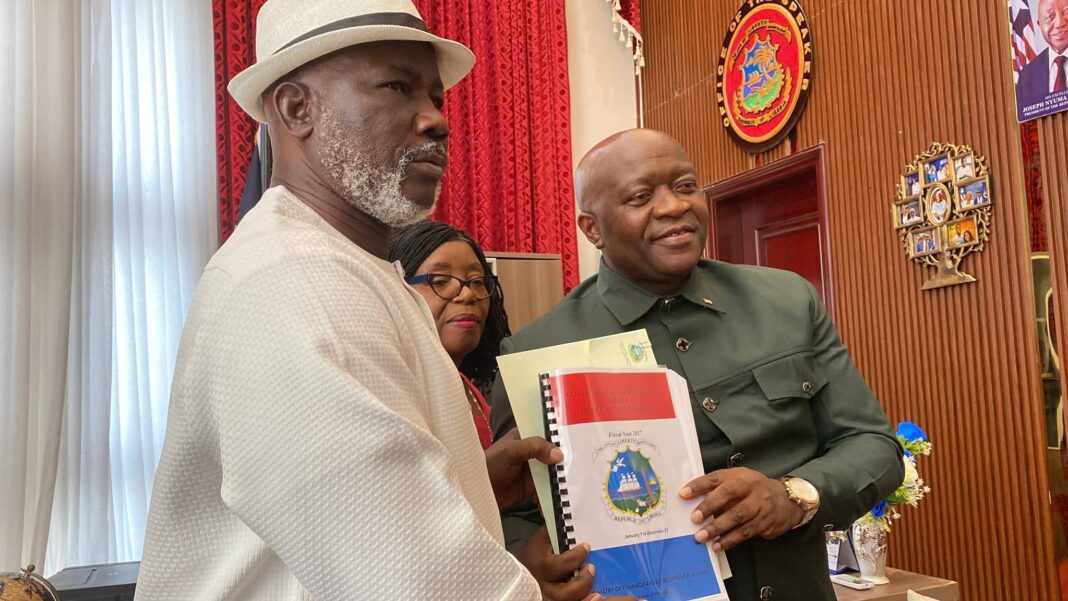
President Boakai, through Finance and Development Planning Minister Augustine Kpehe Ngafuan II, has submitted a proposed US$1.54 billion national budget for 2027 to the National Legislature for consideration and passage.
The proposal represents a significant increase from the approximately US$1.30 billion authorized for 2026 following a supplementary appropriation.
But as government spending continues to expand, poverty, unemployment, poor road conditions, inadequate healthcare, struggling public schools and the rising cost of living remain major concerns for ordinary Liberians.
The issue is not simply how much money the government intends to spend. It is whether previous allocations have translated into measurable development.
Where did the 2026 money go?
The government must provide a comprehensive account of how the 2026 budget was utilized.
How much was actually collected, released and spent? Which roads were completed? What improvements were made in hospitals, schools, electricity, water supply and agriculture?
The government must also explain how much was spent on salaries, allowances, administrative expenses, grants and subsidies compared with productive investments.
The concern is that Liberia could continue expanding the cost of maintaining government without sufficiently improving the economic conditions of its citizens.
The IMF has previously expressed concerns about the slow transition toward capital investment and the challenges of expanding social spending in healthcare and education.
This raises an important question: Is Liberia spending more on governing the country than it is investing in transforming the lives of its people?
The US$1.54 billion question
The proposed 2027 budget is approximately US$240 million higher than the expanded 2026 budget.
However, the government must explain how it intends to finance this increase, particularly considering the challenge of replacing the approximately US$200 million one-time ArcelorMittal concession-related inflow that supported the 2026 revenue framework.
A national budget built on unrealistic revenue projections could create financial pressure, unpaid obligations and additional borrowing.
A bigger budget does not necessarily mean a stronger economy. Its value depends on how effectively public resources are collected, managed and invested.
The burden on ordinary Liberians
While government prepares another massive spending plan, many Liberians continue struggling to afford food, transportation, education and healthcare.
Young people remain desperate for employment, rural communities face poor infrastructure, and families continue to experience economic hardship.
Meanwhile, public institutions receive substantial financial allocations, making it necessary to examine whether those resources are producing corresponding improvements in service delivery.
Liberians deserve to know whether the expansion of government spending is improving their welfare or primarily sustaining an increasingly expensive public administration.
The Legislature must demand accountability
The National Legislature should not approve the proposed US$1.54 billion budget without demanding a detailed performance assessment of the 2026 budget.
Lawmakers must request actual expenditure reports, project completion records, revenue performance, outstanding government obligations and a breakdown of recurrent versus capital spending.
Ministries and agencies that failed to demonstrate results from previous allocations should be required to explain why they deserve increased funding.
Conclusion: Bigger budgets must produce bigger results
President Boakai’s administration must understand that national development cannot be measured by the billions of dollars announced in budget presentations.
It must be measured by accessible roads, functioning hospitals, quality education, reliable electricity, clean water, employment opportunities and reduced poverty.
If Liberia is moving from approximately US$1.30 billion in 2026 to a proposed US$1.54 billion in 2027, citizens have every right to demand evidence of what the previous money accomplished.
The fundamental question is this: Can President Boakai justify another US$1.54 billion spending plan while ordinary Liberians continue struggling for the basic necessities of life?
Liberia needs a development budget that transforms lives, not simply an expanding government budget that increases the cost of administration.