
CDC official questions foreign-worker privileges, US$500 million financing facility and lack of guaranteed jobs for Liberians under proposed US$5.68 billion agreement.
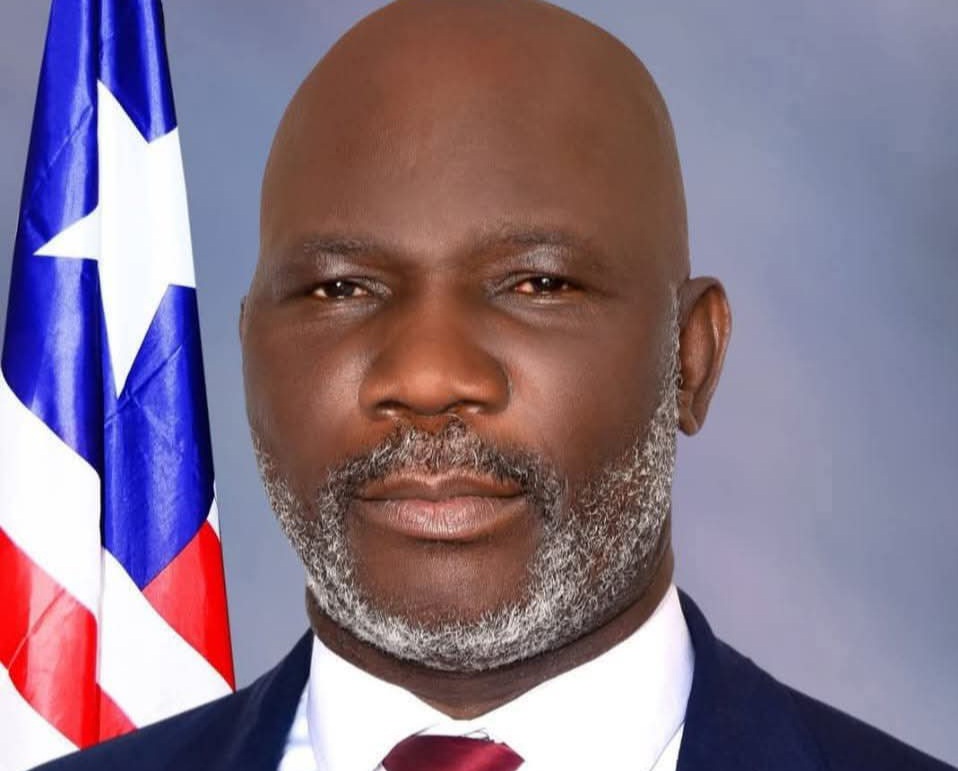
MONROVIA, LIBERIA — Coalition for Democratic Change (CDC) Vice Chair for International Affairs aspirant Wantoe Teah Wantoe has vowed to mobilize Liberians against the proposed US$5.68 billion infrastructure agreement between the Government of Liberia and Bea Mountain Mining Corporation, warning that the arrangement could burden future national budgets while offering inadequate guarantees for Liberian employment and economic opportunities.
Wantoe argues that the agreement’s headline figure should not be mistaken for a financial gift to Liberia. Under the proposed arrangement, Bea Mountain would finance approved infrastructure projects and recover qualifying expenditures, including interest, through deductions from eligible government revenue.
He warned that these deductions could reduce the resources available to future governments for healthcare, education, public-sector salaries and other essential services.
“We cannot celebrate billions in infrastructure promises without asking how many billions Bea Mountain will recover from our national revenue, how much interest Liberia will bear, and what our children will inherit,” Wantoe stated.
FOREIGN WORKERS GET TAX BENEFITS, BUT WHERE ARE THE GUARANTEED LIBERIAN JOBS?
One of Wantoe’s major concerns is what he considers an imbalance between benefits provided to foreign employees and protections for Liberian workers.
He pointed to Article 11.3, which provides specified foreign employees with personal income-tax exemptions, reduced work-permit fees and exemptions from employee NASSCORP contributions.
However, he questioned Article 5.6, which he says protects Bea Mountain and its contractors from penalties for failing to meet local-content objectives.
According to Wantoe, the agreement does not establish enforceable minimum employment targets for Liberians, particularly young people from Grand Cape Mount County, where mining operations have significant local implications.
He questioned why foreign workers should receive explicit contractual privileges while Liberian jobseekers lack equivalent enforceable guarantees.
US$500 MILLION FINANCING AND INTEREST CHARGES
Wantoe also raised concerns about Article 6.4, which allows Bea Mountain to provide revolving financing of up to US$500 million outstanding at any given time.
Under Article 9.4, interest is calculated at three-month SOFR plus 2%, while unpaid quarterly interest can be added to outstanding costs.
He warned that accumulating interest could increase Liberia’s eventual repayment obligations.
Article 32.3, he further argued, does not establish a fixed overall expiration date, potentially extending the arrangement until the applicable financial recovery and project-transfer conditions are fulfilled, unless terminated earlier.
He wants the government to explain how much Liberia could ultimately repay and what safeguards will prevent excessive deductions from public revenue.
PROCUREMENT QUESTIONS AND US$50 MILLION ADMINISTRATIVE COSTS
Another concern involves Article 31.3, which reportedly exempts major construction contracts from the Public Procurement and Concessions Act, while Article 4.1 directly appoints Turkish company MAPA as contractor.
Wantoe questioned why a multibillion-dollar national infrastructure arrangement should bypass ordinary competitive procurement safeguards.
He also highlighted Article 19.12, which permits up to US$50 million in qualifying administrative, consultancy, engineering and implementation expenses.
Although the agreement requires these expenses to be reasonable, documented and auditable, Wantoe questioned whether independent oversight is sufficiently strong to prevent inflated charges and unnecessary expenditure.
He called for disclosure of the administrative budget, beneficiaries and auditing arrangements.
GOVERNMENT COULD STILL BEAR ELECTRICITY CONNECTION COSTS
Wantoe further questioned Article 7.8, which reportedly leaves the Liberian Government responsible for certain supporting infrastructure outside the agreement’s scope, including electricity distribution networks, household connections and metering facilities.
He argued that Liberia could commit substantial future revenue to electricity infrastructure without securing guaranteed household connections or affordable tariffs for ordinary citizens.
For communities in Grand Cape Mount County, he said, the agreement must deliver measurable benefits, including employment, local procurement, skills development and community investment.
CALL FOR REJECTION IN ITS PRESENT FORM
Wantoe has called on the National Legislature to subject the agreement to independent scrutiny and reject ratification in its present form until concerns about financing, procurement, foreign-worker privileges and local economic benefits are adequately addressed.
He also vowed to rally Liberians through peaceful civic engagement and public consultations against provisions he believes could undermine the country’s long-term financial interests.
His position adds to growing public debate over whether the proposed US$5.68 billion arrangement represents sustainable national development or creates financial obligations that could constrain future governments.
The government and Bea Mountain must publicly explain the financial implications, repayment safeguards, employment commitments and expected benefits before lawmakers make a decision.
“Liberia’s development must be measured not only by the billions announced, but by the jobs created, the homes connected to electricity, the businesses supported, and the public revenue protected for future generations,” Wantoe concluded.