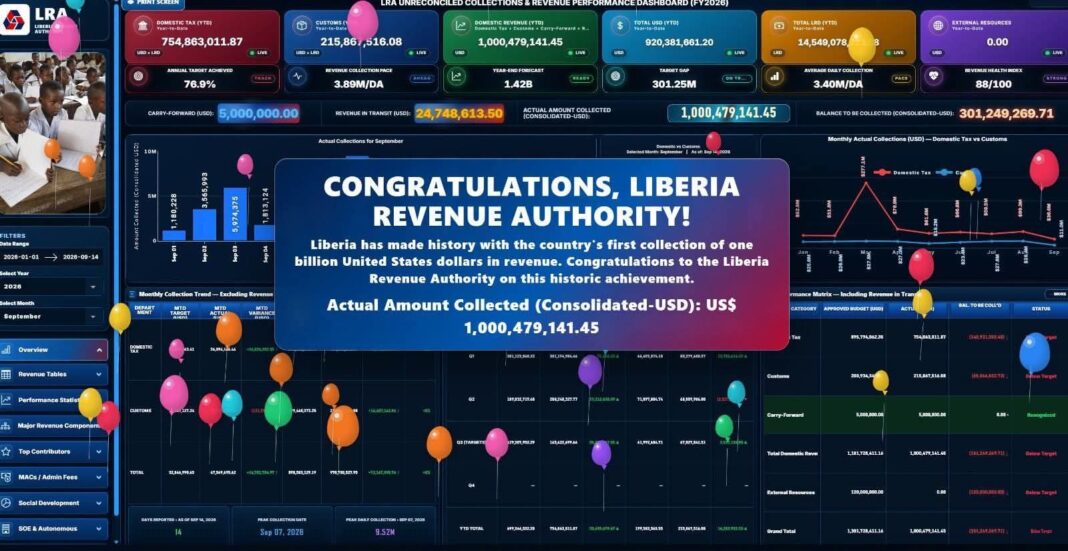
Liberia’s achievement of more than US$1 billion in domestic revenue collection has been welcomed as a major fiscal milestone, but the celebration is already being accompanied by a more important question about what the achievement will mean for ordinary Liberians who ultimately bear much of the country’s tax burden.
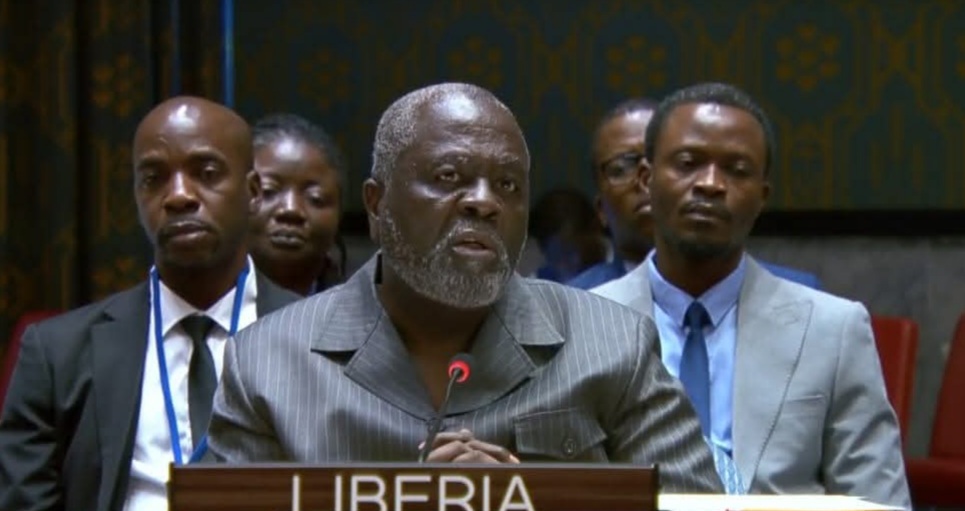
The Liberia Revenue Authority announced the milestone on Monday, September 14, 2026, presenting it as evidence of improved domestic resource mobilization and stronger tax compliance under the administration of President Joseph Nyuma Boakai. The achievement has attracted commendation from transparency advocates and taxation professionals, including Anderson Miamen, Executive Director of the Center for Transparency and Accountability in Liberia, who described reaching the billion-dollar mark as highly welcome and commended the government, LRA Commissioner General James Dorbor Jallah and his team.
CENTAL has now expanded its position on the milestone, saying the achievement deserves recognition but should also trigger a serious national conversation about how increased domestic revenue is collected, allocated and spent.
In a statement posted on its official Facebook page, CENTAL said that about a fortnight after the Liberia Revenue Authority announced that it had surpassed the US$1 billion target in domestic revenue collection, the achievement was being largely credited to reforms including the deployment of electronic fiscal devices, improvements in tax administration and increased compliance.
The transparency organization applauded the management teams at the Liberia Revenue Authority and the Ministry of Finance and Development Planning, as well as the Central Bank of Liberia, for contributing to the increase in the country’s national revenue envelope. CENTAL said the additional resources could have a meaningful impact on critical development needs if they are properly allocated and managed.
But CENTAL’s commendation came with a clear warning. The organization said it hopes increased revenue collection will translate into increased budgetary allocations for critical sectors, including healthcare, education and anti-corruption institutions, rather than being used merely to benefit politicians.
The organization also called for greater transparency, equity and inclusivity in the processes surrounding the collection and expenditure of public revenue.
That position introduces an important dimension to Liberia’s US$1 billion revenue achievement. The issue is no longer simply whether Liberia can collect more money. The country must now demonstrate whether it can transform increased revenue into measurable improvements in the lives of citizens.
For taxpayers, the collection of US$1 billion is meaningful only if the money eventually translates into better public services, improved infrastructure, stronger healthcare, quality education, greater economic opportunities and other tangible improvements in everyday life. Liberians who pay taxes expect their contributions to return to society through effective public services and responsible government spending.
The revenue milestone therefore changes the conversation. The issue is no longer simply whether Liberia can collect more money. The country must now demonstrate whether it can transform increased revenue into measurable national development.
The achievement did not happen without the contribution of taxpayers. Cecelia Sam Financial Consultation Services also welcomed the milestone, stressing that businesses, entrepreneurs, nonprofit organizations, individuals, corporations, ministries, government agencies and state owned enterprises all contributed to the achievement by filing and paying their taxes.
The platform described the development as progress in taxation and tax administration and credited years of taxpayer sensitization and awareness. It also commended the LRA and local and international partners involved in strengthening Liberia’s tax administration.
That recognition is important because domestic revenue mobilization is ultimately a partnership between the state and taxpayers. Government cannot collect revenue without taxpayers, and taxpayers cannot benefit from a functioning public system unless the state manages collected resources responsibly.
The US$1 billion figure therefore represents a major achievement for the Liberia Revenue Authority and the Boakai administration, but it also creates a higher standard of accountability. Once government demonstrates that it can mobilize significant domestic resources, citizens have every right to ask where those resources are going and what results they are producing.
The LRA has attributed the milestone to improved compliance, stronger tax administration and the collective efforts of taxpayers, customs stakeholders and its staff. Under Commissioner General Dorbor Jallah, the authority has pursued measures including increased audits, taxpayer education, digitization of tax systems, customs enforcement and efforts to reduce revenue leakages.
Those reforms are important because Liberia’s development cannot depend indefinitely on external borrowing and international assistance. A stronger domestic revenue base gives the country greater control over its development agenda and provides government with resources that can be used to finance national priorities.
But increased revenue also means increased responsibility.
If citizens are paying more taxes, they should be able to see improvements in the services they receive. If businesses are meeting their tax obligations, they should see an environment in which public resources contribute to infrastructure, security, education, healthcare and economic growth. If small entrepreneurs are surrendering part of their earnings to the state, they should have confidence that the resources are being managed in the national interest.
This is where transparency becomes critical. Liberia’s US$1 billion revenue milestone should be accompanied by clear public information about how the money is being allocated and what results it is producing. Citizens should not have to rely solely on the announcement of collection figures. They should be able to follow the journey from revenue collection to budget allocation and eventually to completed projects and improved services.
Miamen’s position is therefore balanced. He has not rejected the achievement or refused to commend the LRA and the government. Instead, he has recognized the milestone while making it clear that commendation should be followed by accountability. CENTAL’s latest statement reinforces that position by welcoming the increased national revenue envelope while calling for transparency, equity and inclusivity in how the resources are collected and spent.
The achievement should be celebrated because Liberia has crossed a revenue threshold that has long been difficult to reach. The LRA deserves recognition for its efforts, Commissioner General Jallah and his team deserve credit for the progress recorded, and taxpayers deserve acknowledgment because their compliance made the achievement possible.
At the same time, the milestone should not become an excuse for complacency. It should become a new benchmark. Liberia must now ask whether increased revenue is reducing pressure on government finances, expanding development programs, improving public services and creating opportunities for citizens.
The Boakai administration has an opportunity to turn the US$1 billion milestone into a stronger public confidence story. If citizens begin to see better roads, improved hospitals, stronger schools, reliable public services, increased investment and greater economic opportunities, then the revenue achievement will have a meaning beyond the figures displayed on an LRA dashboard.
The real victory will come when the ordinary taxpayer can look at the services provided by the state and recognize that the money collected from citizens is being used responsibly.
For now, Liberia deserves to acknowledge the achievement. Reaching US$1 billion in domestic revenue is not a small accomplishment, and those responsible for strengthening tax administration should receive their commendation. But the celebration should also mark the beginning of a more demanding phase in Liberia’s fiscal journey.
The question is no longer whether Liberia can collect US$1 billion. The next question is whether Liberia can turn US$1 billion in domestic revenue into US$1 billion worth of public value.
That is where the achievement will eventually be judged.