MONROVIA – President Joseph Nyuma Boakai has warned that Liberia’s growing problem of non-performing loans is no longer simply a concern for banks, saying unpaid loans are restricting access to credit, threatening private-sector expansion and limiting opportunities for job creation.
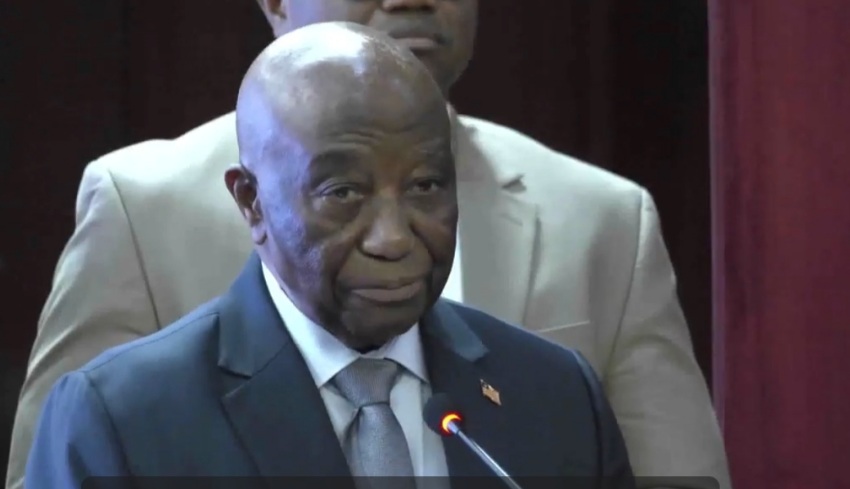
Speaking on Wednesday, September 9, 2026, at the official opening of the National Conference on the Resolution of Non-Performing Loans at the EJS Ministerial Complex in Congo Town, President Boakai said the consequences of unpaid loans extend beyond financial institutions and directly affect farmers, entrepreneurs, businesses and ordinary Liberians.
The President said discussions surrounding non-performing loans are often dominated by technical terms such as distressed assets, collateral, credit risks and insolvency, but argued that the real consequences are ultimately felt by people seeking opportunities to improve their livelihoods.
He pointed to farmers who need financing to increase production, young entrepreneurs seeking capital to turn business ideas into viable enterprises and established Liberian businesses seeking financing to expand operations and employ more workers.
According to President Boakai, when loans remain unpaid, money that should continue circulating through the economy becomes tied up, forcing banks to become more cautious about lending and making credit more difficult and expensive to obtain.
The President said the resulting restrictions can affect the very people Liberia needs to finance if it is to achieve sustained private-sector growth.
“When too many loans go unpaid, money that should be circulating through the economy becomes tied up,” President Boakai said, warning that banks subsequently become more cautious about lending and credit becomes harder and more expensive to obtain.
He said the impact ultimately reaches businesses, entrepreneurs and ordinary Liberians.
President Boakai therefore described the resolution of non-performing loans as a national development issue rather than a problem that should be left exclusively to the banking industry.
The conference was held under the theme “Resolving Non-Performing Loans to Unlock Access to Finance for Private Sector Growth and Job Creation.”
The President linked the issue directly to his administration’s ARREST Agenda for Inclusive Development, which seeks to create jobs, expand opportunities, empower young people and women, strengthen agriculture and food security, improve infrastructure and support the growth of Liberian businesses.
He argued that achieving those objectives requires a strong financial system capable of providing financing for productive economic activities.
But President Boakai also stressed that responsibility for the health of the financial system does not rest with banks alone.
He called for responsible lending by financial institutions, including stronger assessments of borrowers before loans are approved, while urging borrowers to understand that obtaining financing creates an obligation to repay.
The President made clear that both sides of the lending relationship must fulfill their responsibilities if confidence in Liberia’s financial sector is to improve.
“Contracts must mean something,” he said, adding that collateral must also have meaning and that legal and judicial institutions must be capable of resolving disputes fairly and efficiently.
For Liberia, the issue is particularly important because limited access to affordable financing can prevent businesses from expanding and reduce opportunities for employment.
A financial system in which banks are reluctant to lend because of unresolved bad loans can leave legitimate businesses struggling to obtain the capital needed to purchase equipment, increase production, enter new markets or hire additional workers.
President Boakai said Liberia must therefore confront weaknesses in credit assessment and risk management, challenges involving credit information and collateral enforcement, limitations within legal and judicial processes and what he described as the country’s repayment culture.
He acknowledged that the problem did not develop overnight and would not disappear overnight.
The President also emphasized the need to prevent future non-performing loans instead of focusing exclusively on recovering existing troubled loans.
He called for stronger credit reporting systems, improved land administration and collateral registration, greater use of technology, responsible digital financial services and improvements to Liberia’s insolvency framework.
He also warned that as the financial sector changes rapidly, Liberia cannot afford to remain behind, while stressing that innovation must be pursued responsibly to protect financial stability and consumers.
President Boakai said the government, Central Bank of Liberia, commercial banks, borrowers, Legislature, Judiciary, Executive Branch, private sector and development partners all have responsibilities in addressing the problem.
He urged participants at the conference to recognize that no single institution can resolve the country’s non-performing loan challenge alone.
The President said the ultimate objective should be a financial system where responsible borrowers can access credit, lenders can have confidence that legitimate obligations will be honored and capital can reach farmers, entrepreneurs, manufacturers, women and young people prepared to invest and create jobs.
For Boakai, resolving bad loans is therefore directly connected to Liberia’s wider economic ambitions.
The President declared the conference officially open Wednesday, challenging participants to turn the discussion into practical action capable of restoring confidence in the financial sector and unlocking financing for productive economic activity.