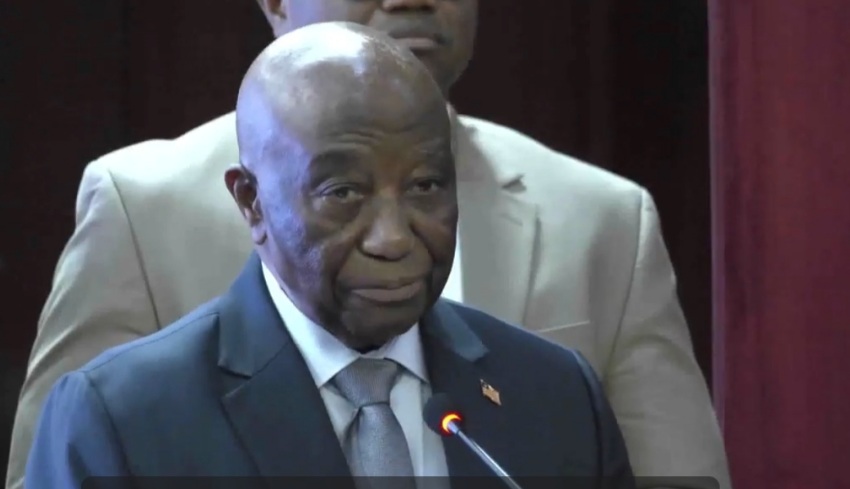
MONROVIA – More than two decades after Liberia’s civil wars, a coalition of civil society organizations is pressing President Joseph Nyuma Boakai’s administration to move beyond commitments and establish the proposed War and Economic Crimes Court, warning that continued delays are prolonging the wait for justice among victims and survivors.
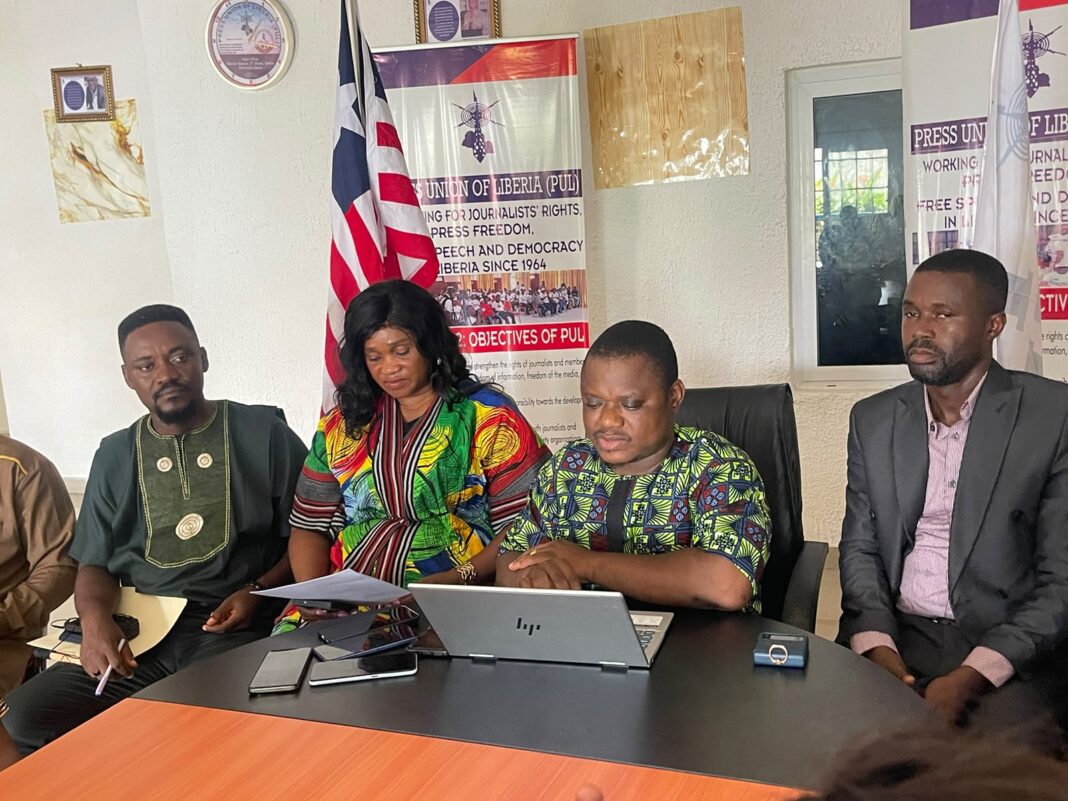
The National Civil Society Consortium for Transitional Justice made the call in a statement issued Tuesday, September 8, 2026, and read by Anderson Miamen, Executive Director of the Center for Transparency and Accountability in Liberia (CENTAL).
The Consortium also demanded the establishment of a Specialized National Anti-Corruption Court, arguing that Liberia’s transitional justice and anti-corruption challenges require specialized institutions capable of delivering credible accountability.
The coalition’s concerns come nearly three years after President Boakai assumed office in January 2024.
While acknowledging that the government has taken preliminary steps, including establishing the Office for the Establishment of War and Economic Crimes Court for Liberia and submitting draft legislation, the Consortium said the process remains incomplete because the enabling laws have not yet been enacted and the institutions have not been fully operationalized.
The group also praised the 55th Legislature for passing a Joint Resolution in April 2024 supporting the establishment of the War and Economic Crimes Court.
But it argued that resolutions and draft bills cannot substitute for functioning justice institutions.
For survivors of Liberia’s civil wars, the issue goes beyond legislation.
The Consortium said women and girls experienced serious violations during the conflicts, including conflict-related sexual and gender-based violence, displacement, loss of livelihoods and other human rights abuses.
It said the continuing absence of a War and Economic Crimes Court denies many victims the opportunity to pursue truth, justice and remedy through a dedicated institutional framework.
The coalition further argued that accountability is essential to preventing the repetition of abuses and strengthening reconciliation.
It said the court must be designed around the rights and needs of victims rather than treating them merely as symbols of Liberia’s peace story.
According to the Consortium, a credible court must provide meaningful victim participation, protection for victims and witnesses, due process and fair-trial guarantees while maintaining judicial independence and equality before the law.
The group also placed the proposed Anti-Corruption Court within the broader struggle for economic and social justice.
It argued that corruption and abuse of public resources do not only affect government finances. They can also undermine citizens’ access to basic services and deepen poverty and inequality.
The Consortium said a properly funded and independent National Anti-Corruption Court could help strengthen accountability, protect public resources, deter corruption and increase public confidence in state institutions.
It stressed that the two courts should not be viewed as political instruments but as institutions governed by constitutional safeguards and international human rights standards.
The coalition’s position comes as Liberia prepares to assume the presidency of the UN Security Council in December 2026.
It said Liberia’s international leadership makes the unresolved domestic justice agenda even more important because the country is expected to champion issues including conflict prevention, peacebuilding, human rights, justice, accountability and Women, Peace and Security.
The Consortium argued that Liberia’s international commitments should be reflected in its domestic policies and institutions.
It specifically cited UN Security Council Resolution 1325 and the broader Women, Peace and Security framework, saying sustainable peace requires more than women’s participation in peace processes. It also requires protection, accountability, access to justice and measures to prevent violations from recurring.
The coalition therefore urged President Boakai to engage directly with the leadership of the Senate and House of Representatives to secure passage of the bills establishing the two courts.
It also called on lawmakers to act without further delay, cautioning against the use of constituency consultations as a reason to postpone action.
The Consortium further demanded that the 2027 National Budget include funding for both institutions and that government seek international assistance to support their establishment and sustainability.
The group called for the courts to be financially and operationally independent, impartial, transparent, victim-centered and gender-responsive.
It also urged international partners, including the United Nations, European Union and United States government, to continue supporting Liberians’ demand for accountability and encourage the government to establish and adequately finance the courts.
The coalition said the Office for the Establishment of War and Economic Crimes Court should strengthen coordination with the Executive, Legislature, Judiciary and other stakeholders to help move the process forward.
For the civil society groups, the central issue is no longer whether Liberia has discussed transitional justice and accountability. The issue is whether the government will finally turn years of commitments into functioning institutions.
The Consortium warned that continued delays could deepen public frustration and reinforce perceptions that serious violations and corruption can go without meaningful accountability.
It ended with a stark warning to the government that justice cannot remain indefinitely postponed.
“Justice delayed is justice denied,” the coalition declared, urging the Boakai administration to act now.